Universe
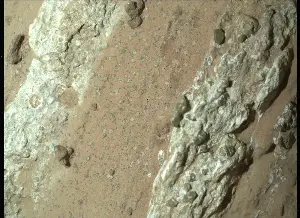
NASA considers moon mission for Mars-type rover
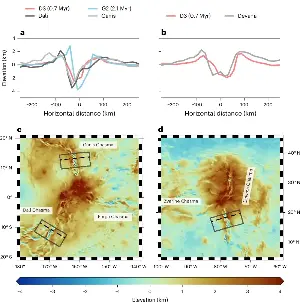
Earth’s oldest asteroid impact crater may just have been found
Apollo astronauts trying to sleep on the way to the Moon kept seeing flashes and streaks in the dark, and the cause turned out to be cosmic rays from deep space passing straight through their eyes.
We think of Mount Everest as the ultimate mountain, but Olympus Mons on Mars rises nearly three times as high and spreads across a footprint roughly the size of Italy, making Earth’s tallest peak look almost local by comparison.
The James Webb telescope picked out 16.5 million individual stars in the Cigar Galaxy — a neighbor forming stars ten times faster than the Milky Way, in a burst estimated to last only a few hundred million years
The Moon is so far from Earth that, using its average distance, you could line up every other planet in the solar system between us and still have about 4,400 kilometres left over.
The universe might not be expanding as we thought, study says
A moon only 10 kilometres wide was hiding around Uranus for decades. Voyager 2 missed it. Hubble missed it. But in 2025, Webb finally caught the faint speck circling near the planet’s inner rings, raising Uranus’s known moon count to 29.
Five uncrewed Starship rockets are projected to launch toward Mars during the brief window in late 2026 when the two planets align for the closest possible journey — and depending on whether they arrive intact, the first crewed missions could follow within five to seven years, in what would be the first time human beings have traveled to another planet in the roughly 200,000-year history of our species
We tend to imagine the Moon as a barren, resourceless rock, but the permanently shadowed craters near its south pole hold something future astronauts may prize more than gold: water ice, confirmed by NASA missions, that could one day be split into oxygen to breathe and hydrogen for rocket fuel.
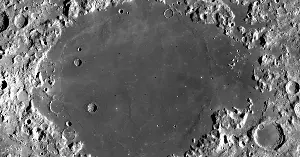
A lunar meteorite found in northwest Africa has been shown to record evidence of an asteroid impact on the Moon 3.5 billion years ago, matching independently dated impacts on Earth and on the asteroid 4 Vesta from the same period, at the moment life on Earth was first taking hold
In the weightlessness of orbit, an astronaut’s heart can become more spherical as it no longer works against gravity in the usual way, while their spine stretches enough to make them measurably taller before they return to Earth.
Mars can produce dust storms so vast they swallow the planet. In 2018, one of them turned day into darkness for NASA’s solar-powered Opportunity rover, cutting off the sunlight that had sustained it through more than 14 years on Mars.
Stargazing Wonders: A Complete Guide to the Most Spectacular Astronomical Events Happening Throughout the Year
Discover The True Soulmates Of Cancer: Which Zodiac Signs Are Destined For Perfect Love
Cancer Queen Energy: Famous Women Who Illuminate The World With Empathy And Grace
Mars once had a magnetic field strong enough to deflect solar wind, just as Earth’s does now — when it collapsed, the planet lost its atmosphere and its oceans within a geologically brief period, transforming from a world that may have held life into the frozen desert it is today
344 steps stood between the James Webb Space Telescope and total failure — any one could have ended it — and the telescope that survived them all now runs on less power than a household kettle, a million miles from Earth
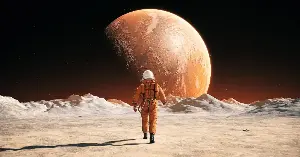
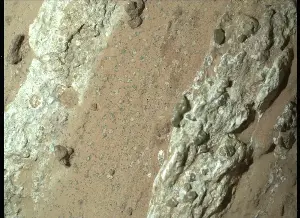
Most of NASA’s first Moon-base robots will depend on solar power, which makes the two-week lunar night one of the whole project’s nastiest problems — but NASA is now considering an odd workaround: sending PROMISE, a JPL engineering twin of its nuclear-powered Mars rovers, to the lunar south pole.
Webb has confirmed a galaxy, MoM-z14, whose light left just 280 million years after the Big Bang, after travelling about 13.5 billion years. The shock was not that one galaxy shone 100 times brighter than expected, but that JWST is finding bright galaxies from this era far more often than pre-Webb models predicted, and MoM-z14 even shows unusual nitrogen enrichment, hinting that star formation and chemical evolution were already moving faster than astronomers expected.