


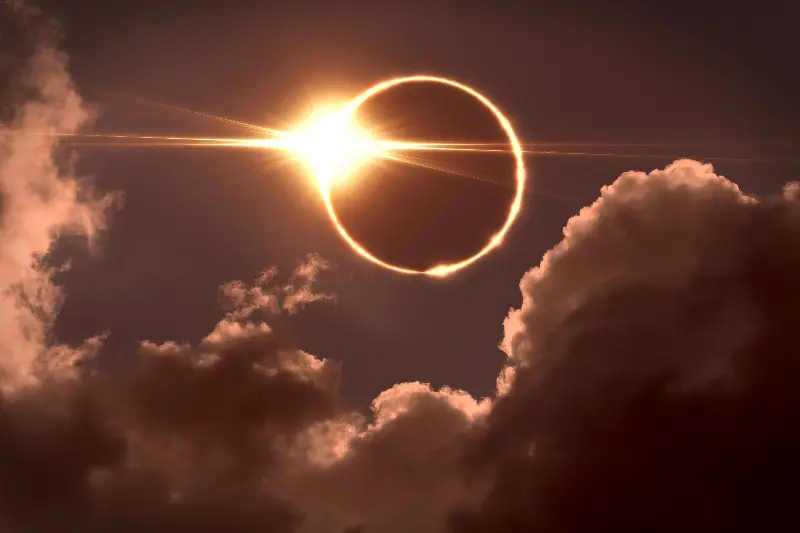
From moments of awe on mountaintops to stories whispered under moonlit skies, eclipses have always held a special place in the human imagination. Across continents and centuries, the fleeting drama of solar and lunar eclipses has not only inspired scientists but has also left an unmistakable imprint on our cultures, beliefs, and the very biological rhythms of life.
CELESTIAL MECHANICS: THE DANCE OF SHADOWS AND LIGHT
Solar and lunar eclipses are striking examples of celestial alignment, reminding us of the remarkable choreography at work in our solar system.
- Solar Eclipse: This unfolds when the moon passes between the sun and Earth, casting a shadow over our planet. For those in the path of totality, day temporarily turns into night.
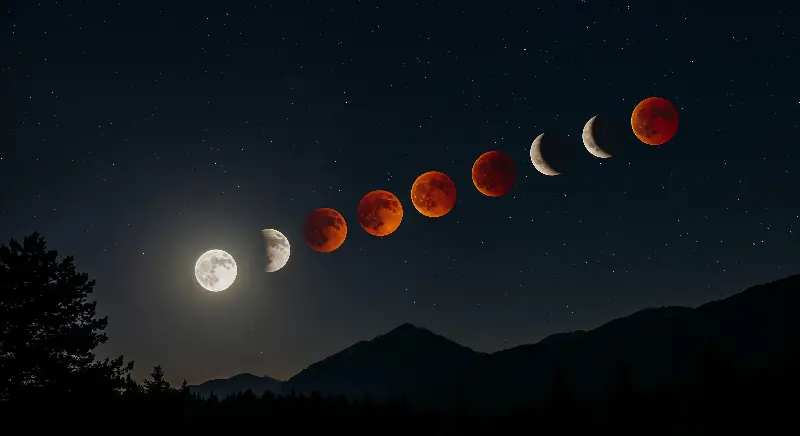
- Lunar Eclipse: This occurs when Earth stands between the sun and the moon. Our planet’s shadow sweeps across the lunar surface, often tinting it a haunting red—the famous “blood moon.”
While these events are brief, their predictability is a testament to the precision of cosmic movements. Modern astronomy allows us to forecast these events centuries in advance, but ancient cultures viewed them with a mixture of fear and high-stakes fascination.
MYTHS, LEGENDS, AND CULTURAL SIGNIFICANCE
Before we understood the physics, civilizations ascribing deep meaning to these "disappearing" celestial bodies. To many, an eclipse was a sign from the gods or a cosmic drama with earthly consequences.
Global Interpretations:
- Ancient China: Solar eclipses were believed to be caused by celestial dragons devouring the sun. Villagers would bang drums and set off fireworks to drive the beast away.
- The Vikings: Tales were told of two wolves, Skoll and Hati, chasing the sun and moon. An eclipse meant the wolves had finally caught their prey.
- The Navajo: For the Navajo, eclipses are sacred times reserved for reflection and stillness. It is a time for prayer and connection, rather than outward observation.
Eclipses have even altered history. In 585 BCE, a solar eclipse led to a truce during a battle between the Lydians and the Medes; both armies interpreted the sudden darkness as a divine command to cease fighting.
MODERN FASCINATION: SCIENCE MEETS WONDER
While we now understand the mechanics, the sense of wonder remains. "Eclipse chasers" travel across continents to spend a few minutes in the moon’s shadow, describing a surreal experience where the temperature drops, birds fall silent, and stars twinkle at midday.
Beyond the spectacle, scientists find eclipses invaluable:
- Testing Relativity: During the 1919 eclipse, Arthur Eddington confirmed Einstein’s theory of general relativity by observing how gravity bends starlight.
- Solar Study: Totality allows astronomers to see the solar corona—the sun's outer atmosphere—which is usually invisible due to the sun's glare.
- Atmospheric Insights: Researchers use these events to study the cooling of Earth's surface and the behavior of our own atmosphere.

ECLIPSES AND EARTHLY LIFE
The impact of an eclipse extends to the natural world. Animals often behave as if dusk has fallen:
- Birds: Many species begin to roost or sing their evening songs.
- Livestock: Cows may return to their barns, fooled by the sudden dimming of the sun.
- Insects: Crickets often begin their nighttime chirping in the middle of the day.
For humans, the psychological impact is profound. Eclipses bring communities together—neighbors and strangers alike gather to share a rare, silent moment of connection. These events remind us of the immense forces at play in the universe and our relatively small, yet significant, place within it.
LOOKING UP: THE ENDURING MAGIC OF ECLIPSES
No matter how advanced our technology becomes, the allure of eclipses is timeless. They are both cosmic clockwork and cultural canvas, blending hard science with the human need for marvel. As we look forward to the next shadow sweeping across the land, we are united by the same curiosity that has inspired our species for millennia. Next time the skies darken unexpectedly, step outside and remember the long tradition of those who have looked up in awe.