



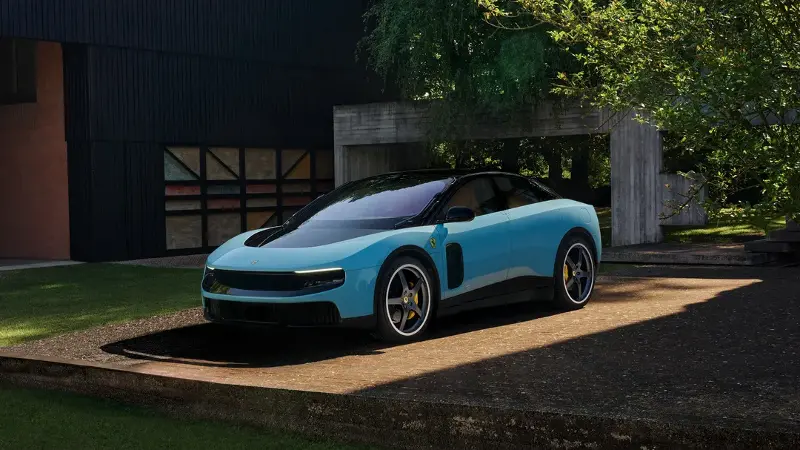
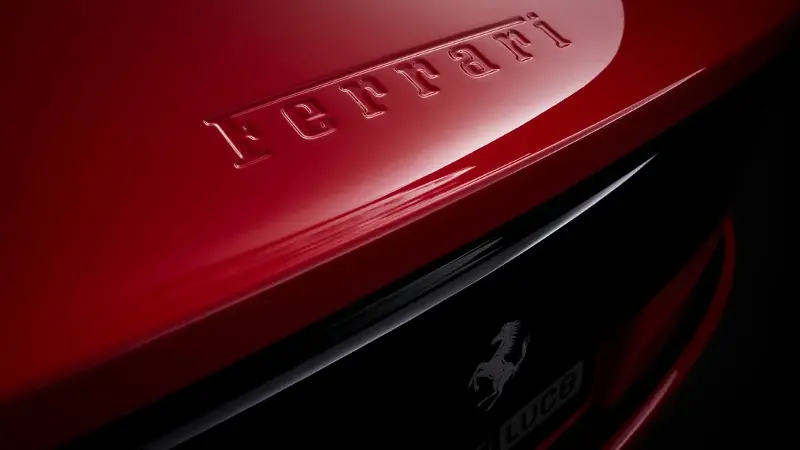
Ferrari officially revealed the Luce today, on May 26, 2026, at the Vela di Calatrava sports complex in Rome, which is a date chosen to coincide with the 79th anniversary of the company’s first race victory, when the Ferrari 125 S won the Gran Premio di Roma at the Baths of Caracalla in 1947. A huge milestone that Ferrari seems to think is indeed fitting for the launch of their latest BEV.
Read more: Ferrari reveals the interior of its upcoming EV, the Luce
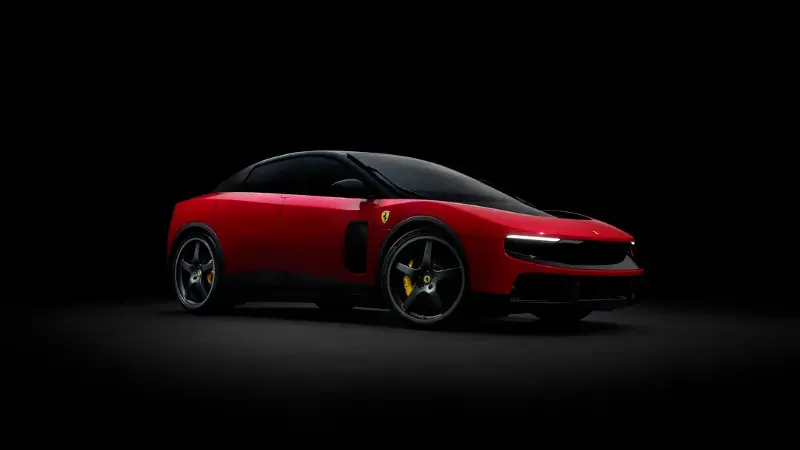
The Luce is Ferrari’s first fully electric production car and its first five-seater, made possible by ditching the traditional transaxle layout that previously prevented a fifth seat.
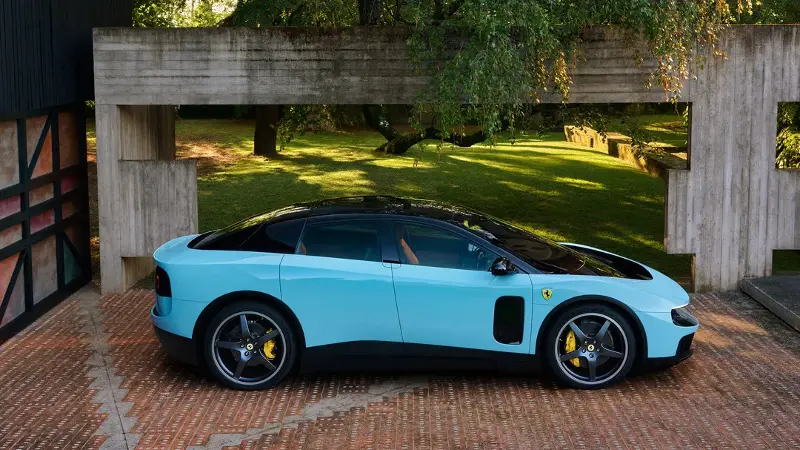
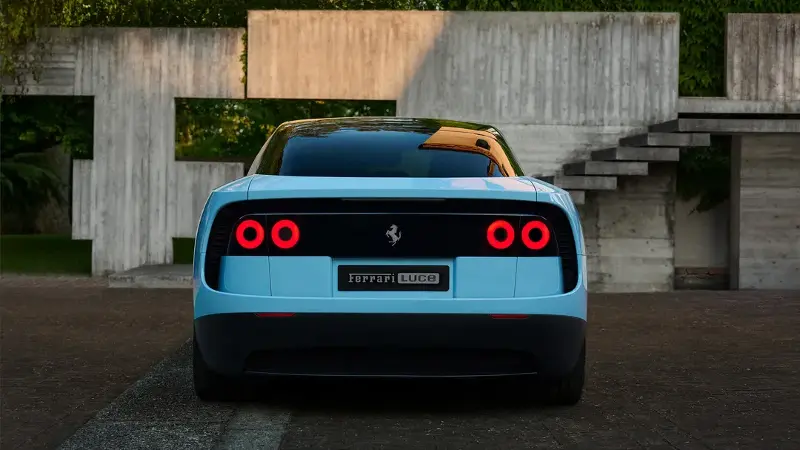
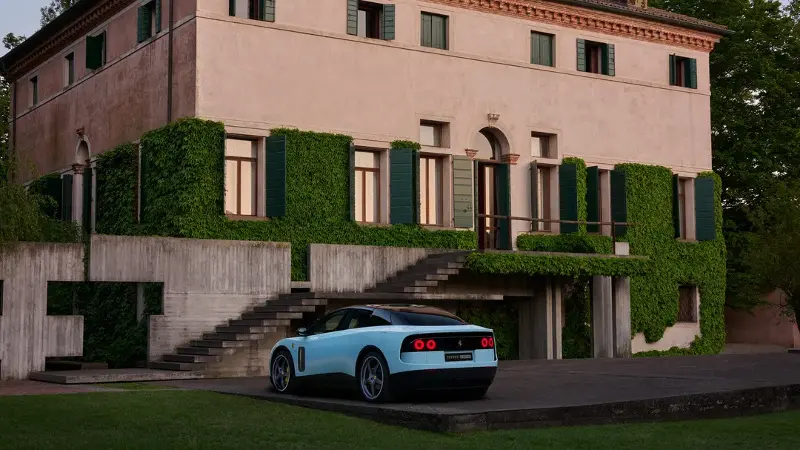
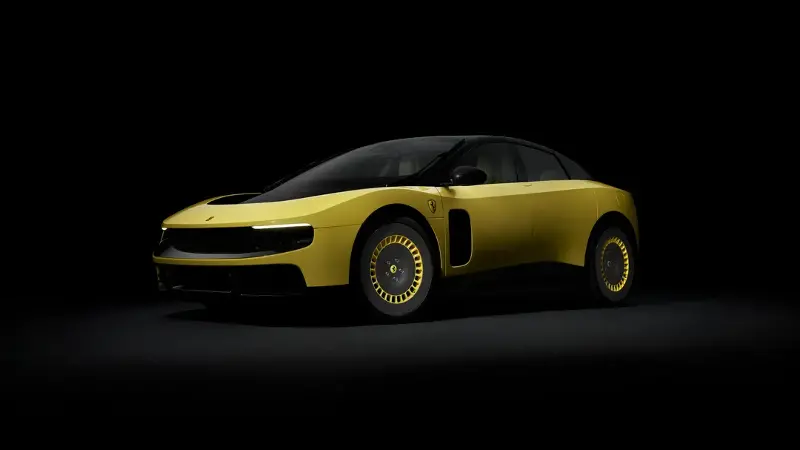
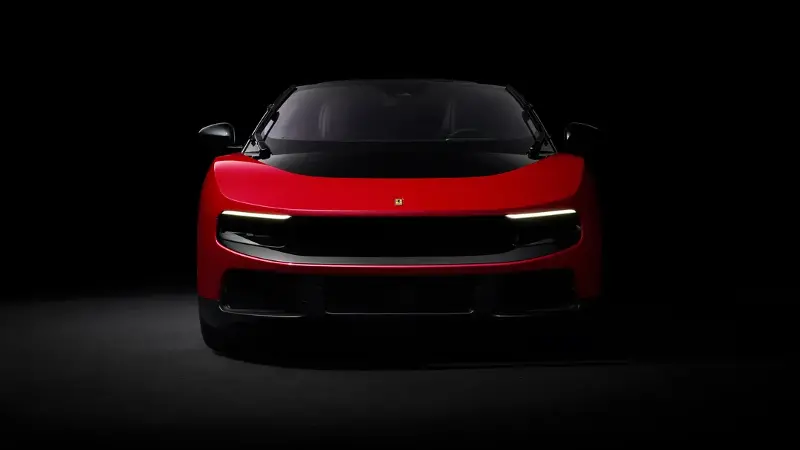
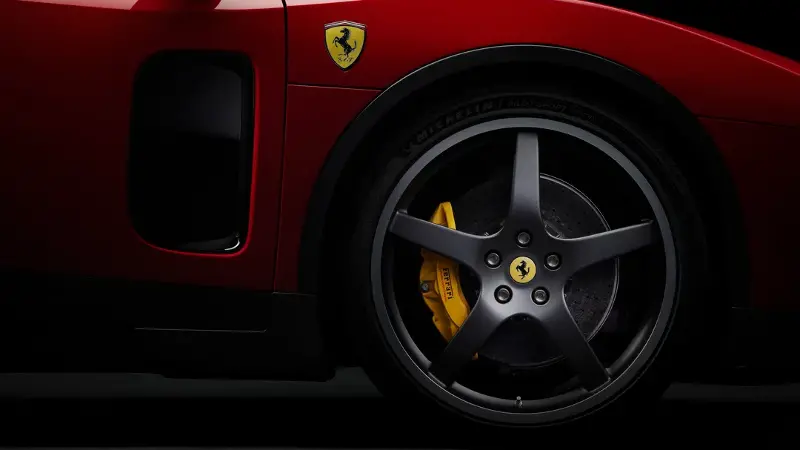
Ferrari handed the exterior design to LoveFrom, the creative studio run by Jony Ive and Marc Newson, rather than its in-house design team led by Flavio Manzoni. The result is a glass-heavy body with a shell-like greenhouse that extends below the beltline. Front and rear aerodynamic wings float above the main silhouette. The transparent light panels are integrated flush with the primary surfaces and appear to recede when off. Wheel sizes are the largest ever on a series-production Ferrari road car: 23 inches at the front, 24 inches at the rear.
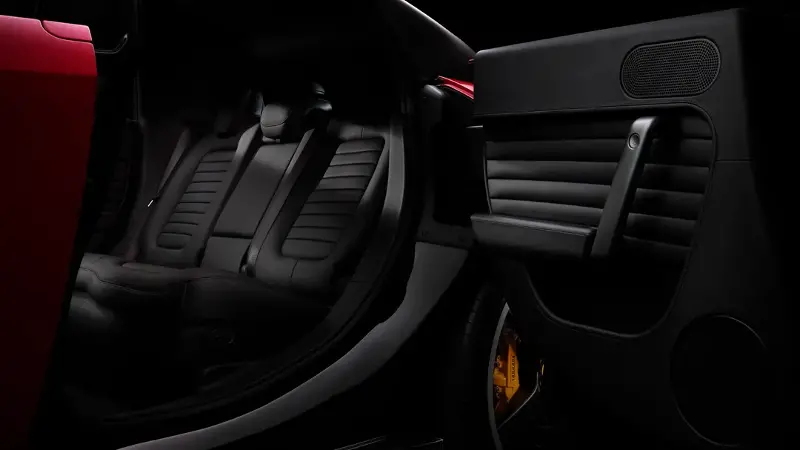
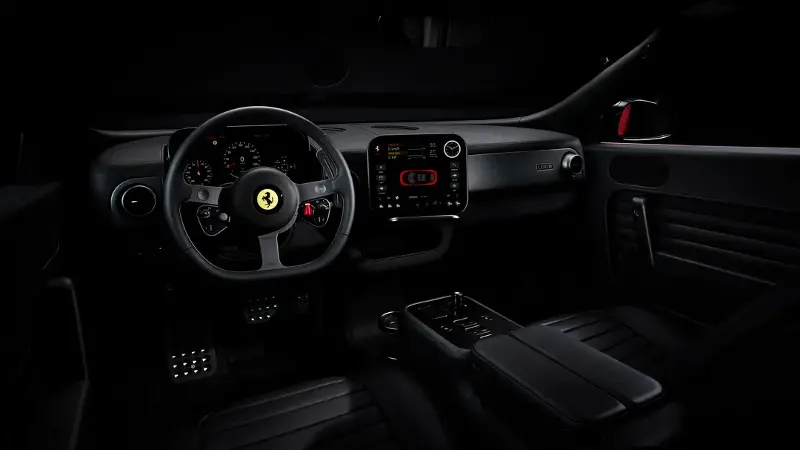
The cabin eliminates the central tunnel entirely, with the battery integrated beneath the floor and rear seats. Controls are organized by function, with primary inputs and displays positioned directly in front of the driver. Physical buttons, dials, toggles, and switches are paired with digital displays developed with Samsung Display. Materials include recycled anodized aluminum, Corning Gorilla Glass, and leather. The audio system runs 21 speakers through a 24-channel, 3,000-watt amplifier, and includes a feature Ferrari calls Audio Signature.
In terms of performance figures, the Luce has plenty of impressive numbers.
Maximum power: 1,050 cv / 1035 hp (combined)
0–100 km/h: 2.5 seconds
0–200 km/h: 6.8 seconds
Top speed: over 310 km/h
Range: over 530 km
Curb weight: 2,260 kg
Power comes from four permanent magnet synchronous motors — one per wheel — derived from the F80 hypercar. Front motors spin up to 30,000 rpm; rear motors up to 25,500 rpm. The system runs on an 800V architecture and supports fast charging up to 350 kW.
The 122 kWh battery pack was engineered and built at Ferrari’s Maranello facility. It consists of 210 cells in series and doubles as a structural chassis element, improving body stiffness by over 25% in bending and 35% in torsion compared to Ferrari’s previous four-door models. Power electronics achieve over 98% efficiency. Remote battery and cabin preconditioning are supported.
The chassis uses hollow castings, extrusions, and aluminum sheet metal. An elastically mounted rear subframe, which again is a first in Ferrari’s history, is used alongside active suspension derived from the F80, independent rear-wheel steering, and a semi-virtual double-wishbone suspension. The active suspension’s DC/DC resonant converter is integrated into the power electronics.
Each wheel has three actuators: one for torque and regeneration, one for steering angle, and one for vertical movement. This gives the car independent control over every wheel in all directions simultaneously. The system is managed by a new Vehicle Control Unit (VCU) that integrates powertrain and dynamics, running updates at 200 Hz alongside a new Side Slip Control X system.
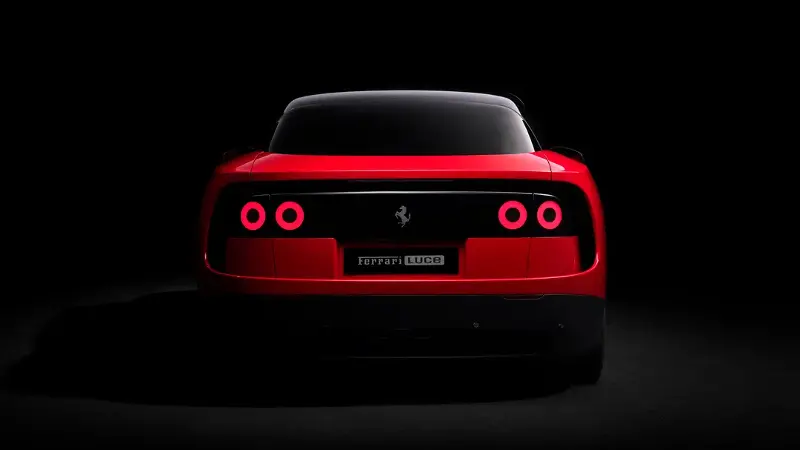
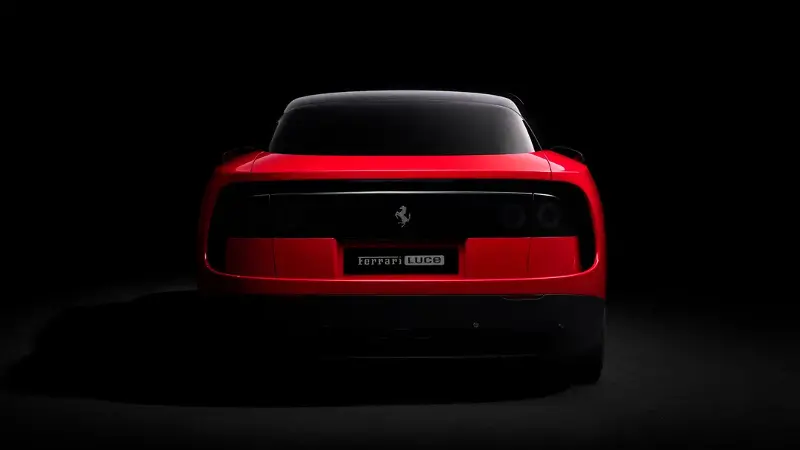
Ferrari claims the Luce has the lowest drag coefficient of any road car it has ever made. The body surfaces are designed to be smooth and uninterrupted. Active aerodynamic grilles regulate airflow through the heat exchangers, balancing cooling and drag. Active ride height lowers the front by 10 mm at speed.
In terms of sound (yes, sound), Ferrari developed a patented system using a precision accelerometer mounted at the center of each axle. It captures mechanical vibrations from the drivetrain and amplifies them, which the brand says functions similarly to an electric guitar pickup. Volume and character are controlled via the e-Manettino dial and steering wheel paddles. Sound is emitted both externally and inside the cabin.
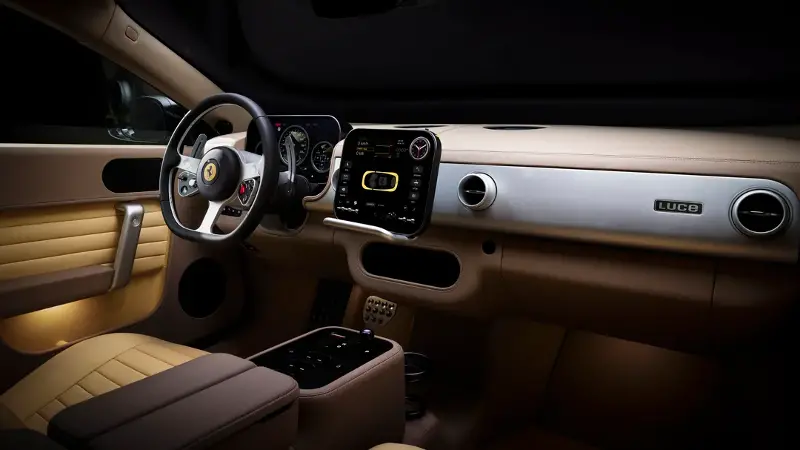
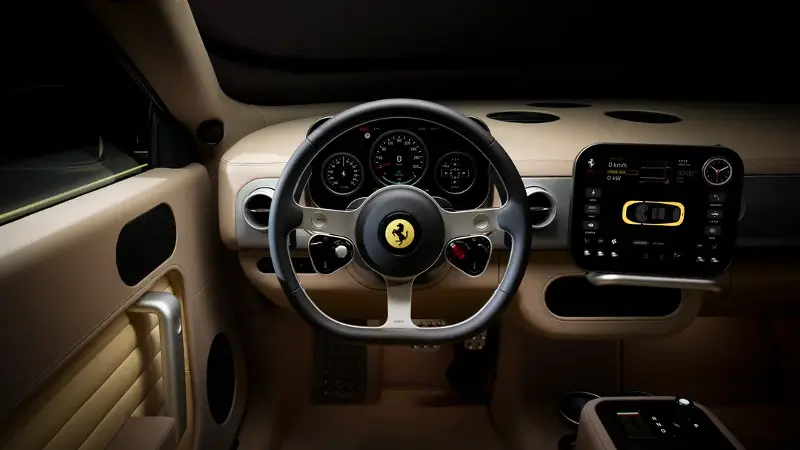
The Luce carries over 60 new patents and introduces electric all-wheel drive to Ferrari for the first time. Ferrari says it will service all electric components, including batteries, under its Ferrari Forever program. The body makes extensive use of recycled secondary-alloy aluminum, reducing CO₂ equivalent emissions by around 70% of the vehicle’s total weight during production.
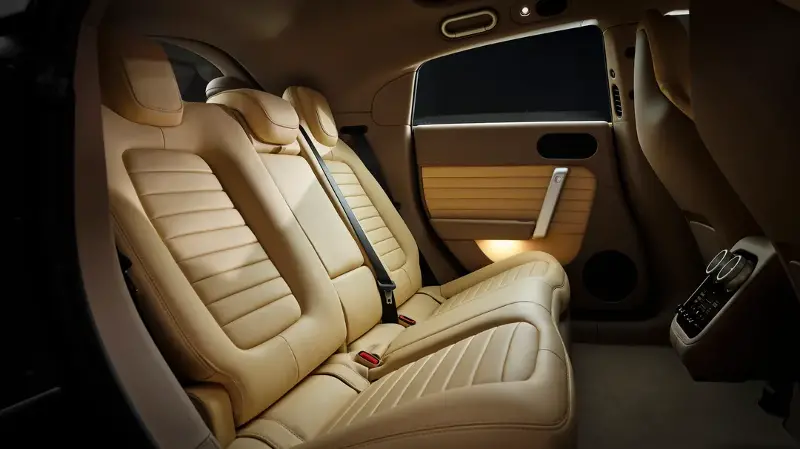
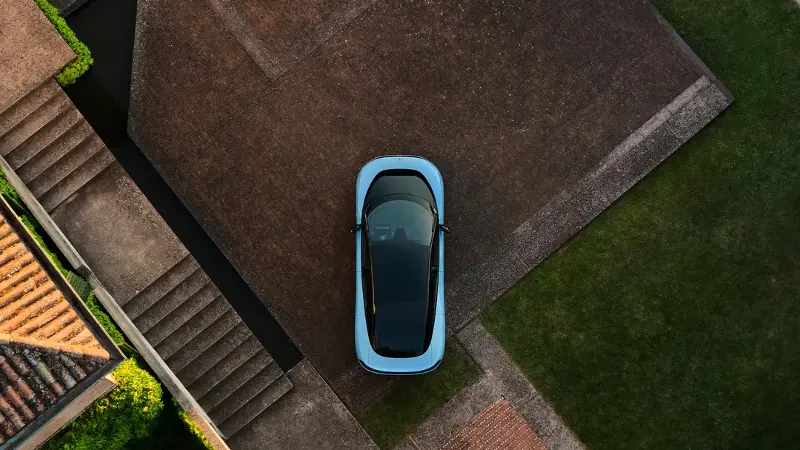
No pricing or on-sale date has been announced at the time of writing, but we suspect it could begin as early as this year or the first quarter of 2027.
The post This is the Ferrari Luce–The first electric Ferrari appeared first on YugaAuto: Automotive News & Reviews in the Philippines.