


Purchasing power increased by 20-30%.
Surveys conducted at numerous local markets and food stores in the area show that the demand for summer goods has increased by 20-30% compared to the beginning of the year. Items such as watermelons, fresh coconuts, dragon fruit, mangosteen, oranges, pomelos, green vegetables, and fruit juices are selling quickly.
Ms. Ha My, a fruit vendor at Do Market (Kinh Bac Ward), said: “During hot weather, the number of customers increases significantly, especially for fruits rich in vitamins and with a refreshing quality. On average, I import nearly 200 kg of various fruits each day, a 25% increase compared to before, but I still sell them all early.”
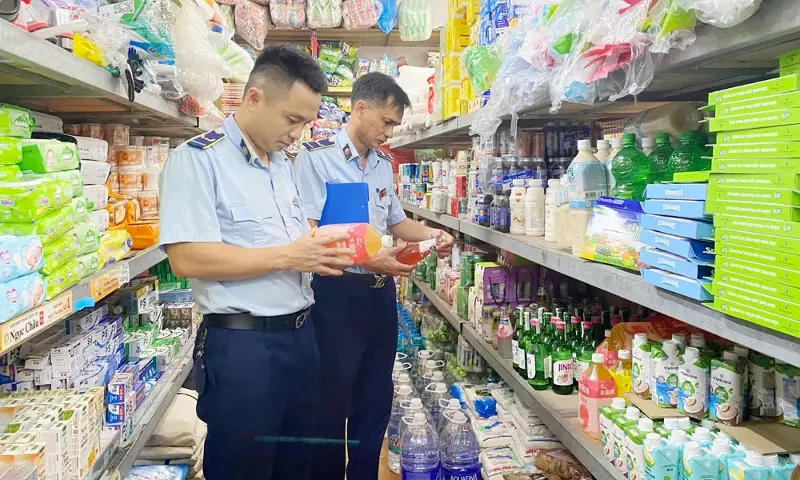
Market management officials inspect the labels and stamps of various bottled soft drinks at Hai Ha store, Vinh Ninh market (Bac Giang ward).
Not only in traditional markets, but also in supermarkets and modern retail stores, sales of fresh food and beverages have increased significantly. Ms. Nguyen Hai Van, Director of Dabaco Que Vo Supermarket (Que Vo Ward), said: "The consumption of green vegetables, fruits, yogurt, and soft drinks has increased by about 20% in the last two months compared to the period before summer."
Besides fresh fruit, summer vegetables such as spinach, water spinach, gourds, zucchini, and loofah are also preferred choices for many families. Thanks to the abundant supply from production areas within the province, the prices of basic goods remain stable, and there is no shortage.
Ms. Ngo Thi Thu Giang (Bac Giang ward) said: “During hot weather, my family prioritizes choosing refreshing, vitamin-rich vegetables and fruits with clear origins. I usually buy them at supermarkets, safe food stores, or reputable businesses to ensure the health of my family members.” This is also an increasingly popular consumer trend as people become more concerned about the quality and safety of food.



Increased consumer demand is creating opportunities for agricultural production areas in the province. Mr. Tran Van Ky, Head of the Minh Son residential area's vegetable and fruit professional association (Van Ha ward), said: “The association currently has 41 members producing vegetables and fruits. The loofah crop is entering its main harvesting period with yields increasing by more than 20% compared to last year. The harvested produce is bought up by traders as soon as it's harvested, giving people confidence to expand production.”
Many high-tech agricultural models are also benefiting from the trend of consuming clean food. Typical examples include the cantaloupe farming models of Mr. Nguyen Dang Cuong in Thuan Thanh ward and Mr. Nguyen Van Boi in Xuan Cam commune. Thanks to the application of automatic irrigation technology, good control of the production environment, and clear traceability, their cantaloupe products have been positively received by supermarkets and clean food stores, with the number of orders increasing compared to the first months of the year.
Increase unannounced inspections.
According to the Department of Industry and Trade's assessment, the supply of goods in the area basically meets market demand. Distribution businesses, supermarkets, convenience stores, and wholesale markets have all proactively stockpiled goods, ensuring a balance between supply and demand and stable prices.
However, increased purchasing power also poses the risk of the appearance of goods of unknown origin and poor quality food, especially ready-made soft drinks; ice cream, tea, processed foods and imported fruits being sold online.
| In May alone, the provincial market management force discovered and imposed administrative penalties on 6 violations related to food safety; confiscated and destroyed many substandard cooling products such as: 52 boxes of jelly (2.55 kg/box); 22 kg of coconut-filled tapioca pearls; 60 bottles of fruit yogurt and many other processed foods. |
Mr. Nguyen Van Hoang, Deputy Head of the Provincial Market Management Department, said: “In the summer, the risk of food safety violations often increases due to unfavorable hot weather conditions that make food more prone to spoilage and deterioration. Market management forces are strengthening coordination with relevant agencies to conduct surprise inspections at wholesale markets, production facilities, and mobile sales points.”
Besides checking the origin, labels, and invoices, authorities pay special attention to the storage conditions and expiration dates of goods. In May alone, the provincial market management force discovered and imposed administrative penalties on 6 violations related to food safety; confiscated and destroyed many substandard cooling products such as: 52 boxes of jelly (2.55 kg/box); 22 kg of coconut-filled tapioca pearls; 60 bottles of fruit yogurt; and many other processed foods.
Alongside inspections, market management forces continue to promote awareness and guide food production and business establishments to strictly comply with legal regulations; advising people to choose products with clear origins, prioritize shopping at reputable addresses, and avoid using food that shows signs of spoilage or quality changes.
With hot weather forecasts continuing in the coming period, the demand for summer food will remain high. Besides the involvement of relevant authorities, each citizen needs to proactively become a smart consumer, choosing safe products with clear origins.
In reality, the increasing demand for cooling foods is creating more opportunities for local agricultural products to expand their markets and increase production value. However, along with promoting consumption, quality control and food safety must continue to be tightened. When supply is ensured, the market is effectively managed, and people prioritize using products with clear origins, the summer food market will develop stably, contributing to protecting public health and promoting agricultural economic development.