


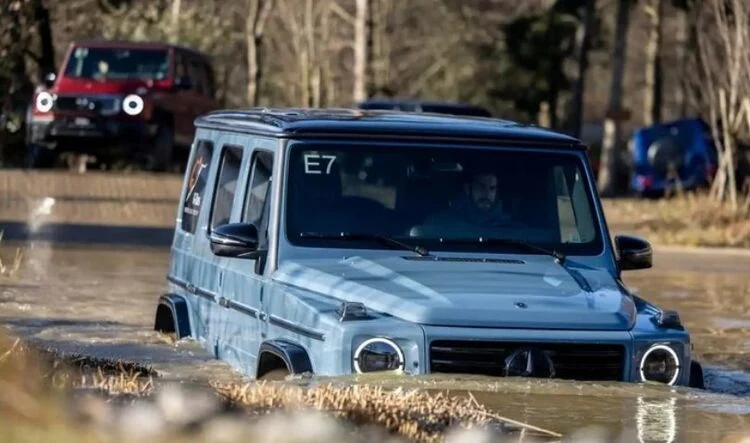
Mercedes-Benz has just registered a patent in Germany for a unique system that allows its all-wheel-drive SUVs to float on water and find their way back to shore. The system uses inflatable or foam-like buoyancy bags placed in each wheel well.
When afloat, the vehicle still uses its wheels to generate thrust and steering, while software controls torque and steering angle to maintain stability.
According to patent filings, inventor Joerg Kneip and Mercedes-Benz Group AG are the applicants at the German Patent Office. However, according to CarBuzz, this remains just an idea on paper and has not been linked to any of the company's production programs.
This buoyancy system uses removable components, helping the vehicle maintain balance when encountering currents or changing loads. When not in use, the inflatable bags are stored in the spare tire compartment, and the vehicle's air compressor inflates them before the vehicle crosses a river or body of water.
Although Mercedes' G-Class SUV is capable of wading through deep water, it is not designed to float and move on the surface. Once sufficient buoyancy is achieved, the vehicle still uses its wheels to move, with the wheels continuing to rotate and steer even after leaving the ground.
Adaptive suspension systems adjust the wheel angle, allowing them to function similarly to the rudder of a boat.
The engines that power the vehicle on the road will also generate thrust when the vehicle enters the water. The control system is capable of distributing different torque to each wheel, helping the vehicle fight the current and adjust its direction as it approaches the shore.
This system also facilitates the transition from floating to ground-based driving, while limiting sideways drift when the vehicle climbs ashore.
If this technology becomes a reality, it will expand the capabilities of off-road SUVs without requiring too many changes to their basic structure.
However, Mercedes-Benz will face numerous challenges, including corrosion resistance, watertightness, crash safety, and electrical system protection. Additionally, regulatory requirements and insurance demands will also impact the commercial viability of this model.
According to Vtcnews.vn