


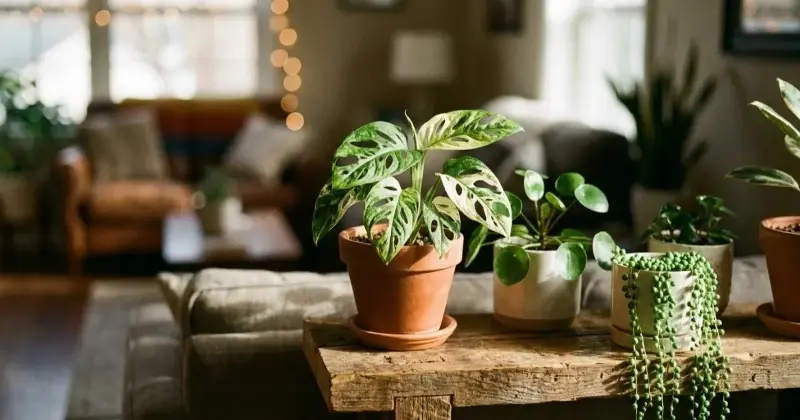
Summer is the time when many families take advantage of the opportunity to move their indoor potted plants out onto balconies, rooftops, or patios to "catch the sun." However, not all plants can adapt to an outdoor environment.
For plants native to tropical regions or accustomed to living in mild light conditions, high temperatures, intense sunlight, and hot winds can quickly weaken them.
According to gardening experts, the following plants should be kept indoors year-round to maintain their lush greenery.
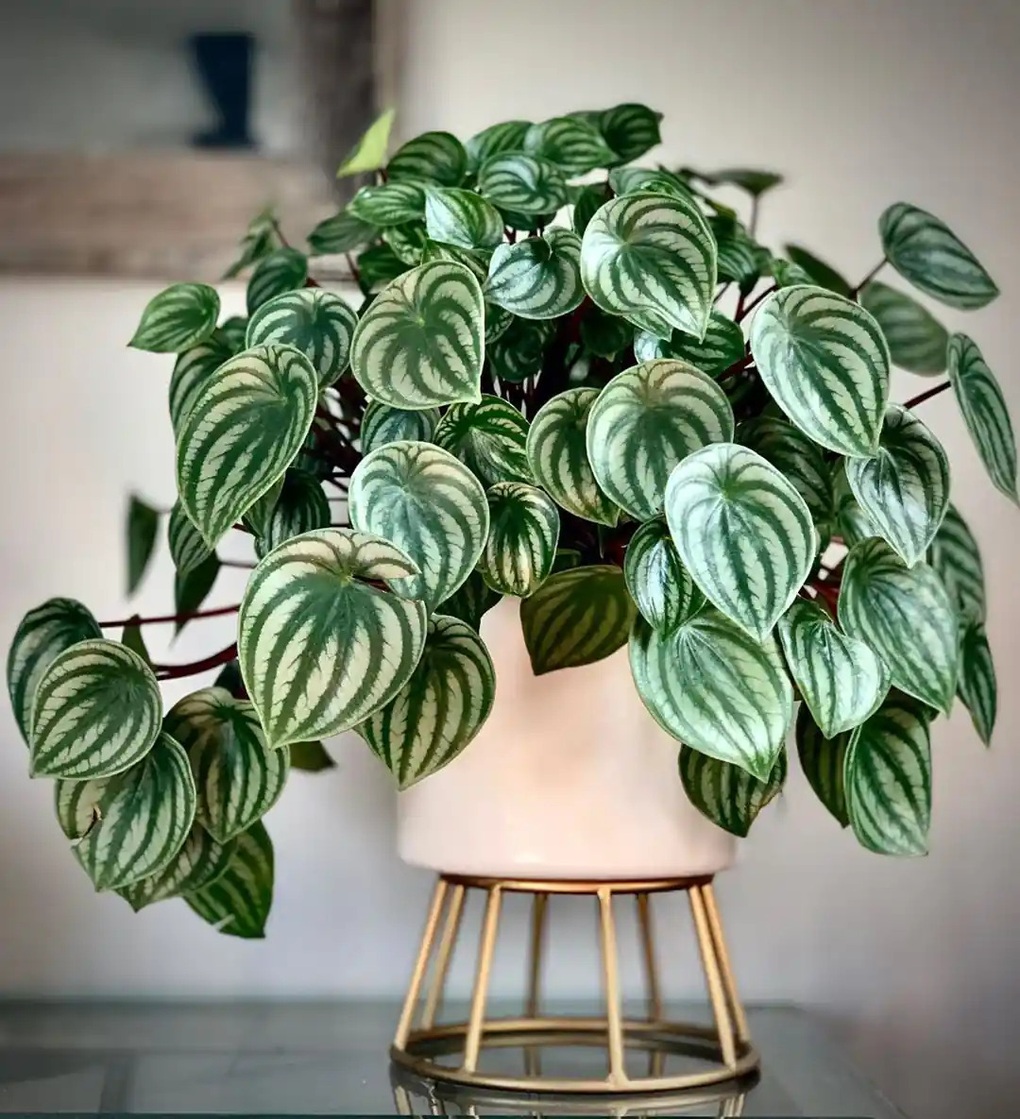
Peacock plant
With its strikingly patterned leaves, the peacock plant is often a popular choice for outdoor landscaping. However, it is one of the most sensitive plants to direct sunlight.

Peacock plant leaves easily burn in the summer sun (Photo: Be.green).
Peacock plant leaves are quite thin, making them susceptible to burning, curling edges, or wilting when exposed to intense sunlight. Instead of taking the plant outdoors, experts recommend placing it indoors in a location with diffused light, while maintaining consistent soil and air humidity.
Cleaning dust off the leaves also helps the plant photosynthesize better and reduces the appearance of spider mites.
Lily of the valley
The petunia is notable for its small, colorful flowers, but it is a very finicky plant when it comes to care. This plant particularly dislikes cold water clinging to its leaves or accumulating at the tips. If water remains for too long, the plant is very susceptible to damage.

The lily of the valley is only suitable for indoor environments (Photo: Gardener's Path).
For stable growth, place the plant near an east-facing window or in a location with soft light. When watering, avoid using water that is too cold. If water accidentally accumulates between the leaves, dry it immediately to prevent root rot.
Evergreen tree
The evergreen plant is popular for its compact size and dense foliage with many different shapes.
These are slow-growing plants that prefer stable temperatures and humidity. When moved outdoors, constant changes in sunlight, wind, and temperature can cause them to go into shock.
Evergreen plants prefer a stable environment rather than the open air outdoors (Photo: Casacor).
Experts recommend placing the plant in a location with strong but not direct sunlight, using a loose, well-draining potting mix, and avoiding exposure to cold winds.
Ferns
Many people hang ferns on their porches to create a cool atmosphere. However, many ornamental fern varieties, such as bird's nest fern, staghorn fern, or hair fern, are very vulnerable to direct sunlight.
In addition, this group of plants is quite "fussy" when it comes to watering. Overwatering or underwatering can both affect their growth.

Ferns need shade and consistent humidity (Photo: Greenenvy).
Specifically for bird's nest ferns, water should not be poured directly into the central core. If water remains there for too long, the plant risks rotting. Keeping the plant indoors makes it easier to control humidity and watering.
Velvet plant
Velvet leaf is impressive thanks to its prominent leaf veins and a variety of colors such as white, pink, red, or silver.

Velvet plant thrives best in enclosed spaces (Photo: Wera Plants).
Due to its small size and high humidity requirements, this plant is better suited to indoor environments than outdoor ones. The ideal location is a warm, calm space with consistent humidity to keep the leaves vibrant in color.
If you want to take a plant outdoors, remember these 3 principles.
According to experts, not all houseplants need to stay indoors. Some species can still be taken outside in the summer if properly cared for.
The most important thing is to avoid the afternoon sun because this is when the radiation intensity is highest, making it easy to burn the leaves and cause the soil in the pot to dry out quickly.
Instead, place the plant in a location with only bright sunlight or under a canopy or tree to receive diffused light. Also, check the soil moisture regularly, as outdoor plants lose water much faster than indoor plants.
Even a small change in plant placement can determine whether a potted plant continues to thrive or quickly wilts during hot weather. Understanding the characteristics of each plant will help keep your living space lush and green without requiring extensive care.