



In the early stages of life, it is quite common for children to have unclear pronunciation, lisp, or mispronounce some words.
However, if this condition persists as the child gets older, it could be a warning sign of a speech disorder and requires a specialist's examination for accurate assessment.
When is it considered normal to have a speech impediment?
In the early years of life, especially from 1-3 years old, children are in the process of learning pronunciation, memorizing vocabulary, and perfecting their language system. At this stage, it is completely natural for children to mispronounce words, speak unclearly, or omit sounds. This is because their speech organs (tongue, lips, jaw) are not yet fully developed, and their ability to listen and understand language is also still in the process of formation.
- When is it considered normal to have a speech impediment?
- Causes of speech impediments in children.
- Signs that indicate a child needs an early check-up.
- Can speech impediments be cured?
Typically, by the age of 4-5, children can pronounce most basic words clearly. If, after this age, a child still stutters, speaks indistinctly, or is incomprehensible to strangers, parents should be aware and consider taking the child for a medical examination.
Causes of speech impediments in children.
Speech impediments in children can stem from a variety of causes, including physiological, pathological, and environmental factors.
Certain structural abnormalities of the vocal organs can cause speech impediments in children, such as tongue tie, cleft lip and palate, or other oral deformities. These abnormalities directly affect the ability to control the tongue, lips, and airflow during speech.
Children with hearing impairments will find it difficult to accurately imitate sounds, leading to incorrect pronunciation. This is a fairly common cause, but it is easily overlooked if hearing is not checked early.
Certain medical conditions, such as cerebral palsy, brain damage, autism spectrum disorder, or Down syndrome, can affect a child's language and speech abilities. These children often require intensive and long-term intervention.
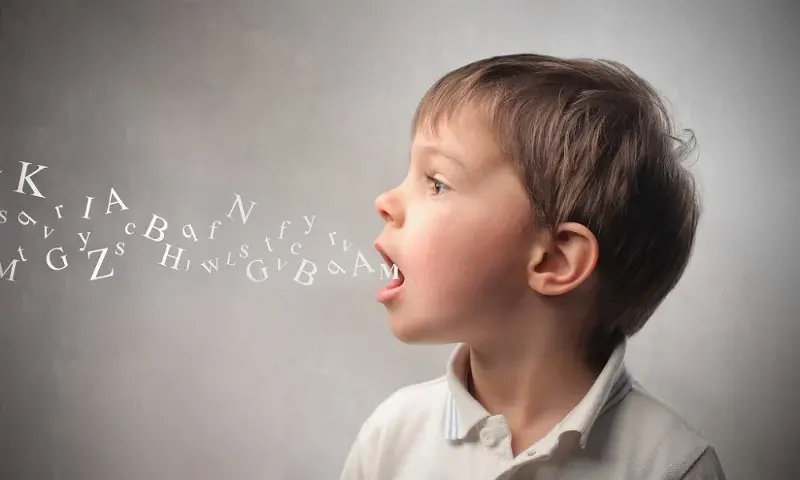
Parents should closely monitor their children's language development during their early years.
Children who have limited social interaction, lack family engagement, or live in environments where the language is not standardized are at a higher risk of developing speech impediments. Furthermore, adults imitating children's speech impediments can inadvertently lead to children developing incorrect pronunciation habits.
Signs that indicate a child needs an early check-up.
Not all cases of speech impediments are cause for concern, but there are some signs that indicate a child needs a more thorough evaluation:
Children over 4-5 years old still mispronounce many basic sounds; outsiders have difficulty understanding what the child says; the child stutters accompanied by delayed speech or a limited vocabulary; the child shows no reaction to sounds or is suspected of having hearing loss; the child has difficulty communicating and interacts little with those around them.
Early detection of these signs helps increase the effectiveness of interventions and limit long-term impacts on children's learning and communication abilities.
Can speech impediments be cured?
Most cases of speech impediments can be significantly improved if detected early and treated properly. It's crucial that parents don't take things for granted, nor should they wait for their child to "recover on their own" after the normal language development stage.
When taking a child to the doctor, the first step is a hearing assessment to rule out hearing loss as the cause. Afterward, the child will be examined by a speech therapist – someone who specializes in assessing and treating speech disorders.
The speech therapist will conduct a comprehensive assessment of the child's language abilities, including:
Pronunciation of each syllable; coordination of the lips, tongue, and jaw; ability to understand and use the language; level of interaction and communication.
Based on the assessment results, a suitable intervention program will be developed for the child. Exercises may include practicing correct pronunciation of individual sounds, identifying correct and incorrect sounds, practicing speaking simple words to longer sentences, and improving communication skills.
The exercises need to be performed regularly and consistently, with close cooperation between the family and the professional to achieve the best results.
Besides professional intervention, the role of parents is extremely important in helping children improve their speech impediments. Here are some things parents should keep in mind:
Regular communication with children: Talking, reading books, and telling stories helps children increase their vocabulary and learn correct pronunciation.
Clear pronunciation examples: Children learn by imitation, so adults need to speak correctly and clearly, avoiding mispronouncing words like children.
Patience and encouragement: Don't criticize or put pressure on children when they make mistakes; instead, gently correct and encourage them.
Create a positive language environment: Limit children's excessive exposure to electronic devices and encourage direct interaction.
Follow treatment instructions: Maintain your exercise schedule and attend follow-up appointments as directed by your specialist.
If speech impediments persist without treatment, children may face many difficulties in life, such as: limited communication skills, difficulty integrating with peers; impact on learning to read and write; reduced self-confidence and feelings of inferiority; and the risk of developing speech defects into adulthood. Therefore, early detection and intervention play a crucial role in helping children develop normal language skills.
In summary: Parents should closely monitor their children's language development during the early years. If any persistent abnormalities are observed, the child should be taken to a specialized medical facility for evaluation.
Speech impediments are not uncommon, but they are entirely treatable with timely intervention. Family support and expert assistance will help children develop comprehensive, confident, and effective communication skills in the future.