


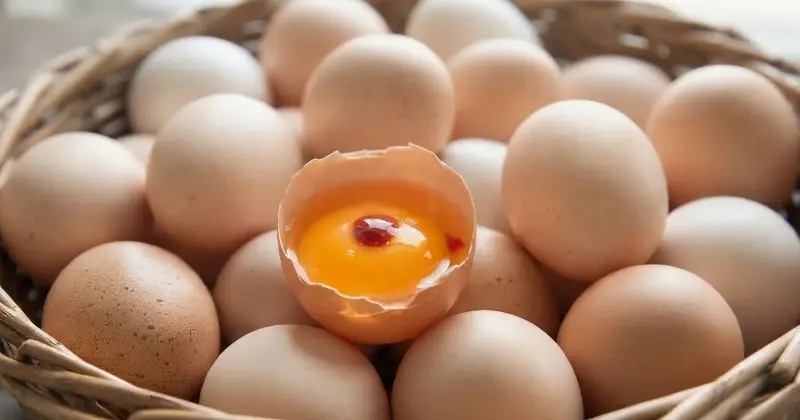
- 1. Why do blood spots appear on egg yolks?
- 2. Are blood spots in eggs common?
- 3. Is it okay to eat eggs with blood spots?
Eggs with blood spots are often mistakenly thought to be fertilized or carrying dangerous pathogens, leading to the wasteful discarding of countless amounts of fresh food. The truth behind these mysterious blood spots is quite different from what you might think. Let's unravel the real cause and explore their safety below.
1. Why do blood spots appear on egg yolks?
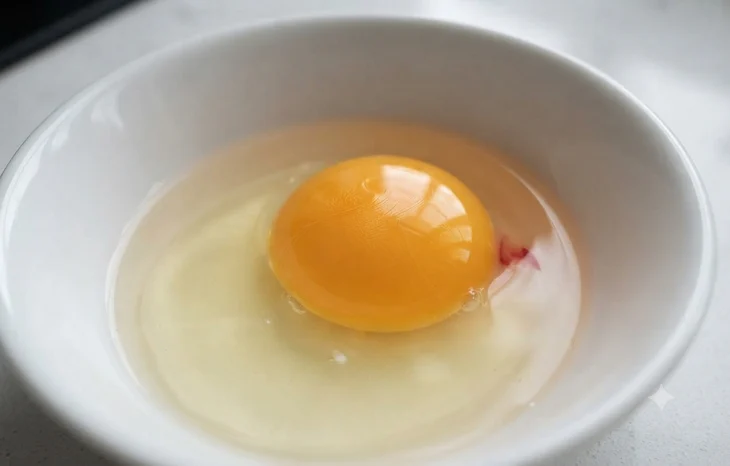
The presence of blood spots inside eggs is normal, perfectly safe to consume after cooking, and not a sign of illness.
Cracking a seemingly perfect egg into a pan and suddenly discovering a bloodstain can be alarming for anyone. Many people immediately assume these eggs are unsafe to eat. This misconception not only ruins the meal but also contributes to food waste by discarding eggs with bloodstains.
In fact, blood spots are just small drops of blood sometimes found on the surface of the egg yolk. Although commercially, egg producers consider them a defect, biologically, these blood spots form completely naturally during the egg-laying cycle in some hens.
Blood spots are the direct result of the rupture of tiny blood vessels in the ovaries or oviducts of a hen (where eggs travel from the ovaries to the outside environment). The ovaries of a healthy hen are full of tiny blood vessels, and occasionally a fragile blood vessel will accidentally rupture during egg laying.

Specifically, when the blood spot connects directly to the yolk, the bleeding most likely occurred in the ovary at the moment the egg was released from the follicle. The follicle is a fluid-filled sac containing several blood vessels. When it ruptures during egg laying, if any of the blood vessels are damaged, blood can deposit directly on the surface of the egg yolk.
Conversely, if blood spots appear in the egg white, it means that bleeding occurred later, after the egg had been released into the fallopian tube.
In addition, another type of spot that is often mistaken for blood spots is flesh spots. Unlike blood spots, flesh spots usually appear on egg whites as brown, red, or white deposits. They are often formed from small pieces of tissue that the egg accidentally picks up as it travels through the fallopian tube.
2. Are blood spots in eggs common?
In fact, statistics show that the frequency of blood spots and flesh spots is less than 1% in all types of eggs laid and harvested on farms.
The color of the eggshell is a major factor influencing the appearance of blood spots. The incidence of these defects is as high as 18% in hens laying brown eggs, compared to a much lower rate of just 0.5% in white eggs. Additionally, older hens nearing the end of their laying cycle, or young hens just starting to lay, tend to lay more eggs containing blood spots than normal.
External factors such as poor nutrition (vitamin A and vitamin D deficiencies) or a stressful living environment can also increase the likelihood of this condition occurring.
3. Is it okay to eat eggs with blood spots?
It's perfectly understandable to feel apprehensive and worried when preparing meals with eggs that have blood spots. However, according to leading health and food organizations such as the U.S. Department of Agriculture (USDA), eggs with blood spots are perfectly safe to eat as long as they are cooked properly.
It's important to note that the health risk doesn't come from the blood spots themselves, but from the way the eggs are prepared. Consuming raw or undercooked eggs, regardless of whether they contain blood spots or not, increases the risk of salmonellosis – a dangerous salmonella infection that can lead to symptoms such as diarrhea, high fever, and abdominal cramps.
However, it's important to remember that if you crack an egg open and see the egg white has changed color to pink, green, or purple, it indicates that the egg has been contaminated with spoilage bacteria and must be discarded immediately.
So what do you do if you accidentally crack open a fresh egg and find a blood spot? There are a few simple ways to handle this situation without wasting any:
- If the blood spot is small and doesn't spoil the taste, beat it up and mix it into the rest of the egg when cooking (like in an omelet or scrambled eggs).
- If you don't feel comfortable eating that blood spot, simply remove it from the egg yolk and discard it before cooking. Meat spots can also be removed in a similar way.