


Cardiovascular health is influenced by overall diet and lifestyle. According to the American Heart Association (AHA) nutritional guidelines, a heart-healthy diet should prioritize vegetables, fruits, whole grains, healthy protein sources, fiber-rich foods, and unsaturated fats; while limiting saturated fats, added sugar, and salt.
- 1. Suggestions for some types of nuts that are good for cardiovascular health.
- 1.1. Flax seeds are good for cardiovascular health.
- 1.2. Chia seeds
- 1.3. Pumpkin seeds
- 1.4. Sunflower seeds
- 1.5. Sesame seeds
- 2. How can you eat nuts to benefit your heart?
Nuts and seeds are one of the food groups that can be included in this diet. They provide unsaturated fats, fiber, plant-based protein, and many micronutrients. When used to replace foods high in saturated fats, unsaturated fats can help improve LDL cholesterol levels and contribute to a reduced risk of cardiovascular disease.
1. Suggestions for some types of nuts that are good for cardiovascular health.
1.1. Flax seeds are good for cardiovascular health.
Flaxseed is notable for its high content of alpha-linolenic acid (ALA), a plant-based form of omega-3 fatty acid. In addition, flaxseed contains fiber and lignans – a group of bioactive plant compounds. Several studies have examined the impact of flaxseed on cardiovascular risk factors.
A meta-analysis of 18 randomized trials published in 2025 noted that flaxseed supplementation was associated with reduced systolic and diastolic blood pressure in individuals with cardiovascular risk factors.
You can use ground flax seeds to sprinkle on porridge, yogurt, smoothies, or other dishes.
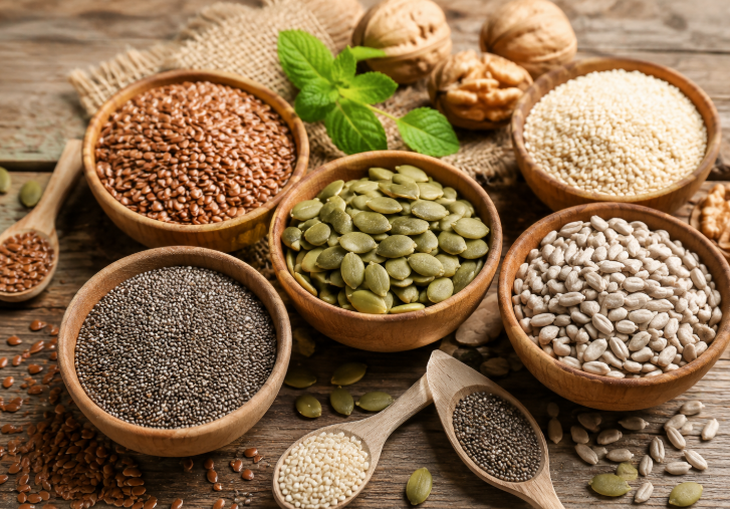
Some types of nuts provide unsaturated fats, fiber, and many vitamins and minerals that are good for cardiovascular health.
1.2. Chia seeds
Chia seeds provide fiber, ALA, plant protein, and many minerals. Their significant fiber content is one of the reasons this food is often included in diets aimed at controlling cholesterol and improving metabolic health. Dietary fiber plays a crucial role in cardiovascular health.
Chia seeds can be added to yogurt, oatmeal, or soaked in water before use.
1.3. Pumpkin seeds
Pumpkin seeds contain unsaturated fats, protein, magnesium, zinc, and several antioxidant compounds. Magnesium is involved in many physiological processes, including neuromuscular function and blood pressure regulation.
It's best to prioritize pumpkin seeds that are unsalted or lightly salted, as adding a lot of salt can increase the sodium intake, which is not suitable for people who need to control their blood pressure.
1.4. Sunflower seeds
Sunflower seeds provide vitamin E, unsaturated fats, plant protein, and several minerals. Vitamin E acts as an antioxidant, helping to protect cells from damage caused by free radicals. Sunflower seeds also contain phytosterols—plant compounds with a structure similar to cholesterol. When consumed in the right diet, phytosterols may contribute to better cholesterol control.
Similar to other nuts, the processing method is very important. You should choose unsalted or low-salt sunflower seeds instead of roasted, salted, seasoned, or sugar-laden varieties.
1.5. Sesame seeds
Sesame seeds contain unsaturated fats, fiber, magnesium, calcium, and lignans. They are a familiar ingredient in many Vietnamese dishes, used to enhance the flavor of vegetables, salads, porridge, or other meals. You should include sesame seeds as part of a varied diet.
2. How can you eat nuts to benefit your heart?
The AHA recommends nuts and seeds as a good source of healthy fats, protein, and fiber. A small serving of about 28g of unsalted nuts is a commonly used option in a healthy diet.
When choosing nuts, prioritize whole nuts with little or no salt, and limit those that are sugared, fried, or high in added fat. Also, don't focus on just one type of nut; rotate through different varieties to diversify your nutrient intake.
More importantly, nuts should be used to replace unhealthy foods, such as salty or saturated fat-rich snacks, rather than being consumed in large quantities. Because nuts are still high in calories, overconsumption can significantly increase the total calorie intake.
Readers are invited to read more: