


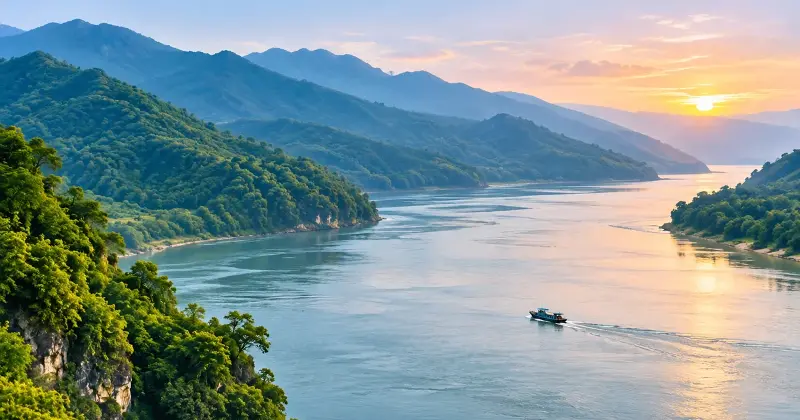
From prehistoric settlements with intricate spatial planning to traces of royal power in ancient states, four new archaeological discoveries are opening up deeper insights into the developmental history of the Yangtze River region.
According to information provided by the National Cultural Heritage Administration of China (NCHA), the four discoveries announced at a conference held by the agency in Beijing relate to the Laohudun site in Hubei province, Taohuahe in Sichuan province, Fanshan in the Liangzhu complex in Zhejiang province, and Lingtoushang in the Qiaomailing complex in Jiangxi province.
As the world's third longest river and China's longest, the Yangtze River has long been considered one of the crucial cradles of Chinese civilization. New discoveries not only add to the documentation of ancient communities but also reveal the different paths that early civilizations formed and developed along this river.

Traces of cultural exchange and ancient copper mining activities.