


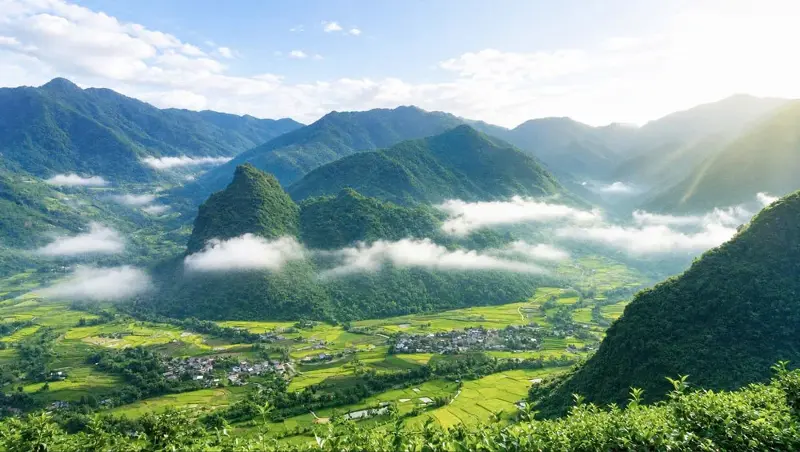
This is also a special opportunity for Dong Phuc to make its mark at the Thai Nguyen International Tea Festival 2026, affirming its position as one of the "Five Great Famous Teas" in the homeland of "First-Class Famous Tea".
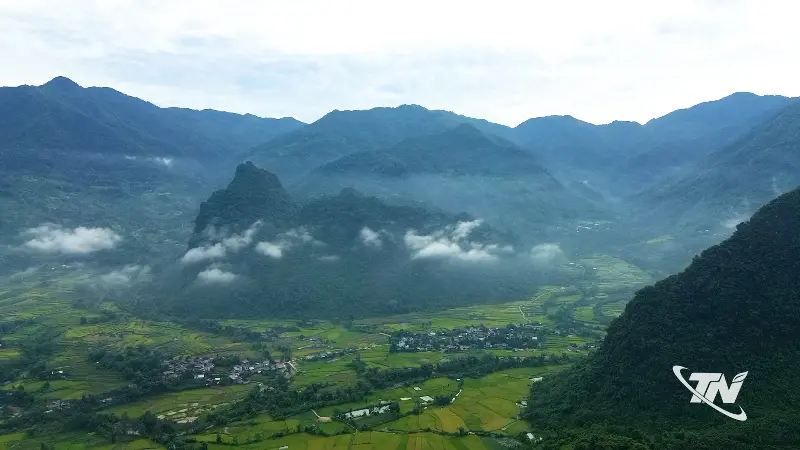 The cool climate in the high mountainous area of Dong Phuc commune is suitable for growing Shan Tuyet tea.
The essence distilled from the earth and sky.
Early in the morning in Shan Tuyet Tea Village, Dong Phuc Commune, clouds drift lazily down from the mountain slopes into the valley, weaving through the ancient tea trees. In the thin mist, the gnarled, moss-covered tea trunks appear as witnesses to time. The ancient Shan Tuyet tea trees, with their wide canopies and freely spreading branches amidst the vast forest, create a unique and rarely found landscape.
The cool climate year-round, large diurnal temperature fluctuations, and rich, moist soil have created a unique ecological environment perfectly suited to the Shan Snow tea variety. Having adapted to nature for hundreds of years, the native tea plants are resistant to pests and diseases, producing thick buds covered in a fine, white downy hair like snow. When processed, the tea has a delicate aroma, a rich flavor, a mild astringency, and a deep, sweet aftertaste, bearing the distinct mark of the mountains and forests.
The unique value of Bang Phuc Shan Tuyet tea comes not only from its natural conditions but also from the traditional farming methods preserved through generations. The local people mainly weed, mulch, care for, and protect the tea plants.
The grass is mowed two to three times a year, but a layer of vegetation is left to cover the soil, limit erosion, and retain moisture. Weeding is also done on dry days to avoid soil runoff.
In particular, the growers do not use inorganic fertilizers, herbicides, or chemical pesticides, thereby protecting the ecosystem and creating a clean source of raw materials.
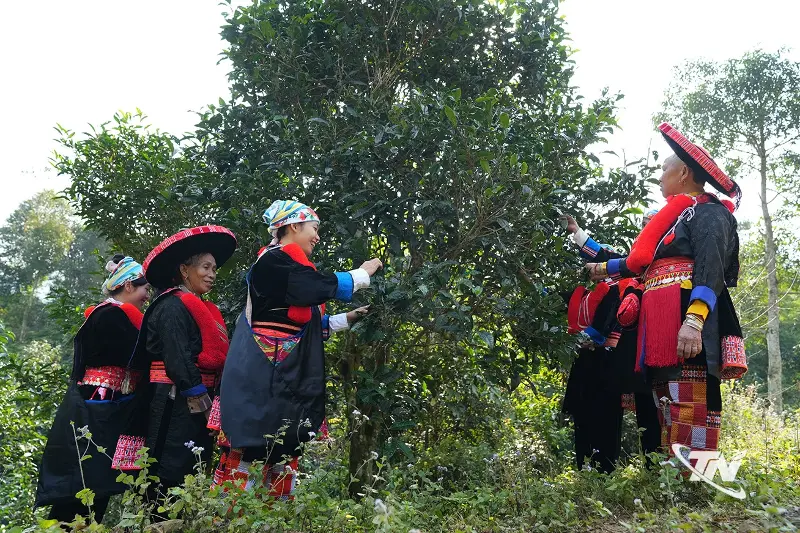 The Dao ethnic people in Bang Phuc 3 village currently own about 400 ancient Shan Tuyet tea trees.
In Dong Phuc, organic tea production is not a new model, but rather a continuation of traditional farming practices, based on respect for nature and the accumulated experience of the local people.
Ms. Phung Mui Chay, a resident of Bang Phuc 3 village, shared: "The Shan Tuyet tea trees have grown and developed alongside the Dao people in our village for hundreds of years. For the villagers, these ancient tea trees are like members of the community, always cherished and protected."
The value of the tea-growing region is increasingly being affirmed. The cluster of 12 ancient Shan Tuyet tea trees in Dong Phuc has been recognized as a Vietnamese Heritage Tree. In 2018, Bang Phuc Shan Tuyet tea was granted a collective trademark certificate; by the end of 2025,
The Bang Phuc Shan Tuyet tea village has been recognized by the Provincial People's Committee as a provincial craft village. These are important milestones, affirming the historical, ecological, genetic, and cultural value of the tea-growing region.
 The production facility of SACHTEA Joint Stock Company is located in Bang Phuc 1 village, Dong Phuc commune.
According to Mr. Ha Van Kien, Head of the Self-Management Team of Bang Phuc Shan Tuyet Tea Village, this recognition also places a greater responsibility on the government and the community in preserving ancient tea trees, maintaining indigenous tea varieties, protecting the ecological environment, and maintaining safe farming methods. The self-management team regularly disseminates information and encourages people to continue producing organically, ensuring a clean source of raw materials for processing.
Bringing the aroma of Dong Phuc tea to a wider audience.
For a long time, the people of Bang Phuc have been involved in tea harvesting, processing, and making fragrant cups of tea. However, for tea cultivation to truly become a sustainable livelihood, the value of the product cannot be limited to selling fresh tea buds or small-scale manual processing.
In recent years, Dong Phuc commune has gradually formed a link between tea growers and cooperatives and businesses involved in processing and consuming the product. Currently, there are cooperatives such as Hong Ha, Bang Phuc, and Binh An Green Agriculture , along with several businesses participating in building brands and expanding markets. The tea industry is providing stable employment for nearly 1,000 local workers.
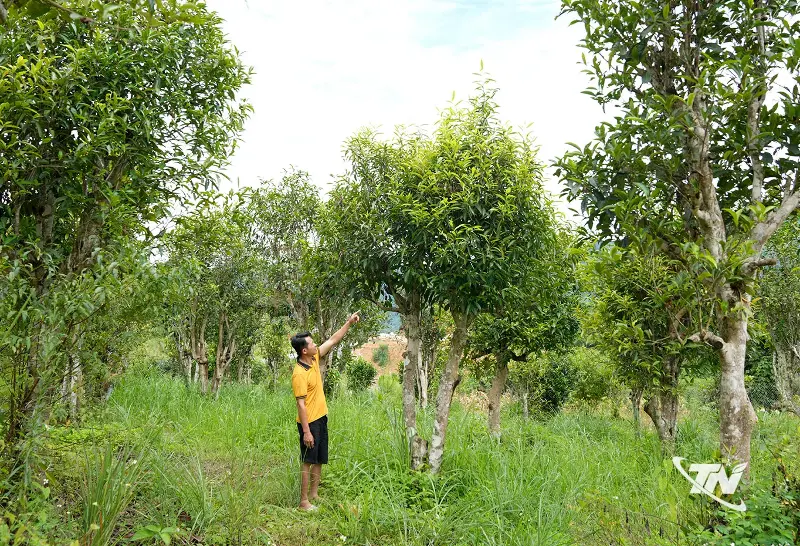 Mr. Ha Van Kien, Head of the Self-Management Team of Bang Phuc Shan Tuyet Tea Village, introduces the area for preserving ancient tea trees in Dong Phuc commune.
One exemplary model is SACHTEA Joint Stock Company (Bac Kan), which collaborates with households in Bang Phuc 2 village to develop a 40-hectare organic raw material area. Using indigenous Shan Tuyet tea as the raw material, the company has developed many high-value-added product lines such as organic Shan Tuyet black tea, white tea, and yellow tea.
Thanks to diversified processing methods, the same ingredients can create many different layers of flavor. Some products have received USDA organic certification and are beginning to be exported to the United States and Japan .
Mr. Nguyen Thanh Binh, Deputy Director of SACHTEA Joint Stock Company (Bac Kan), assessed: The land conditions, climate, and farming practices of the people of Bang Phuc are very suitable for developing organic tea. Shan Tuyet tea here has a special aroma and taste; when processed into fermented tea varieties, it creates a unique identity compared to many other raw material regions.
In reality, the traditional, chemical-free farming methods of the people of Bang Phuc can become a competitive advantage when standardized through production processes, quality control, and traceability. With continued investment in deep processing and product diversification, Dong Phuc Shan Tuyet tea will have more opportunities to conquer various market segments and expand exports.
Expanding the development area for Shan Tuyet tea.
Besides preserving the existing tea-growing area, Dong Phuc also aims to expand the development space for Shan Tuyet tea. According to the draft General Planning of the commune until 2045, the locality plans to allocate approximately 2,000 hectares of suitable land for the development of a large-scale concentrated tea growing area. This orientation aims to effectively exploit the potential of the land and climate, preserve the native tea variety, and create a stable source of raw materials for processing facilities.
Mr. Trieu Duc Thong, Vice Chairman of the People's Committee of Dong Phuc commune, said that the locality has identified planning as a priority task; at the same time, it focuses on breeding native tea varieties to support people in expanding the area, applying science and technology to improve productivity and quality, and continues to have mechanisms to encourage businesses to invest in processing.
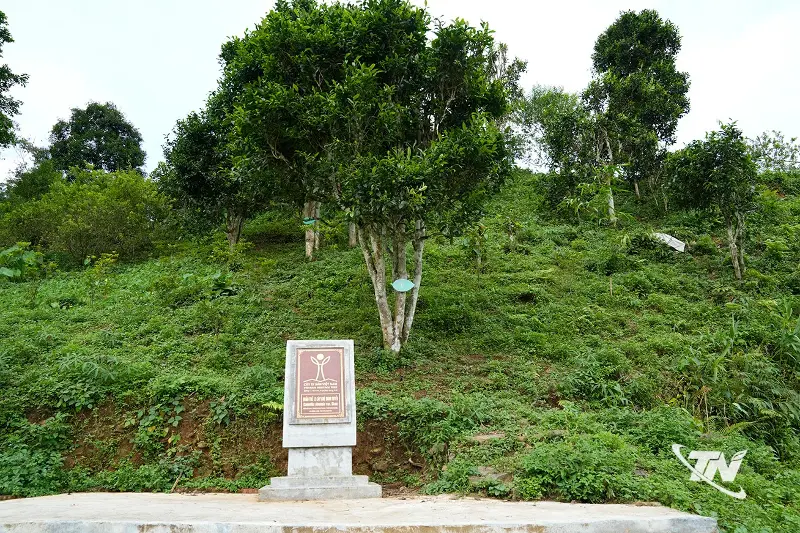 The cluster of 12 ancient Shan Tuyet tea trees in Dong Phuc has been recognized as a Vietnamese Heritage Tree.
Simultaneously, the commune proactively invites businesses to survey, invest, and purchase products. Currently, Quan Chu Tea Joint Stock Company is researching a project to preserve and restore ancient tea trees, develop the Shan Tuyet tea growing area associated with community-based ecotourism; survey organic raw material areas and research the development of product lines such as black tea, white tea, and Shan leaf tea.
The locality also aims to establish a geographical indication for Bang Phuc Shan Tuyet tea; invest in modern processing facilities; develop specialty teas, tea bags, herbal teas, gift teas, and OCOP products. VietGAP and organic certified tea growing areas will continue to be expanded, linked to the conservation and restoration of ancient tea trees and strict control of product origin.
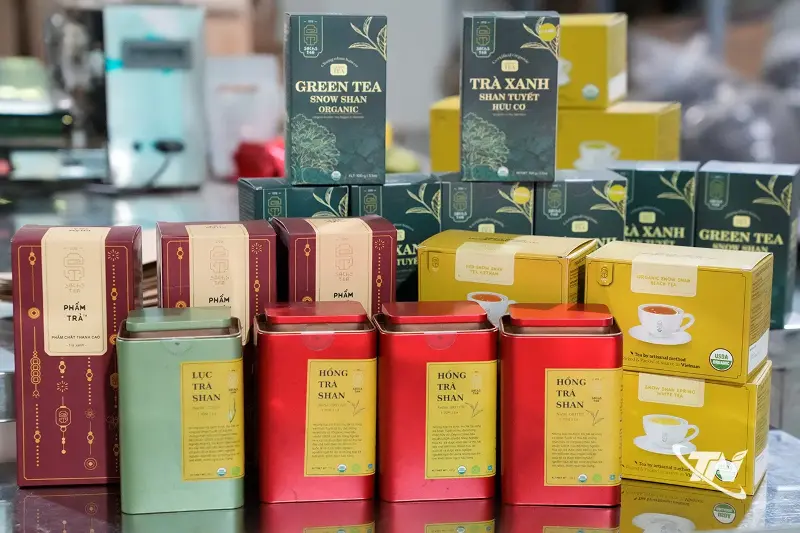 These tea products are made from ingredients sourced from the Bang Phuc Shan Tuyet Tea Village.
The 2026 Thai Nguyen International Tea Festival will be an opportunity for Dong Phuc to bring its products closer to domestic and international consumers, distributors, and partners. It will also be a chance for the locality to tell its own story within the cultural space of Thai Nguyen tea – a story about ancient tea trees growing amidst the clouds and mountain winds, about natural farming methods, about the cultural identity of the highland people, and the aspiration to bring the flavors of the mountains to a wider audience.
With values preserved through generations and a well-structured development plan, Dong Phuc is gradually asserting its rightful position as one of the "Five Great Tea Regions" of Thai Nguyen, allowing the flavor of "tea in the clouds" to spread to tea lovers both domestically and internationally.