


1. Ginger - From a familiar spice to a medicinal herb in traditional medicine.
Ginger is a spice found in most Vietnamese kitchens and has long been used as a medicinal herb in traditional Eastern medicine. Depending on the preparation method, ginger can be transformed into various remedies with different properties and applications.
Among these, dried ginger (can khương) and roasted ginger (bào khương) are two common forms of processing. Although both are made from ginger root, the processing alters the properties and medicinal uses of the herb. Therefore, these two types cannot be used completely interchangeably.
1.1 Dried ginger: Warms the body, dispels cold, supports people with a cold constitution.
According to traditional medicine, dried ginger is made from mature ginger roots after cleaning and drying or sun-drying. This process reduces the water content in the ginger root and is believed to help concentrate its medicinal properties. Dried ginger has a pungent taste, a warm nature, and acts on the spleen, stomach, heart, and lungs meridians. Traditional Chinese medicine often uses this herb to warm the body, dispel cold, restore yang, and help improve symptoms caused by cold pathogens.
Common cases where its use is considered include:
- People who are prone to stomach chills and abdominal pain due to cold.
- My hands and feet are cold, and I'm afraid of the cold.
- Diarrhea caused by deficiency and coldness in the spleen and stomach.
- Vomiting due to a cold stomach.
In some traditional herbal remedies, dried ginger is combined with other herbs to treat more serious illnesses according to the principles of traditional medicine. However, its use requires the prescription of a traditional medicine practitioner and should not be used without medical supervision.
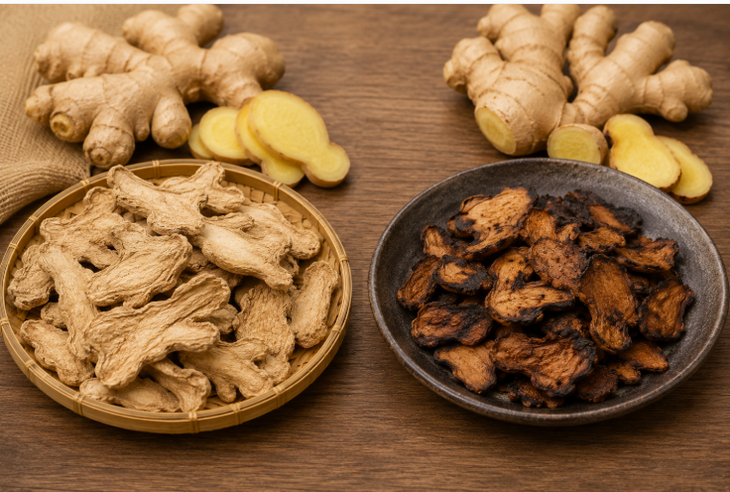
Dried ginger (can khương) and roasted ginger (bào khương) are both processed from ginger root, but they have different processing methods that alter their properties and uses according to traditional medicine; therefore, they should not be used interchangeably.
1.2 Roasted ginger: It has a milder, more mellow nature and is often used in Traditional Chinese Medicine to stop bleeding.
Roasted ginger (bao jiang) is made by drying and roasting the ginger until the surface turns dark brown or slightly charred. According to traditional medicine, this processing reduces the strong cooling effect of dried ginger while increasing its warming and hemostatic properties.
Dried ginger is often used in remedies for people with bleeding caused by cold deficiency, such as:
- Menorrhagia or prolonged menstruation due to cold deficiency.
- Gastrointestinal bleeding is of the cold deficiency type.
- Some cases of postpartum hemorrhage are treated as directed by a doctor.
Folklore also includes the practice of using roasted ginger water combined with red dates or brown sugar to warm the body after childbirth or to help reduce the feeling of coldness during menstruation. However, these methods are mainly based on traditional experience and do not replace medical treatment when there is a medical condition.
2. Differentiating between fresh ginger, dried ginger, and roasted ginger.
The three forms of ginger have different properties, and therefore their uses are also different:
- Fresh ginger (Sinh Khương) is often used when first catching a cold caused by wind-cold, helping to warm the body, promote sweating, and reduce chills.
- Dried ginger (can khương) is more suitable for cases of spleen and stomach deficiency with cold symptoms, abdominal coldness, or poor digestion due to cold.
- Roasted ginger (bao jiang) is primarily used in traditional Chinese medicine to warm the meridians and stop bleeding; it is not a suitable option for treating colds.
Using the correct form of ginger will help maximize its effectiveness according to traditional medicine principles and avoid inappropriate use.
3. How to use ginger appropriately in daily health care.
In daily life, ginger remains a beneficial food if used correctly:
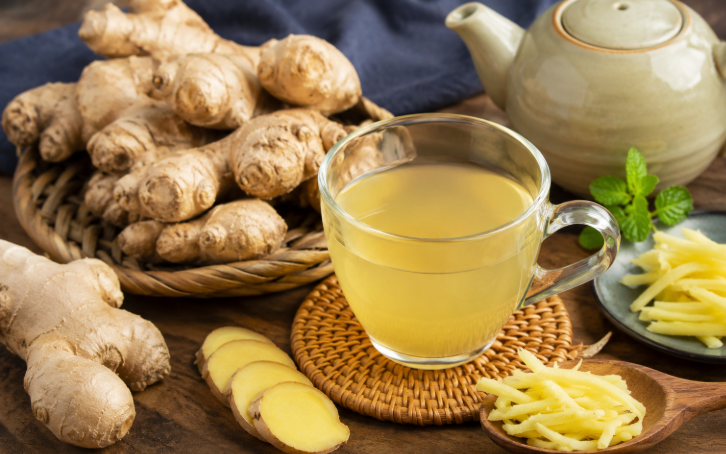
- People who frequently stay in air-conditioned rooms and are prone to stomach chills can consume a moderate amount of ginger tea combined with tangerine peel, as directed by a traditional medicine practitioner.
- For women who experience menstrual cramps due to a cold constitution, some folk remedies using roasted ginger and red dates are also passed down. However, if menstrual cramps are prolonged, menstrual flow is abnormal, or accompanied by other symptoms, patients should consult a specialist to determine the cause instead of just using supportive measures.
- In addition, people taking anticoagulants, diabetes medication, pregnant women, or those with chronic illnesses should consult their doctor before using ginger as a supportive treatment.
Both dried and roasted ginger are important medicinal ingredients in traditional medicine, but their uses differ due to changes in processing that alter their medicinal properties. Choosing the right type of ginger should be based on one's health condition and the specific ailment according to Traditional Chinese Medicine; it should not be used as a substitute for prescribed medication. For daily health care purposes, ginger should only be used in moderation and combined with a healthy diet and lifestyle for optimal results.