


Lovneet Batra, a clinical nutritionist in Delhi, India , says that eating fruit immediately after a meal generally does not cause fermentation or affect the digestive process in the stomach.
Eating fruit after a meal does not cause the fruit to ferment.
The stomach secretes hydrochloric acid with a pH ranging from 1.5 to 3.5. This environment is highly acidic and unfavorable for bacterial fermentation, according to NDTV (India).
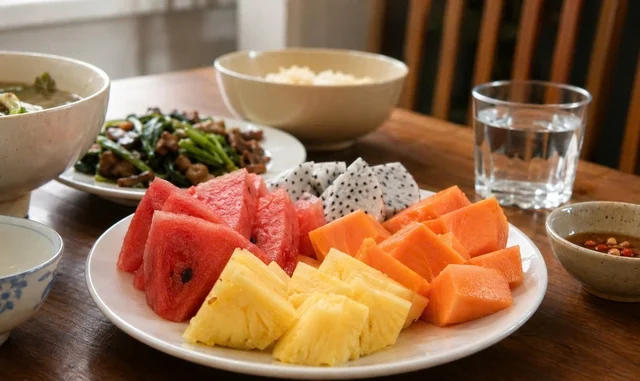
Eating fruit immediately after a meal generally does not cause fermentation or affect the digestive process in the stomach.
Illustration: N.Vy created using AI
When you eat fruit with a meal containing protein, fat, and complex carbohydrates, your stomach will digest the food more slowly. This is a normal function of the digestive system.
Ms. Batra explained that soluble fiber in fruit can slow down the emptying of the stomach. This helps the body feel fuller for longer and regulates nutrient absorption.
A study in the European Journal of Clinical Nutrition showed that pectin in apples and citrus fruits can slow down gastric emptying. This mechanism helps limit the rapid increase in blood sugar after meals.
What are the effects of eating fruit after a meal?
Eating fruit after a meal is not harmful to most healthy people. However, the timing of eating it can make a difference.
When you eat fruit on an empty stomach, the simple sugars in the fruit pass through the small intestine more quickly. If you eat it after a main meal, the fiber, protein, and fat will slow this process down. As a result, the body can maintain a feeling of fullness for longer and reduce snacking.
For people with type 2 diabetes or insulin resistance, eating fruit along with meals containing protein and healthy fats may help better control blood sugar.
A study published in the Journal of Nutritional Science showed that consuming fiber from fruit with meals helps control post-meal blood sugar better than consuming rapidly absorbed sugars alone.
However, people with irritable bowel syndrome or sensitive digestive systems may experience bloating when eating large amounts of fructose-rich fruits like watermelon, pears, and grapes after meals.
A more appropriate way to eat fruit.
The timing of fruit consumption is less important than the total amount of fruit consumed each day. Each person should adjust their eating times based on their body's digestive capacity.
If eating fruit right after lunch makes your stomach feel heavy or bloated, you can switch to eating it around 11 a.m. or 4 p.m.
Portion sizes also need to be controlled. A small portion of berries or a small apple can meet your needs without overloading your digestive system.
Whole fruit is also better than juice because it retains its fiber. Removing the fiber during juicing can cause blood sugar to rise more quickly.
People prone to gastroesophageal reflux should avoid eating oranges and lemons late at night, as they can trigger symptoms.
For healthy individuals, eating fruit immediately after a meal remains a safe and better option than desserts high in refined sugar.
People who frequently experience bloating can eat fruit 1 to 2 hours between main meals to feel more comfortable.