


As Paris, Rome, and Santorini become increasingly crowded, a new trend is emerging: travelers are beginning to seek out destinations untouched by the throngs.
A paradox is reshaping the world's tourism map: the most popular destinations are at risk of becoming less attractive due to overcrowding.
Every day, around 30,000 people flock to the Trevi Fountain in Rome. Paris, Barcelona , and Amsterdam also face similar pressure as crowds concentrate on certain attractions, neighborhoods, and during peak tourist seasons.
When social media check-in photos drive millions to a single destination, the experience of " traveling to escape the crowds" becomes increasingly valuable.
That's also why Intrepid Travel continues to publish its "Not Hot List" - a list of underrated destinations with modest visitor numbers but ready to welcome more tourists.
Destinations are selected based on three factors: low tourist numbers, sufficient tourism capacity, and emerging drivers such as infrastructure, connectivity, community initiatives, or major events.

Here are 10 interesting names for 2027.
1. Samburu, Kenya : A safari without the crowds.
While Kenya immediately brings to mind Maasai Mara, Samburu offers a different version of African safari: vast, unspoiled, and significantly less crowded.
Samburu National Park currently receives only about 30,000-40,000 visitors annually, while Maasai Mara attracts around 300,000. This difference makes Samburu a noteworthy option for those wishing to observe wildlife in a less disturbed environment.
What makes Samburu special is its "Samburu Special Five" – a group of five distinctive animal species including the netted giraffe, Grevy's zebra, Somali ostrich, East African oryx, and gerenuk.
This might be one of the rare places where visitors still feel like they're exploring a Kenya they're not yet completely familiar with.
2. Mettia, Georgia : A mountain city for those who love to travel.
Nestled in the Caucasus Mountains, Mestia is like a secret that trekking enthusiasts are reluctant to share too widely.
This highland town currently welcomes fewer than 100,000 visitors a year – a very small number compared to the 120 million visitors in the entire Alps region. The mountain ranges, trekking routes, and almost pristine scenery are what make Messia so special.
Currently, Mettia is receiving further investment in infrastructure and connectivity. As accessibility improves, a region traditionally geared towards adventurous travelers could quickly enter the radar of the mass market.
Therefore, if you want to see Mettia while it still retains its "little-known" feel, 2027 might be the right time.
3. The Northern Jordan Plateau : A Very Different Jordan
When Jordan is mentioned, Petra and the Wadi Rum desert often immediately come to mind for tourists.
But the north of the country tells a completely different story.
Greener highlands, mountain reserves, trekking routes, and homestays run by local people are creating a tourism product that is close to the community.
The appeal lies in the contrast: the Jordan that many people still picture as a desert and rocky city boasts verdant mountains, a pleasant climate, and a rich, distinctive rural life.
For travelers who have been to Petra, this could be a reason to return to Jordan and discover a different side of this Middle Eastern country.
4. Whitehorse, Canada : Discovering winter in the far north.
Whitehorse, located in the Yukon in northwestern Canada, is being positioned as a gateway to Arctic experiences and indigenous cultures.
The destination's appeal lies in its vast natural landscapes, outdoor activities, and community-led experiences. Intrepid considers it one of the regions capable of offering a distinct North American experience compared to familiar travel routes.
With the growing trend towards seeking out nature destinations, slow travel, and authentic local experiences, Whitehorse has many advantages that could help it move closer to becoming one of those sought-after destinations.
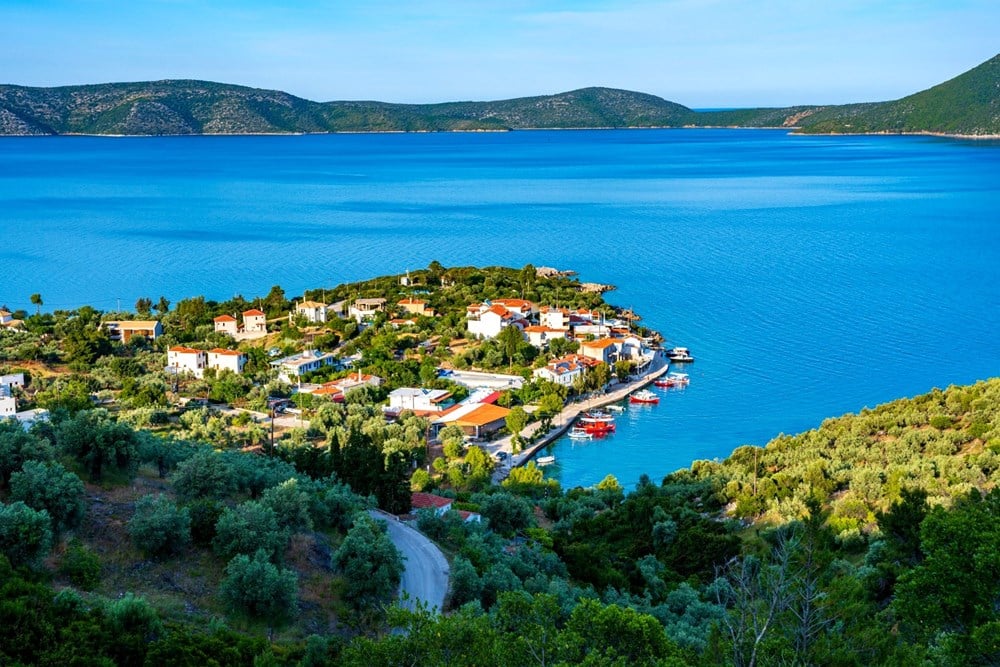
5. Alonnisos, Greece : When travelers start getting tired of overcrowded islands.
Santorini and Mykonos are already very famous. But Greece still has islands where visitors can find blue seas, small towns, and a relaxed pace of life without the crowds. Alonnisos is one of them.
Located in the Northern Sporades archipelago, the island is expected to welcome only about 70,000 visitors in 2024. It is also home to the Alonnisos and Northern Sporades National Marine Park – Europe's largest marine reserve – and Greece's first underwater museum at the Peristera shipwreck.
For travelers who love the sea but want to avoid the "hot spots" of the Mediterranean, Alonnisos could be a name worth adding to their list.
6. Dili, Timor-Leste : A Southeast Asia that is still very much a nascent stage.
Even in Southeast Asia, there is still a capital city that many international tourists have yet to visit: Dili, Timor-Leste.
This country lies outside the region's popular tourist routes, but is gaining new flight paths, improved infrastructure, and community-based tourism experiences.
The sea, coral reefs, mountains, and local culture create an allure that is very different from the familiar resort centers in Southeast Asia.
Dili could therefore be a good choice for groups of travelers looking for the feeling of "going to a place my friends haven't been to."
7. Pekoe Trail, Sri Lanka : Hiking through the tea plantations.
Sri Lanka is already well-known to many tourists, but the Pekoe Trail takes them away from the familiar routes.
This is a long route that passes through tea-growing regions, villages, and native forests, suitable for slow trekking, exploring nature, and connecting with local communities.
Instead of rushing through a series of check-in points over a few days, tourists can spend more time walking, chatting, enjoying the scenery, and experiencing life in the Sri Lankan countryside.
That's the kind of experience that's increasingly sought after: less rushed, more connected.
8. Liepāja, Latvia: Europe's New City of Culture
Liepāja has a unique advantage: in 2027 it will be the European Capital of Culture.
With over 500 cultural events planned for the year, this Baltic coastal city has become a new destination for lovers of European art, music , and culture. The city also boasts an approximately 8km long beach, offering the potential to combine cultural tourism with seaside relaxation.
This is the kind of destination that can change very quickly, in just one year.
While Riga is already well-known to European tourists, Liepāja could become a new name on the Baltic tourism map in 2027.
9. Carretera Austral, Chile : A route for those who love to travel far.
There are journeys where the destination isn't a specific city or landmark. Carretera Austral in Chile is one such journey.
The Trans-Patagonian Trail stretches approximately 770 miles, traversing fjords, glaciers, forests, and vast natural landscapes. It is considered a less crowded option compared to many other popular Patagonian routes.
Perhaps the most appealing aspect lies in the journey itself: driving along long roads, stopping before a lake, a forest, or a mountain range, and then continuing on.
For those seeking a truly authentic road trip, Carretera Austral is a name worth considering.
10. Dalsland, Sweden : When "going slow" becomes a luxury experience.
The Dalsland, often referred to as Sweden's lake region, boasts over 2,000 lakes, along with forests and expansive open spaces perfect for kayaking, cycling, hiking, and camping. A new railway line connecting Malmö with Oslo makes the area more accessible, opening up opportunities for the Dalsland to gain wider recognition.
The most appealing thing about Dalsland isn't any particular tourist landmark. It's the feeling of moving at a slower pace.
When "few people know" becomes a new competitive advantage.
The common thread among the 10 destinations on the Intrepid Travel list isn't that they're completely unfamiliar. Many have long boasted beautiful scenery, unique cultures, or attractive tourism products. The novelty lies in the timing.
These places are seeing the emergence of new flight routes, infrastructure, new roads, cultural events, or community-based tourism models. In other words, they are now well-equipped to accommodate more visitors but are not yet overwhelmed.
That's also the noteworthy message behind "Not Hot List 2027": the future of tourism may not lie in finding another famous check-in spot, but in choosing the right place to go.
As famous squares, heritage cities, and iconic islands become increasingly crowded, a lesser-known beach, a mountain town, a forest trail, or a remote countryside area is becoming the new luxury.
And for travelers who love the thrill of discovery, perhaps the most exciting thing about 2027 is being able to say, "I was there before it became a hotspot."