


1. Maintain a safe distance to avoid having to brake suddenly.
The most important principle for safe braking is to minimize the need for sudden braking in the first place. Applying the 3-second rule – maintaining a distance from the vehicle in front equivalent to 3 seconds of travel time – gives drivers enough time to react and respond when the vehicle ahead brakes suddenly.
When approaching traffic lights or busy intersections, it's safer and more fuel-efficient to proactively slow down from a distance instead of maintaining speed and then braking suddenly at the last minute.
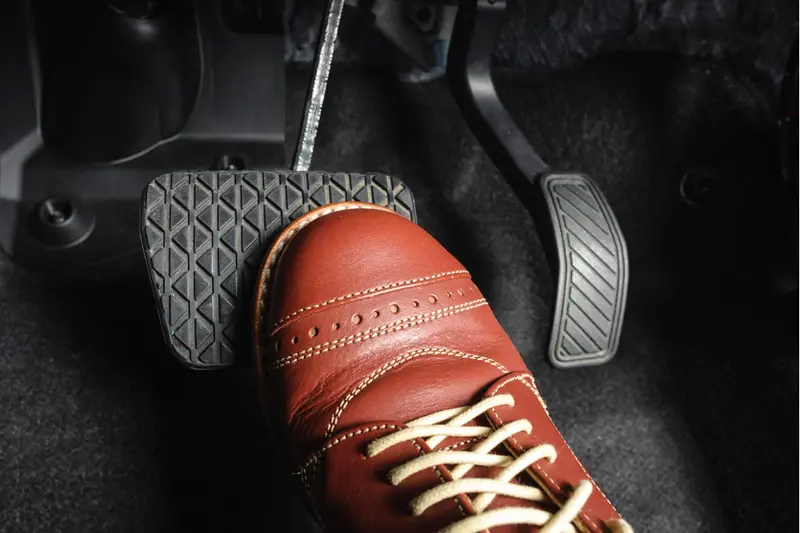
2. Apply the brakes smoothly and decisively, avoiding unnecessary intermittent braking.
With newer vehicles equipped with anti-lock braking systems (ABS), the correct way to brake is to keep your foot on the brake pedal steadily and firmly, rather than repeatedly pressing and releasing it as before. This method helps the vehicle decelerate more smoothly and reduces brake pad wear compared to repeatedly pressing and releasing the brake pedal.
For vehicles without ABS, drivers should proactively apply and release the brakes rhythmically to prevent the wheels from locking up and losing control.
3. Apply the rhythmic braking technique when you need to stop suddenly at high speeds.
Cadence braking is an effective technique: apply the brakes lightly, then gradually increase the braking force, and finish with a gentle braking burst before the vehicle comes to a complete stop.
A steady pace allows the vehicle to decelerate gradually without sudden wheel lock-up, reducing the risk of skidding, which is especially useful when driving on slippery roads or needing to react to unexpected situations at high speeds.
4. Do not keep your foot on the brake pedal at all times.
Many drivers have a habit of keeping their foot lightly on the brake pedal throughout the journey, even when there's no need to slow down. This habit causes uneven wear on the brake pads and creates an unnatural feeling when a quick reaction is needed in an emergency. You should only put your foot on the brake when you really need to slow down or stop the vehicle; otherwise, keep your foot resting to maintain natural reflexes and extend the lifespan of the braking system.
5. Properly using the electronic parking brake (EPB) on modern vehicles.
For vehicles equipped with an electronic parking brake (EPB) instead of a traditional mechanical parking brake, drivers need to be aware of some important principles: do not arbitrarily activate the EPB while the vehicle is moving at low speeds in the city, as this feature primarily acts as an emergency brake when the main braking system malfunctions, working in conjunction with ABS and ESC to create controlled braking force. Always ensure the vehicle has come to a complete stop before activating the EPB for parking, and avoid confusing the EPB with the Auto Hold feature when driving in urban areas.
Additionally, since EPB relies on power from the battery, drivers should pay attention to the battery's condition to avoid situations where the system fails to activate or release the brakes when needed.
Using the brakes correctly not only helps drivers handle emergency situations more safely but also contributes to extending the lifespan of the braking system, saving on maintenance costs in the long run. Every small habit contributes to a safer and more durable journey for both the vehicle and the driver.