


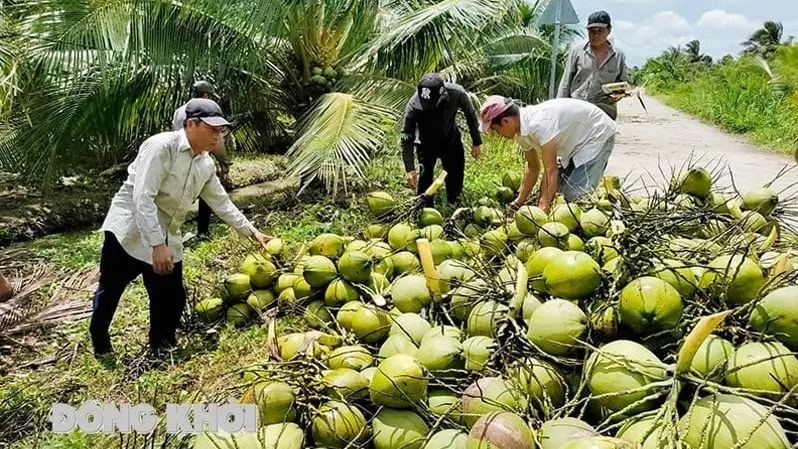
The Vietnamese coconut industry is shifting from a mindset of expanding acreage to one focused on managing data from raw material areas. This is considered a key direction to ensure transparency in production processes, facilitate traceability, attract investment in deep processing, and enhance competitiveness in the international market.
From organically grown areas…
According to the Vietnam Coconut Association, the Mekong Delta is currently the main raw material region for the coconut industry, supplying inputs to hundreds of processing businesses serving both the domestic and export markets. From traditional products such as coconut meat, coconut oil, and coconut water, the coconut industry has expanded into high value-added segments such as food, cosmetics, pharmaceuticals, and green materials. It is projected that by 2026, the export value of coconut products could exceed US$1.1 billion.
However, to maintain growth momentum and meet increasingly stringent import standards, the establishment of concentrated raw material areas that meet international organic standards and have a digitized management system has become an urgent requirement.
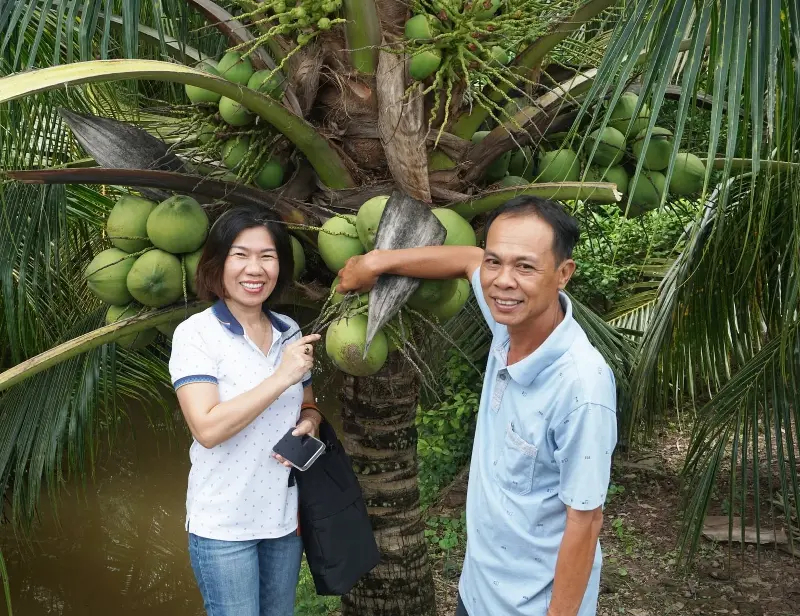
An organic coconut plantation for drinking water has been established in Tam Hiep islet, Phu Thuan commune, Vinh Long province. Photo: Minh Dam.
The Vietnam Coconut Association is implementing a plan to build a digital map of controlled organic coconut growing areas nationwide, initially focusing on the Mekong Delta. The system will statistically track the area of coconut plantations for raw materials and drinking water, and update the investment status of businesses in each locality.
According to Mr. Cao Ba Dang Khoa, Vice President of the Vietnam Coconut Association, the coconut industry is entering a new phase of development, with deep processing and transparent production as its foundation. Currently, the whole country has about 55,000 hectares of coconut trees certified organic and nearly 10,000 hectares are being evaluated; Vinh Long province alone has more than 50% of its area recognized as meeting the standards.
According to Mr. Khoa, the digital map will create a unified database for localities, businesses, and cooperatives to manage raw material areas, reduce overlapping investments, and increase the ability to link the supply chain. Households participating in organic raw material areas will also have the opportunity to have their produce purchased at a higher price than the market rate.
The next challenge is transforming raw material sources into data assets.
The Vietnam Coconut Association believes that the development of raw material areas in recent years has been limited. Due to the lack of a synchronized data system, businesses have to independently search for areas and approach individual households, leading to investment competition in the same region and reducing the effectiveness of linkages.
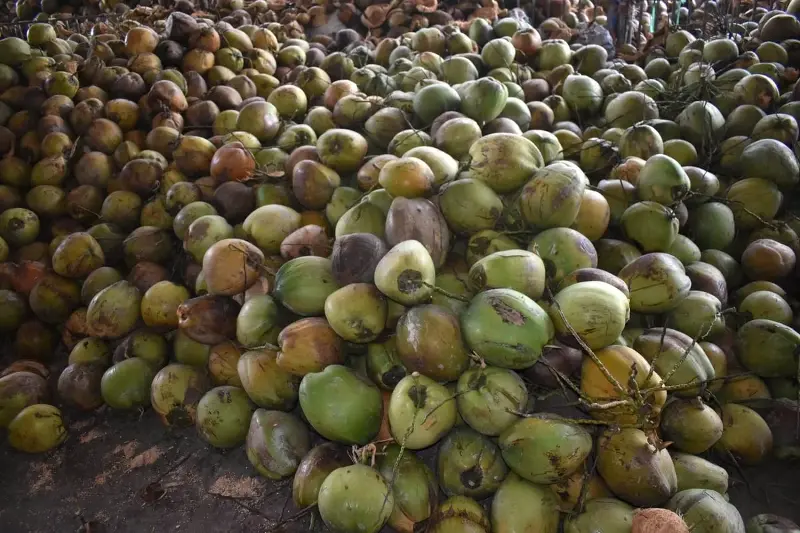
Vinh Long supplies coconut raw materials to hundreds of processing and export businesses. Photo: Minh Dam.
In addition, some farmers did not participate from the beginning due to a lack of full awareness of the benefits of organic production; while foreign businesses also faced difficulties in accessing information about raw material sources to develop deep processing projects.
Therefore, the digital map of raw material areas is expected to become a tool to support planning, attract investment, and develop the coconut industry in a modern direction.
According to the plan, the 2026-2028 period will complete the database in Vinh Long, Dong Thap, Can Tho, Ca Mau, and An Giang provinces, covering approximately 160,000 hectares; then it will be expanded to the Southeast region and integrated nationwide.
Due to the fragmented nature of farming practices, digitizing the entire area from the outset is considered impractical. The chosen solution is to prioritize data entry from organic farming areas that already have business partnerships, and then expand gradually.
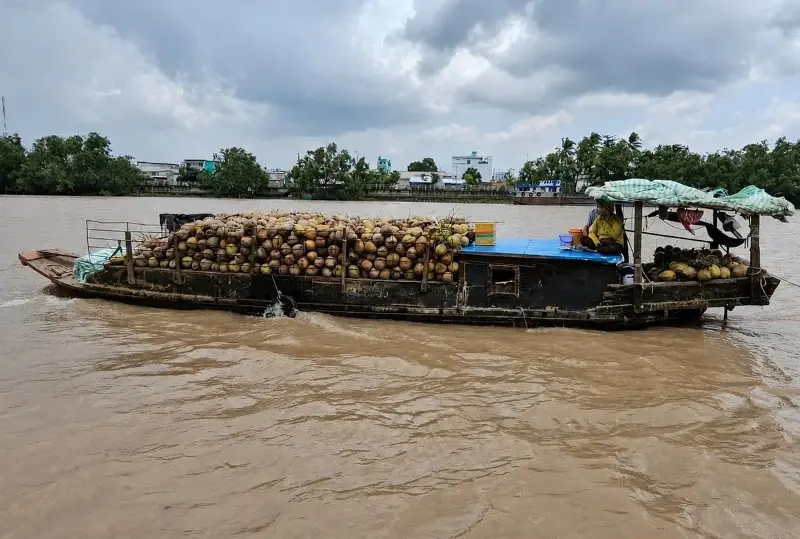
Forecasts indicate that by 2026, exports of coconut products could exceed $1.1 billion. Photo: Minh Đảm.
In terms of technology, the system not only identifies the boundaries of growing areas but also updates information on investing businesses, certification standards, validity periods, and production status. Satellite imagery and drones will be used to update data in real time; simultaneously, a cooperative model linking the supply chain will be developed to act as a central hub for raw material supply.
Representatives from the Vietnam Coconut Association suggest that instead of setting overly ambitious goals from the outset, such as building a "comprehensive coconut map," the initial phase should focus on establishing controlled raw material areas. Accordingly, data would be built step by step, prioritizing essential indicators such as investment areas, organic certification, partner businesses, production status, and traceability; then expanding as needed for management purposes.
Shaping a transparent ecosystem towards the billion-dollar goal.
This step marks a major turning point, transforming the coconut industry's management approach from administrative area-based management to data-driven management of actual production. In the long term, the digitalization system will not only focus on the scale of planted areas but will also aim for individual coconut tree identification management, allowing for accurate updates on variety, tree age, and harvest yield forecasts.
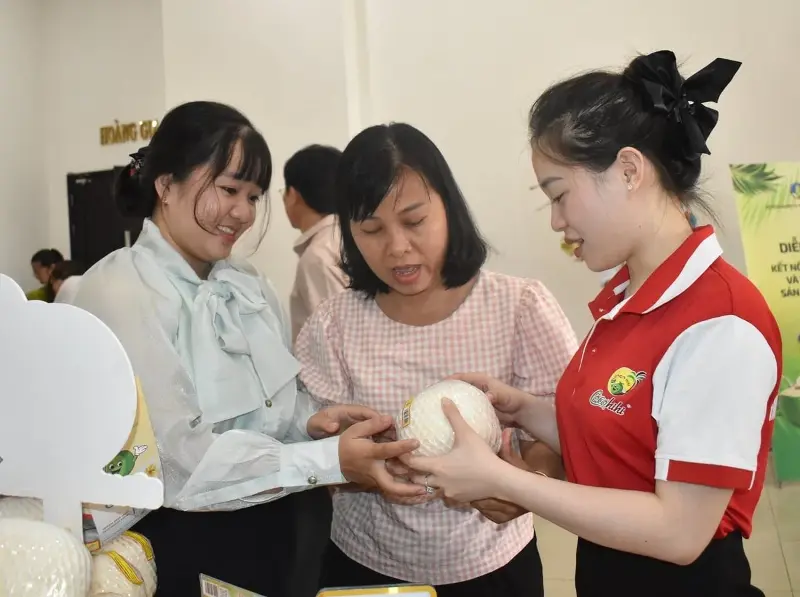
Vietnam's coconut industry is shifting from expanding acreage to managing raw material area data to ensure production transparency, increase traceability, and enhance competitiveness. Photo: Minh Đảm.
Digital maps are being developed as an effective tool for coordinating macro-level investment for management agencies. When a business registers to establish a new raw material area, all information about the location, planned scale, and list of affiliated households will be immediately updated to the system to provide automatic warnings if there is a risk of overlap, helping local authorities monitor and coordinate smoothly.
Mr. Lam Van Tan, Director of the Department of Agriculture and Environment of Vinh Long province, shared that the province's strategic goal is to achieve a coconut export turnover of 1 billion USD by 2030. However, with the current growth rate and readiness for digital transformation, this goal can be achieved even earlier, as early as 2027-2028.
Currently, Vinh Long province has approximately 120,000 hectares of coconut plantations, of which about 30,000 hectares have met organic standards. The goal is to increase the area of organic coconut plantations to 43,000 hectares by 2026 (accounting for 36% of the total area). The province has also proactively prepared for export with 222 codes for fresh coconut growing areas and 29 packaging facilities granted export codes to the Chinese market.
According to Mr. Tran Van Ut Tam, Deputy Director of the Department of Science and Technology of Vinh Long province, the province has built a shared digital map platform and implemented programs to digitize agricultural data. This year alone, more than 20 billion VND has been allocated to digital transformation projects serving this sector.
The project to map controlled organic coconut raw material areas is not simply a technical proposal, but is becoming an information platform that closely connects the "four stakeholders": Government - Businesses - Cooperatives - Farmers.
When each growing region is identified and continuously monitored, the complex problems of traceability, regulating production according to market demand, and attracting FDI for deep processing will have clear solutions.
With its existing advantages, Vinh Long is expected to excel in its role as a pilot locality before this model is replicated nationwide, contributing to enhancing the competitiveness of Vietnam's coconut industry in the international market.
“Building a digital map of organic coconut growing areas is essential. In the future, digitization will not only focus on area but also on managing each individual coconut tree, helping to track variety, age, and yield more accurately,” said Mr. Tran Van Ut Tam, Deputy Director of the Department of Science and Technology of Vinh Long province.