


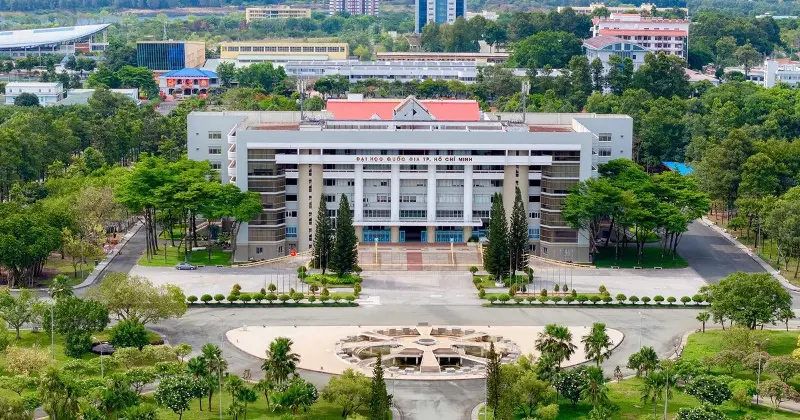
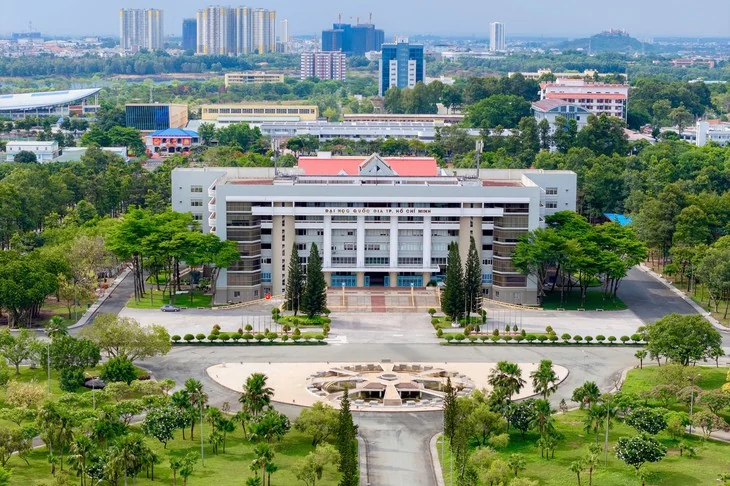
Vietnam National University Ho Chi Minh City - Photo: QUANG DINH
Does relocation really reduce urban pressure?
The policy of relocating some universities from the inner city has been in place for a long time. The goal of reducing pressure on population, traffic, and infrastructure is well-founded. Many universities lack sufficient space, research facilities, and modern training conditions. Campuses in suburban areas are more suitable for lecture halls, laboratories, and practical training areas. However, the effectiveness must be evaluated on a city-wide scale, not just based on the amount of land freed up.
Simply moving universities away from the city center doesn't automatically reduce urban pressure. Many universities have long been present in stable residential areas, connected to transportation, housing, commerce, services, and internship facilities. This presence creates an ecosystem where students, faculty, businesses, and the community interact. Universities also contribute to the vitality of the area.
Many students live with family or rent accommodation near the school, and also need access to jobs and internships. If the school moves to the suburbs but the residences do not relocate accordingly, the need for commuting between the city center and the outskirts may increase. Until public transport coverage is complete, travel will still depend partly on motorbikes and private cars. Pressure could shift to the main routes connecting the inner city with the suburbs.