


While many C-segment SUVs are continuously expanding in size to increase interior space and gain a competitive advantage, Toyota has chosen the opposite approach, with the new generation RAV4 maintaining almost the same dimensions as its predecessor. The Japanese automaker considers this an advantage rather than a weakness.
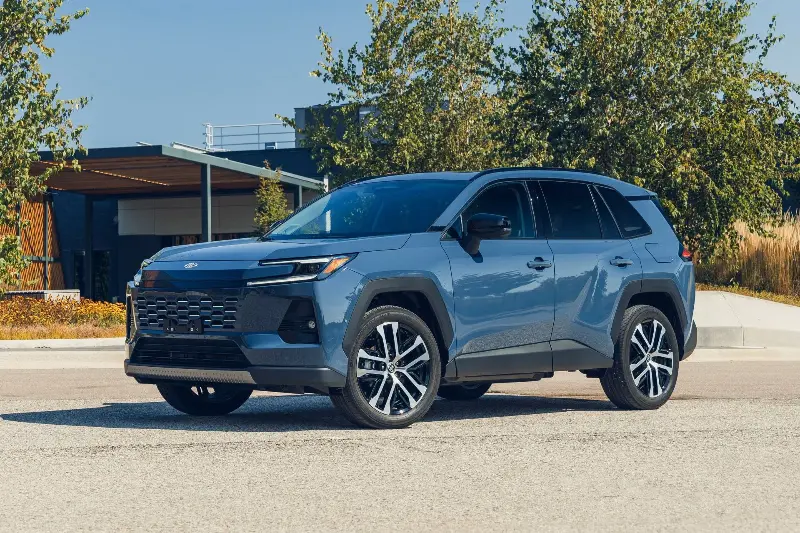
According to Toyota, the decision not to "bulk up" the RAV4 was a deliberate one, based on the success of the previous generation model rather than following the trend of competitors like the Mazda CX-5, Hyundai Tucson, and KIA Sportage. In most versions, the 2026 Toyota RAV4 has a length of 4,600mm and a width of 1,855mm, virtually unchanged from before. Only the height has increased to 1,685mm to optimize cabin space and accommodate the new generation hybrid system.
However, compared to many competitors in the same segment, the RAV4 remains one of the most compact SUVs. Meanwhile, the KIA Sportage is 4,660mm long, the Hyundai Tucson is 4,650mm long, and the new Mazda CX-5 is also 4,690mm long. Even electric vehicles like the Tesla Model Y or Toyota bZ4X are larger than the RAV4.
Speaking to Australia's Drive, Yoshinori Futonagane, Chief Engineer in charge of developing the next generation of the Toyota RAV4, said that increasing the vehicle's size is not difficult, but it will lead to several consequences such as greater weight, higher energy consumption, and impact on performance.
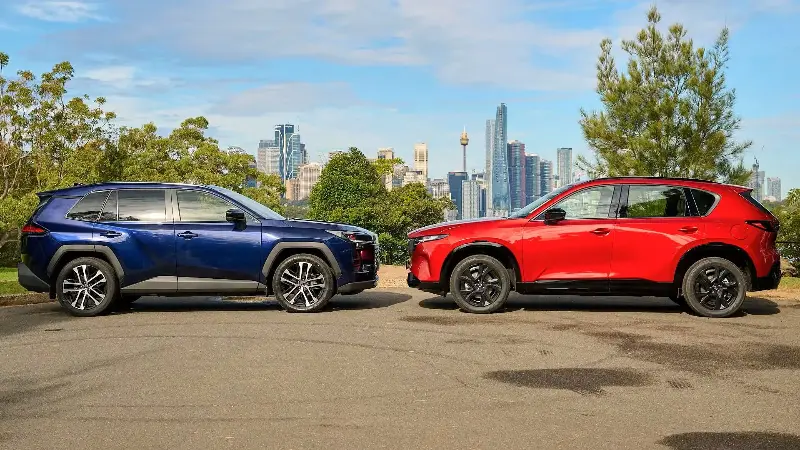
According to this engineer, the company isn't overly concerned about competitors expanding SUV sizes, because what's important is meeting the needs of the majority of customers. Instead of chasing after other automakers, Toyota views the successful sales of the previous generation RAV4 as a "global vote" from customers, proving that the current size is the most sensible choice.
Besides maintaining the same overall dimensions, the 2026 RAV4 does not use an entirely new platform. Toyota continues to develop on the previous generation's TNGA-K chassis but has made significant improvements. Specifically, the chassis has been made more rigid to improve handling and safety, and redesigned to create more space for the large-capacity battery pack of the plug-in hybrid (PHEV) version.
According to the Japanese automaker, this allows the new RAV4 to inherit a proven platform while better meeting modern electrification and safety standards. In some versions, Toyota also adjusts the front and rear wheelbase width to improve driving feel, increase traction, and create a more robust appearance.
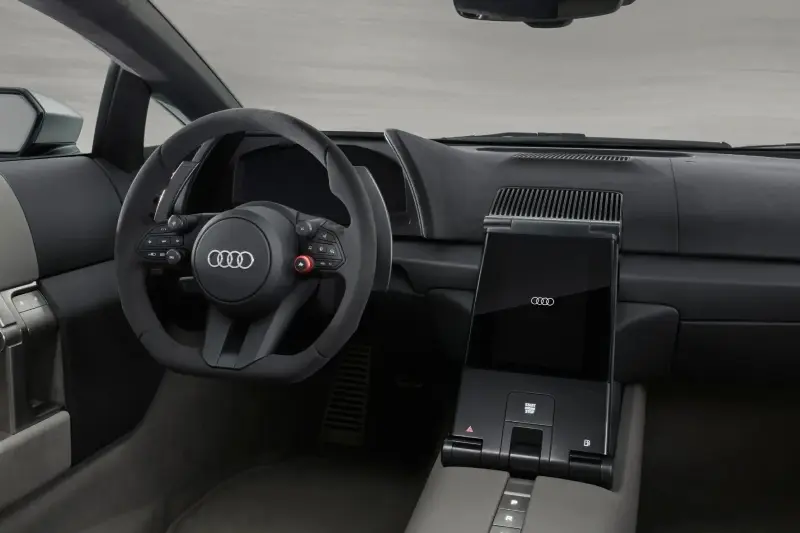
Keeping the RAV4 at its current size also helps Toyota maintain a reasonable distance from other SUVs in its product lineup. Below the Toyota RAV4 is the Corolla Cross, which is approximately 4,460mm long, while above it is the Highlander – a 7-seater SUV nearly 5m long, aimed at large families.
The clear separation between vehicle lines helps Toyota minimize product overlap while offering a wider range of options to suit different customer segments.
With this strategy, Toyota shows that not every new-generation model needs to be bigger to attract buyers. Instead, the company focuses on upgrading technology, improving performance, and optimizing hybrid powertrains, while maintaining the size that has been well-received by the market for many years.
This is seen as a different approach in the C-segment SUV market, where many manufacturers are still pursuing the "bigger is better" trend. According to Toyota, the more important thing is to create an SUV that balances usable space, maneuverability in urban areas, and performance, rather than simply increasing size to compete.
According to the Newspaper
Please share your opinions with VietNamNet Newspaper via email: [email protected]. Suitable content will be published. Thank you!