


Preheat the frying basket before adding food.
This is a step many people skip. Before adding food, preheat the air fryer for 3–5 minutes. When the surface is hot enough, food will be less likely to stick, and it will cook evenly and have a beautiful golden color.
Tip: You can apply a thin layer of oil to the surface of the cage or use an oil spray to enhance its non-stick properties.
Use heat-resistant bowls or plates and place them inside the fryer basket.
A smart and safe way to prevent food from sticking is to use heat-resistant bowls or plates (ceramic, heat-resistant glass) placed directly inside the fryer basket.
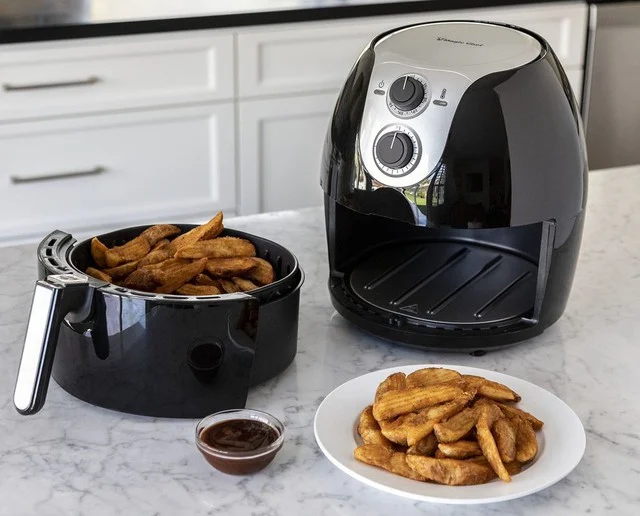
A smart and safe way to prevent food from sticking is to use heat-resistant bowls or plates (ceramic, heat-resistant glass) placed directly inside the fryer basket.
This method is particularly suitable for: Dishes with lots of sauce. Dishes that release fat easily, such as fish and pork belly. Dishes that need to maintain their shape.
Using bowls and plates prevents food from coming into direct contact with the cage, reducing sticking and keeping the cage much cleaner.
Use aluminum foil correctly.
Aluminum foil is a familiar "helper" in the kitchen, but it needs to be used correctly to avoid counterproductive results.
When lining the air fryer basket with aluminum foil, please note: Do not cover the entire bottom of the basket; leave some space for air to escape. Do not use foil that is too thin or reuse it multiple times.
Aluminum foil helps prevent grease from dripping directly onto the cooking surface, reducing burning and making cleaning quicker after cooking.
Use parchment paper (special non-stick paper).
Compared to aluminum foil, parchment paper specifically designed for air fryers is a safer and more convenient option. This type of paper is heat-resistant, doesn't stick to oil, and doesn't affect the taste of the food.
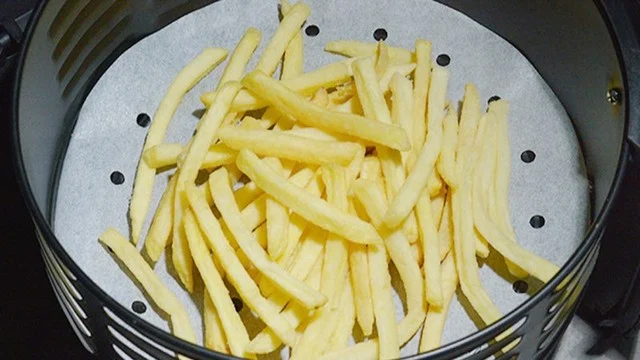
Compared to aluminum foil, parchment paper specifically designed for air fryers is a safer and more convenient option.
Parchment paper is especially suitable for: French fries, baked goods, battered chicken and fish, and dishes that require a crispy crust. After cooking, simply discard the parchment paper, and the fryer will be virtually clean.
Do not stack food too thickly.
Overcrowding the cooking basket with food at once not only results in uneven cooking but also causes water and fat to accumulate at the bottom, making it prone to sticking.
Divide your food into smaller portions and cook in multiple batches if needed. This helps: Make food crispier and tastier. Reduce burning. Keep the fryer basket clean for longer.
Clean the fryer basket while it's still warm.
Avoid: After use, allow the frying basket to cool down slightly but still remain warm before cleaning immediately. At this point, the grease hasn't hardened yet, making it easy to wipe clean with warm water and a soft sponge.
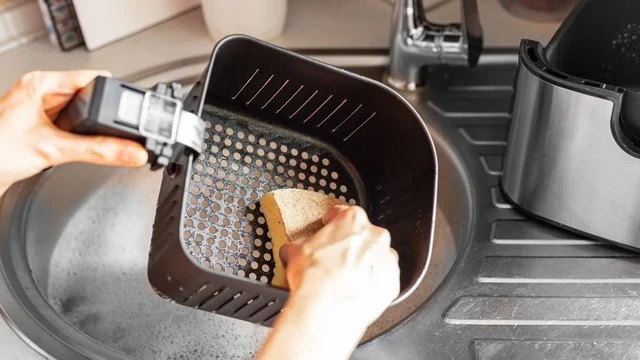
At this stage, the grease hasn't hardened yet, so it's easy to clean off with warm water and a soft sponge.
Using hard objects to scrub. Soaking the frying basket for too long. Using strong detergents. Proper cleaning helps maintain the non-stick coating, prevents peeling, and extends the lifespan of the fryer.
Notes on using an air fryer
To ensure your pot lasts a long time, looks good, and is always safe to use, you should also: Avoid letting grease accumulate in the tray for too long.
Do not put the pot in the dishwasher unless recommended by the manufacturer. Carefully read the instruction manual included with the product.