


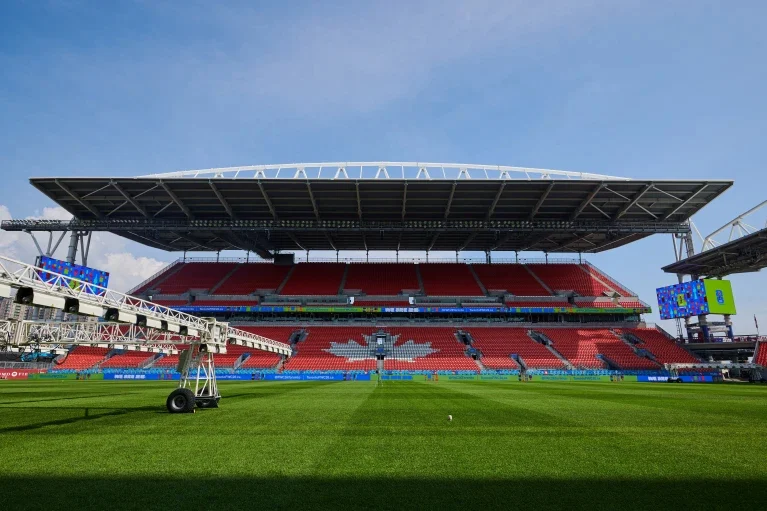
The 2026 World Cup not only marks the first time the tournament will feature 48 teams, but it will also serve as a testing ground for a number of notable rule adjustments. Alongside familiar regulations, the International Football Federation (FIFA) and the International Football Association Board (IFAB) will implement many new rules aimed at increasing the pace of the game and ensuring fairness.
Give VAR more power.
At the 2026 World Cup, the scope of VAR intervention will be expanded. Accordingly, VAR will have the right to intervene in cases where the referee mistakenly issues a second yellow card, incorrectly identifies a player committing a foul, or makes an incorrect corner kick decision.
Additionally, VAR also has the power to review if a foul occurred before the ball was put into play in set-piece situations. If VAR detects a foul, the referee will be asked to review the situation on the screen before deciding whether to apply disciplinary action or allow the set-piece to be retaken.
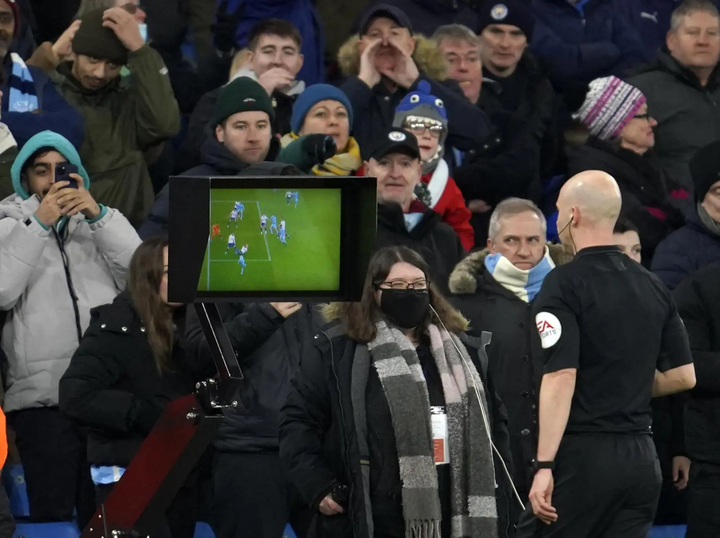
VAR will have increased intervention powers at the 2026 World Cup. (Photo: AP)
VAR checks on corner kicks are only to correct clear fouls and must not delay the game. Regarding second yellow cards, VAR is only authorized to correct incorrect card decisions. VAR cannot recommend a second yellow card if the original on-field referee has not issued one.
Covering your mouth results in a red card.
One of the most notable changes is the rule penalizing players who intentionally cover their mouths with their hands, arms, or shirts during tense confrontations with opponents.
The IFAB argues that covering one's mouth can make it difficult for referees and authorities to determine the content of the exchange, especially in cases involving racism or insults against an opponent. Therefore, this behavior may result in a direct red card.
However, covering your mouth during normal, non-confrontational exchanges with an opposing player will not be penalized.
Leaving the field to protest against the referee also resulted in being sent off.
In addition, players who leave the field in protest against the referee's decision will be disqualified. If this action disrupts the game, the offending player's team will forfeit the match. Members of the coaching staff or team officials will face penalties if they incite players to leave the field.

Substitutions within 10 seconds.
According to the new rules, substituted players have only 10 seconds to leave the field from the moment the substitution board is raised. Failure to comply with this rule means the substitute player will not be allowed back onto the field until the first dead ball after the game resumes for at least one minute. This means the team may have to play with one less player for a period of time.
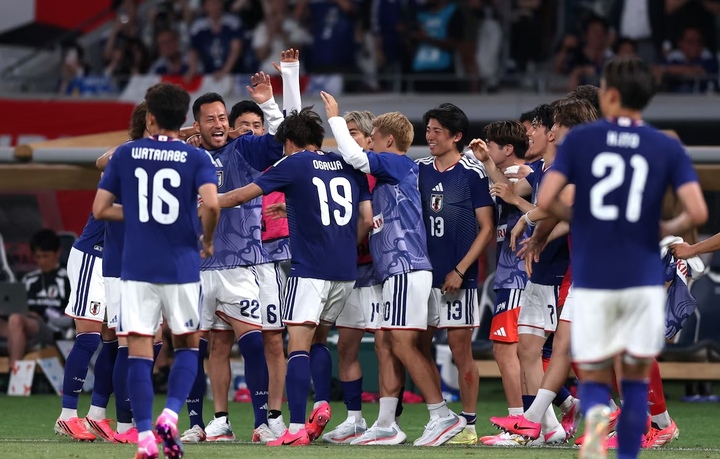
Japan was the first team to benefit from the substitution rule. (Photo: Reuters)
Japan was the first team to benefit from the substitution rule. On May 31st, in a friendly match against Iceland, they made two substitutions in the 85th minute, with Isak Thorvaldsson coming on to replace Kristian Hlynsson.
However, because Hlynsson took more than 10 seconds to leave the field, the referee did not allow Isak Thorvaldsson to enter the field immediately, but had to wait for more than a minute, meaning Iceland had to play with ten men. The Japanese team took advantage of this time to score the only goal of the match.
5-second countdown
Additionally, to prevent time-wasting, referees will use a 5-second countdown timer during throw-ins and corner kicks. If the team taking the throw-in does not get the ball back into play before the time runs out, possession will be transferred to the opposing team. The referee will raise their hand to signal the start of the countdown.
If the ball is not put into play within 5 seconds, possession will be transferred to the opposing team. Specifically, if it is a throw-in, the opposing team will be awarded a throw-in. Furthermore, if it is a goal kick, the opposing team will be awarded a corner kick.
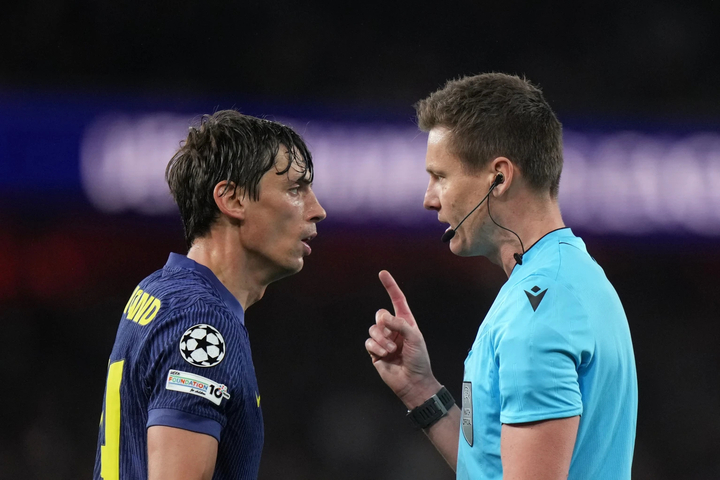
The referee can count down 5 seconds to prevent players from wasting time. (Photo: AP)
The injured player had to leave the field for 1 minute.
According to the new rules, players requiring medical attention must leave the field at least one minute before the game resumes. However, this rule does not apply to cases such as goalkeeper injury, serious collisions, head injuries, suspected concussions, or players injured while preparing to take a penalty kick.

Many teams worry that a one-minute absence will make a team much more vulnerable to conceding goals when they are down to 10 players on the field.
The previous rules of football did not specify how long an injured player had to remain on the sidelines. Leagues had the right to establish their own guidelines, such as the English Premier League, which has adopted the 30-second rule since the 2023-2024 season.
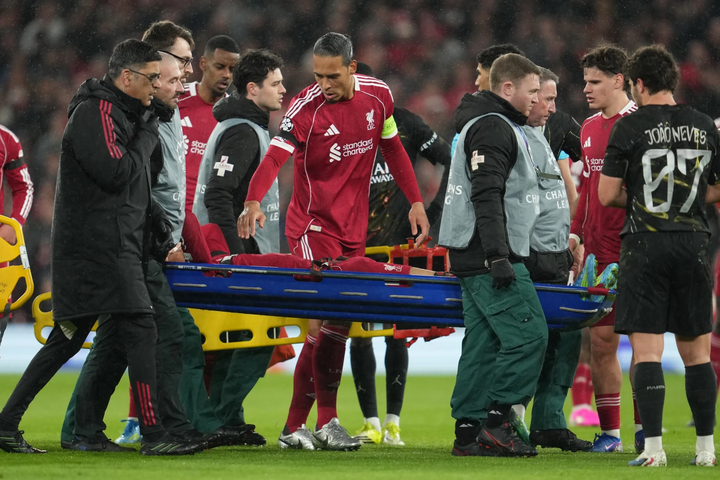
Players requiring medical attention must leave the field at least one minute before the game resumes. (Photo: AP)
Countering delaying tactics.
FIFA also wants to address the issue of teams exploiting player injuries to disrupt the game's tempo and hold tactical meetings on the field. This issue was discussed by the IFAB in March, but no unified solution has yet been found.
Although referees will not have the authority to penalize this situation, FIFA's Head of Referees, Pierluigi Collina, said the organizers will proactively prevent teams from exploiting injuries to gain an advantage.
"We won't allow the entire team to be dragged to the technical area just because a player is lying on the ground receiving treatment. Injuries are unavoidable, but that doesn't mean other players are allowed to leave the field to receive instructions from the coaching staff," said Collina.
3-minute break between halves
FIFA will implement water breaks between halves in all matches at the 2026 World Cup, regardless of weather conditions or temperature. According to FIFA, referees will stop the game at the 22nd minute of each half to allow players to leave the field for water.
Each break lasts a fixed 3 minutes and will be mandatory in all 104 matches. Therefore, each match will actually be divided into four halves. This measure aims to protect the health and well-being of the players throughout the tournament.