


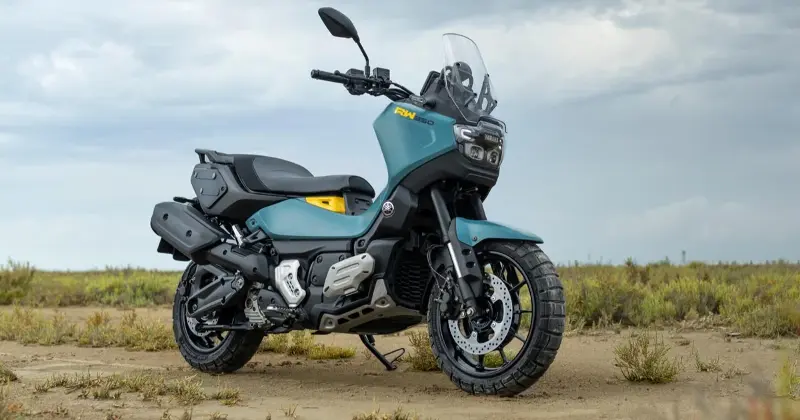
The growth of the adventure scooter segment, with the success of the Honda ADV series, is attracting the attention of many motorcycle manufacturers in the Southeast Asian market. In this trend, Yamaha is showing its ambition to expand its product portfolio through the RW Series. The recent registration of the names RW155 and RW250… in Indonesia is considered a noteworthy sign, especially since this market has high motorcycle consumption and is one of Yamaha's important markets in Southeast Asia.
According to Indonesian media reports, Yamaha has registered the names RW155, RW250, and RW350 in the country's intellectual property database. The registrant is Yamaha Hatsudoki Kabushiki Kaisha, a company belonging to the Yamaha Motor Corporation. The registered product names relate to transportation vehicles, including motorcycles, scooters, and related parts and accessories. Notably, in addition to RW155 and RW250, the names RW350 and RW700 also appear in the registration list.
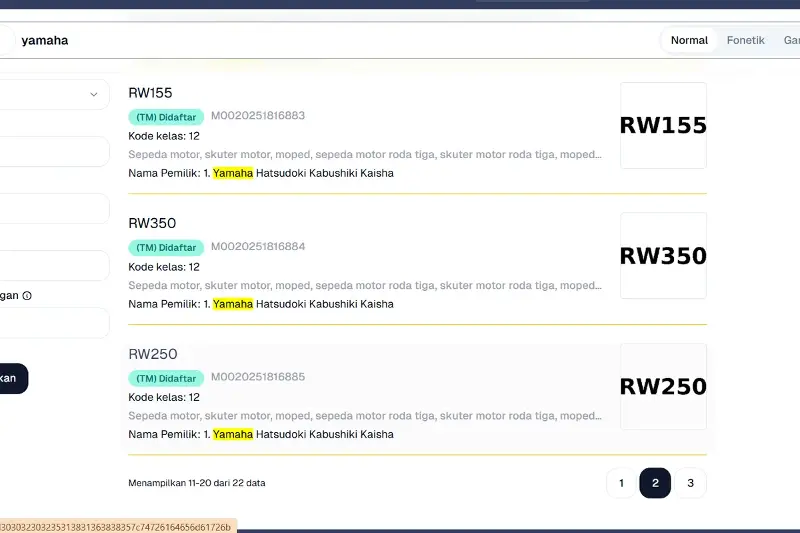
Yamaha has registered the RW155, RW250, and RW350 trademarks in Indonesia.
Photo: KOMPAS
This move comes after Yamaha introduced the RW350 and RW700 at the EICMA 2026 motorcycle show in Milan, Italy. These models mark the beginning of the Japanese manufacturer's development direction for adventure-style scooters.
The addition of the names RW155 and RW250 suggests that Yamaha may be preparing a wider product range, spanning from small-displacement scooters to larger-displacement models. However, trademark registration does not automatically mean the product has been confirmed for production or planned for commercial distribution. To date, Yamaha has not released any official information regarding the launch date, specifications, or distribution markets for the RW155 and RW250.
If developed and commercialized, the Yamaha RW155 will likely target customers interested in 150cc-160cc off-road scooters. This segment also includes the Honda ADV160, an adventure-style scooter popular among users due to its high ground clearance, relatively comfortable riding position, and ability to meet both daily commuting and long-distance travel needs.