


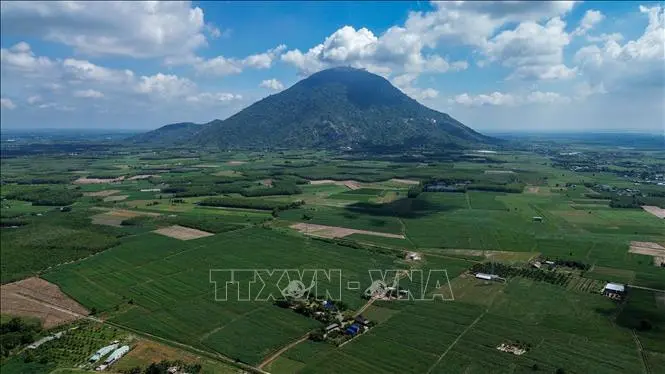
In Tay Ninh, the project for developing ecotourism, resorts, and entertainment in forests managed by the Southern Revolutionary Historical Relics Management Board until 2030, with a vision to 2040, is expected to connect forest ecosystems with revolutionary historical relics, creating momentum to make tourism a key economic sector, preserving cultural, historical values and natural resources.
Connecting forest ecosystems with heritage spaces.
The overarching goal of Tay Ninh is to effectively exploit its natural ecosystem advantages, geographical location, and historical relics to create distinctive and modern tourism products, enhance the tourism value chain, increase its contribution to GRDP, and promote socio-economic development. This orientation also contributes to achieving the goal of making tourism a key economic sector by 2030, as outlined in Plan No. 1308/KH-UBND dated March 27, 2026, of the Provincial People's Committee. Alongside tourism development, the province aims to preserve and restore historical and cultural relics, maintain the natural landscape, create a unique identity for Tay Ninh tourism, and foster the development of green and ecological tourism.
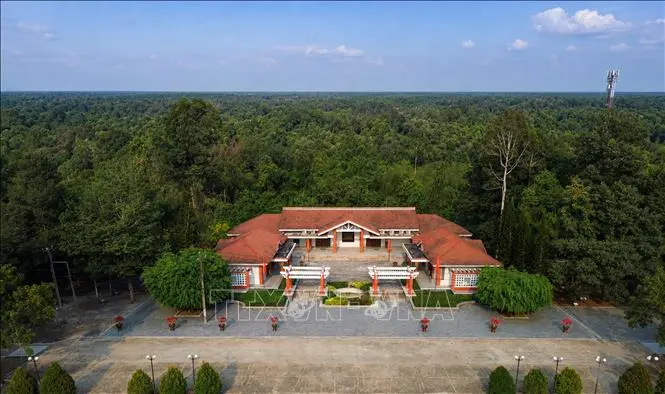
The highlight of the project is to promote the value of revolutionary historical sites by connecting them with key tourist destinations in the province and region. Specifically, the National Liberation Front of South Vietnam Base and the Provisional Revolutionary Government of the Republic of South Vietnam Base will be connected with Lo Go - Xa Mat National Park, Ba Den Mountain National Tourist Area, and other tourist destinations in the Dong Thap Muoi region. The Tay Ninh Provincial Party Committee Base in Boi Loi will serve as a stopover point, connecting tourism between Tay Ninh and Long An, as well as other destinations.
According to the plan, the three eco-tourism, resort, and entertainment sites have a total area of nearly 236 hectares. Of this, the area adjacent to the Tay Ninh Provincial Party Committee Base in Boi Loi (Hung Thuan commune) is planned to include approximately 61.53 hectares of planted forest for the development of an eco-tourism project through forest environment leasing.
By 2030, the province aims to attract at least one investor, establish four tourism routes connecting historical sites with tourist destinations within and outside the province, welcome over 200,000 visitors, and create jobs for more than 500 workers. By 2040, the historical sites are oriented to become unique destinations combining culture, history, ecotourism, recreation, and entertainment.
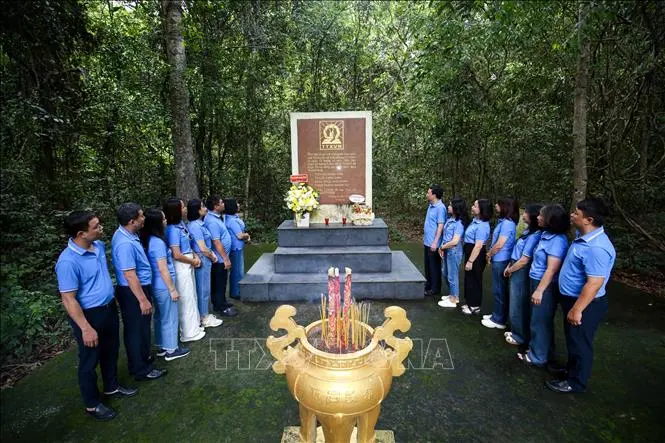
Mr. Nguyen Dinh Xuan, Deputy Director of the Department of Agriculture and Environment of Tay Ninh province, said that the Tay Ninh Provincial Party Committee Base historical site in Boi Loi has many advantages for developing ecotourism thanks to its gateway location, situated on the axis connecting Ho Chi Minh City with the Ba Den Mountain National Tourist Area and the central areas of the province. Advantages in transportation, forest space, and historical value create favorable conditions for forming unique tourism products, extending the length of stay, and attracting investment in a green and sustainable direction. The province needs to prioritize green tourism development models such as using solar energy, reusing water, applying the 3R model (Reduce, Reuse, Recycle); building a mechanism for sharing benefits between the Management Board, businesses, and people contracting forest land to create sustainable livelihoods, encourage community participation in forest protection and biodiversity conservation, and develop ecotourism guide services.
Sustainable development based on forest resource conservation.

Ms. Nguyen Thi Minh Anh, a tourist from Ho Chi Minh City, said she was impressed with Tay Ninh's unspoiled forest landscape and the historical values preserved at its relics. She believes that the local government's focus on developing more experiential products such as trekking through the forest, cycling, camping, and historical experiences combined with digital technology will increase the attractiveness of the destination.
Meanwhile, Mr. Tran Quoc Bao, a tourist from Can Tho, shared that connecting the forests and historical sites with Mount Ba Den and Lo Go - Xa Mat National Park will create unique experiential journeys. He hopes that in the future there will be more products for forest-based resorts, observing flora and fauna, exploring nature, and experiencing local culture.
According to Pham Tan Hoa, Vice Chairman of the People's Committee of Tay Ninh province, the project's development of ecotourism must be linked to forest protection, nature conservation, and the preservation of historical values. All investment activities must not affect the protective functions of forests, biodiversity, national defense, security, and historical and cultural relics; constructions must harmonize with nature and use environmentally friendly materials.
To attract social resources, the province encourages businesses to research and apply technology, develop highly competitive tourism products, and promote investment in ecotourism projects at the Tay Ninh Provincial Party Committee Base historical site in Boi Loi. The leasing of forest land is carried out in accordance with the law, with a rental price not less than 1% of the total annual revenue on the leased area.
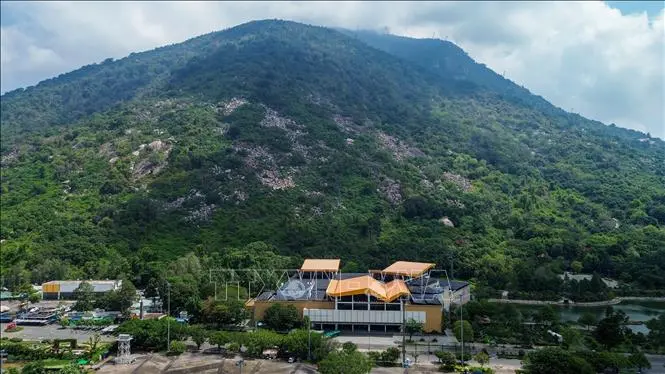
In 2026, Tay Ninh aims to welcome 10 million tourists, including 200,000 international visitors, with tourism revenue reaching 8,000 billion VND, striving to make tourism a key economic sector by 2030. According to the Department of Culture, Sports and Tourism of Tay Ninh province, in the first seven months of 2026, the locality is estimated to have welcomed 5.7 million tourists, an increase of 11.3% compared to the same period; revenue reached approximately 5,000 billion VND, an increase of 31.6%. This is an important foundation for the province to continue expanding eco-tourism products associated with its forest system and historical relics.
The implementation of the project to develop ecotourism, resorts, and recreational activities in the forests managed by the Southern Revolutionary Historical Relics Management Board will create unique tourism products, effectively connecting forest resources and historical relics with existing destinations such as the Ba Den Mountain National Tourist Area, Lo Go - Xa Mat National Park, and the Dong Thap Muoi region. This is expected to be an important driving force to extend the length of stay, increase tourist spending, enhance the competitiveness of Tay Ninh tourism, and realize the goal of developing green and sustainable tourism in the coming period.