



Dear EarthTalk: Have we already begun to see a significant sea level rise as a result of climate change?
-- M.S., Detroit
According to the National Oceanic and Atmospheric Administration, sea levels have been relatively well-documented throughout the course of human history, making the recent sea level rise particularly noticeable. Since 1880, the global average sea level has risen by around 8 to 9 inches. According to the NOAA, sea level rise may be caused by factors such as “ground settling, upstream flood control, erosion [and] regional ocean currents” on a more regional level.
On a worldwide scale, global warming due to extensive human emissions of greenhouse gases has led to the atmosphere increasingly trapping heat, and warming the ocean. As seawater gets warmer, it expands, increasing the sea level. Similarly, per SeaLevelRise.org. glaciers and ice sheets melt rapidly when faced by warmer seawater, which intensifies the rate of sea level rise.
Sea level has consistently fluctuated with the Earth’s climate cycles, rising during warm periods and sinking during cool ones. With the definitive global increase in sea level, and the accelerated rate at which it is occurring, its clear that climate change and its human-driven exacerbation are at least partially responsible for sea level rise.
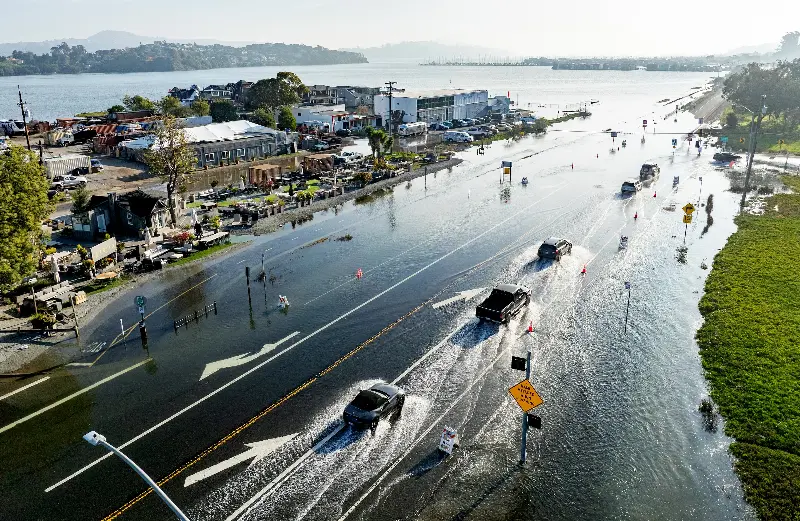
Greenland and Antarctic ice sheets are particularly concerning with regard to the animals there. Polar bears rely on sea ice for hunting, mating and resting. The glacial loss that contributes to sea level rise has resounding impacts for biodiversity across Earth. Further, it is likely that the global sea level will continue to rise in the coming decades, with scientific assessments projecting roughly another 6 to 7 inches in growth of the global average sea level by 2050. This rapid sea level rise would likely lead to more high-tide flooding, storm surges, and pressure on coastal ecosystems.
Yet, sea level rise is not yet a catastrophe. Collective action can still significantly limit long-term damage. By cutting emissions through a rapid transition to clean energy, increased efficiency, and protecting valuable ecosystems, we can slow warming and its impacts.
In this time coastal communities can expand their resources and infrastructure, planning for the slow sea level rise coinciding with the Earth’s natural climate cycles. To help support these efforts, advocate for reduced emissions in your own community, and coastal communities near you. Supporting communities already impacted by sea level rise can help ameliorate the impacts of the rapidly changing climate, reducing their burden.
____
EarthTalk is produced by Roddy Scheer & Doug Moss for the 501(c)3 nonprofit EarthTalk.