



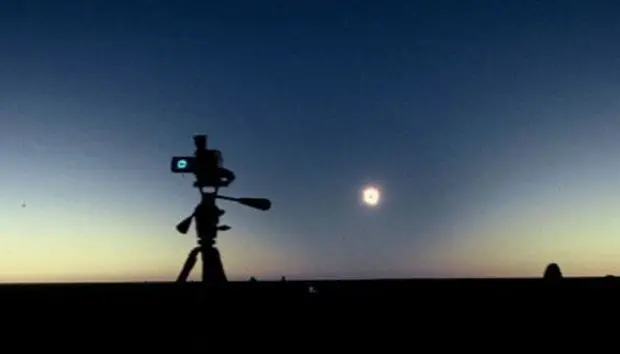
TEMPO.CO, Jakarta - Several major astronomical events or astronomical phenomena will take place throughout August 2026, including a Total Solar Eclipse, a Partial Lunar Eclipse, the Perseid meteor shower, and a Blue Moon. However, not every event will be visible from Indonesia because of geographic location and the timing of each phenomenon.
According to astronomer Avivah Yamani of the South Sky astronomy community in Bandung, some of the month's most anticipated celestial events will occur outside Indonesia's viewing range, while others can still be enjoyed from different parts of the country.
Total Solar Eclipse
The Total Solar Eclipse, expected around August 12–13, will only be visible along a narrow path stretching across the Arctic, Greenland, Iceland, Spain, Portugal, and Russia. Parts of northern North America, western Africa, and Europe will also witness the event.
Indonesia lies far outside the eclipse path, meaning observers in the country will not be able to see either the total or partial phase.
"The next Total Solar Eclipse will not occur until two years from now," Avivah said on Sunday, August 2, 2026.
Partial Lunar Eclipse
The Partial Lunar Eclipse on August 28 will be visible across the eastern Pacific, the Americas, Europe, and Africa.
For Indonesia, however, the eclipse takes place during daylight hours, making it impossible to observe.
Perseid meteor shower
Although the Perseid meteor shower remains active until August 24, its peak is not favorable for Indonesia.
The shower reaches maximum activity on the night of August 13, when up to 100 meteors per hour are expected under ideal conditions.
The meteors originate from debris left behind by Comet Swift-Tuttle and appear to radiate from the Perseus constellation. According to South Sky, Perseus rises only after midnight, around 00:17 WIB, making the peak display effectively unobservable from Indonesia.
Which astronomical events are visible from Indonesia?
Several celestial events can still be enjoyed during August:
- August 9: The star Elnath will disappear behind the Moon, although the occultation can only be observed from southern Papua. Elsewhere in Indonesia, observers can see the Moon pass very close to Beta Tauri.
- August 16: Venus and the Moon will appear close together above the western horizon after sunset. Venus sets at 20:47 WIB, followed by the Moon about eight minutes later.
- August 21: The Moon will appear near the bright star Antares in the southwestern sky, visible from sunset until around midnight.
What lunar phases will occur this month?
August also brings several notable lunar events:
- August 13: New Moon.
- August 22: The Moon reaches apogee, its farthest point from Earth, at about 404,642 kilometers.
- August 28: Full Moon, which will be visible from sunset until dawn.
The second Full Moon of August is also known as a Blue Moon, although the Moon will not actually appear blue. The term simply refers to the second Full Moon occurring within the same calendar month.
While Indonesia will miss both August's Total Solar Eclipse and Partial Lunar Eclipse, skywatchers can still observe several other celestial events, including close Moon-planet encounters, a lunar conjunction with Antares, and the month's Blue Moon. Those hoping to witness a Total Solar Eclipse from Indonesia, however, will have to wait for a future opportunity.
Read: Meteor Over Java Triggers Boom, BRIN Explains the Phenomenon