



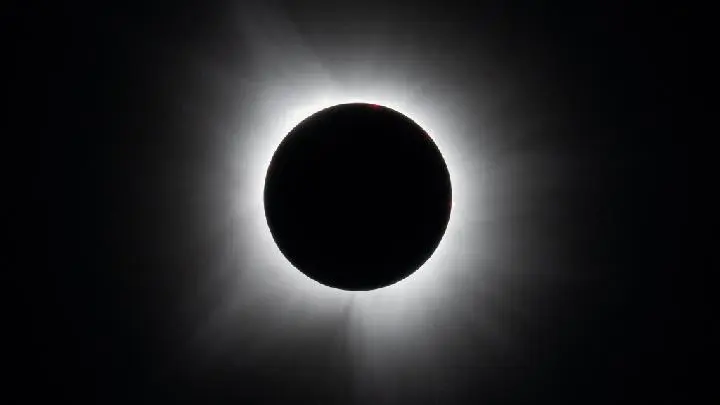
TEMPO.CO, Jakarta - Spain will host several major eclipse events over the next three years, with the first and most anticipated being the total solar eclipse on August 12, 2026. However, as exciting as the celestial spectacle promises to be, skywatchers may face a number of unique challenges when it comes to experiencing it.
Alongside Greenland, Iceland, the Atlantic Ocean, and parts of Portugal, northern Spain lies within the path of totality. According to NASA, locations within this path will witness the Moon’s shadow sweeping across Earth as it covers the Sun.
While millions of people across Spain are eagerly awaiting the event, securing a clear view may prove more difficult than expected. One of the eclipse's biggest challenges is its timing. The event will occur shortly before sunset, with the eclipsed Sun positioned low on the west-northwestern horizon. As a result, successfully viewing the eclipse will require more than simply being inside the path of totality, but will also depend on choosing the right location.
The path of totality will first cross Galicia in northwestern Spain, allowing some areas to experience a 100% total solar eclipse. Although major cities like Madrid and Barcelona have their residents catching an exceptionally deep partial eclipse, they will miss the true spectacle of totality, including the solar corona and other phenomena visible only when the Sun is completely covered.
The Sun's unusually low position in the sky adds another layer of difficulty. Depending on the location, the eclipsed Sun may appear only a few degrees above the horizon, particularly in eastern Spain and the Balearic Islands. Spain's dramatic landscapes, from the mountains of Galicia and Asturias to the rolling hills of the Iberian Highlands, could further obstruct views.
Even some Mediterranean coastal resorts may not offer ideal viewing conditions, as many were designed to face east toward the sunrise rather than west toward the sunset, potentially placing buildings, trees, or hills directly in the line of sight.
According to Space.com, weather is another factor that could make or break the eclipse experience. Because the eclipse will occur very low on the horizon, local weather forecasts may not tell the whole story. In places such as Mallorca, viewers will be looking through a vast stretch of Earth's atmosphere, meaning clouds far beyond the immediate forecast area could still block the view.
Adding to these challenges is the prospect of severe traffic congestion. Because Madrid and Barcelona sit so close to the path of totality, millions of residents and visitors may travel to nearby viewing locations on eclipse day. Heavy traffic is expected around Madrid, Barcelona, Tarragona, Zaragoza, and Valencia, particularly before and after totality.
Read: Europe to Witness First Total Solar Eclipse Since 1999