



Manchester to Nice is the archetypal easyJet flight. It covers a distance of 797 miles, almost exactly the average route length of the low-cost airline. The journey from north-west England to the Côte d’Azur airport is scheduled to last two hours and 15 minutes: the same duration as a southbound Avanti West Coast train to London, with the aesthetic advantage that you arrive at the Mediterranean rather than the Thames.
When easyJet started the no-frills revolution in 1995, passengers were not expected to put up with limited legroom and an absence of complimentary meals and drinks for more than an hour. The airline’s first two routes linked Luton with Glasgow and Edinburgh, little more than 300 miles away as the Boeing 737 flies.
Six years later, I was talking to the boss of a “full frills” airline, whose blushes I will spare. He listed to me some destinations from the UK that he claimed would never be served by upstart airlines such as easyJet and Ryanair: “Morocco, the Canaries and Madeira.” The reason: “I don’t think their customers would be prepared to put up with the service they provide for that length of journey.”
Shifting landscape
A quarter of a century on, the arrivals screens at Tenerife South airport show how poorly that prediction has worn. Ryanair from Edinburgh is followed by Jet2 from Glasgow – each scheduled to take almost five hours. Hardcore sunseekers from Eastern Europe fly from Warsaw to the Canary Islands on Wizz Air in six hours flat (and not in the sense of business-class seats that convert to a flat bed on board).
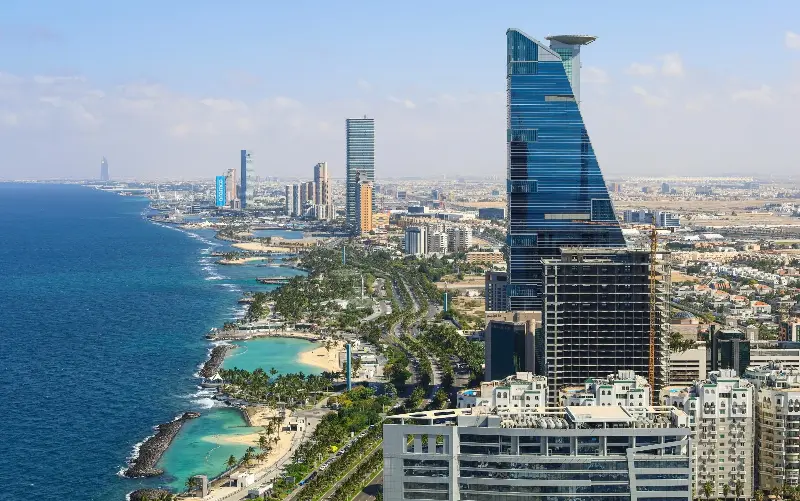
Yet that last airline has now dropped its groundbreaking budget routes from London Gatwick to Saudi Arabia. The link to the Red Sea port of Jeddah was just shy of 3,000 miles, taking up to seven hours. Could it be that Wizz Air has found out the hard way that passengers simply will not tolerate high-density, non-reclining seating for that long?
No. Last December I took that Gatwick-Jeddah flight. It was packed. Some passengers had family connections in Saudi Arabia. Others were heading for Mecca to perform the Islamic ritual of Umrah; a high-speed train runs direct from Jeddah airport to the holy city in less than an hour. My reason for taking the flight – a low-cost self-connecting trip to Delhi – was evidently a niche mission.
What unified us was that it was a genuinely pleasant flight. The plane, a new Airbus A321, was quiet and comfortable enough. The cabin crew was outstanding in looking after a group of passengers rather different from the average budget flight from Gatwick. The in-flight trolley provided plenty of choice and sustenance; after consulting the crew and my neighbours about whether it was appropriate to consume alcohol, I even enjoyed a beer over the Balkans.
Filling a plane is one thing; doing it profitably is another. And Wizz Air simply could not get the sums to add up. Booking a month ahead, I paid £195 one way. Almost half of that went straight to the Chancellor as air passenger duty. Next, the flying distance was around 3,000 miles. While the plane is perfectly capable of flying that far, it is a thirsty business to fly tons of fuel to be burnt later in the journey. Selling the odd Birra Moretti does little to offset the cost.
The final straw: the crew could not fly there and back in a day. Organising hotels, transport and meals for the pilots and cabin crew to stay in Saudi Arabia for 24 hours before flying home erodes the advantage of low-cost airlines over “full-service” carriers.
New frontiers
Wizz Air’s longest route from the UK now links Luton with the Armenian capital, Yerevan. It is a long shift – more than 11 hours there and back – but can be performed by a single crew. They spend 45 minutes at the destination airport, rather than a night and a day. Jet2’s longest route, from Glasgow to Larnaca in Cyprus, has similar timings.
Other airlines believe they can make the sums add up even with “night-stopping” crew. The current longest hop among UK low-cost airlines is Manchester to the island of Sal in Cape Verde, taking a shade more than six hours on easyJet.
This month, though, the UAE-based low-cost airline Air Arabia has trumped that. A new link from Gatwick to Sharjah – just 11 miles from Dubai International – is timed at seven hours and 15 minutes. The typical one-way fare from Gatwick to the Gulf for September is £302 on Air Arabia – or £200 more on Emirates.
You could be indulged by one of the world’s best airlines, or economise with a strictly no-frills (and no-alcohol) experience. How long is too long on a low-cost airline? You decide. It’s good to have choice.