



Looking on as your pet cat wakes from yet another luxurious nap, it can be hard not to feel a little envious. Now research has shown just how idle pet cats really are, finding that they only bother to walk less than 5 per cent of the time.
Scientists discovered that cats actually spend about three-quarters of their lives either lying or sitting down. They spend around 5 per cent of their time grooming themselves, and another 5 per cent eating.
The findings came from movement trackers, which recorded the secret lives of cats 24 hours a day for seven days in the summer, and again in the winter. The collar-worn trackers were given to 18 cats with outdoor access, and 10 indoor cats, to see how they spent their time.
In the summer, the outdoor cats spent 35 per cent of the time lying around, and 38 per cent of it sitting. That increased to 39 per cent of their time lying down in the winter, and 31 per cent of the time sitting.
Indoor cats spent 37 per cent of their time lying down in the summer, and 41 per cent of it sitting, with similar figures, 35 per cent and 41 per cent, for sitting and lying down in the winter.
Dr Michelle Smit, who led the study at Massey University in New Zealand, said: “One of the things owners were most curious about was what their cats were doing when nobody was watching.
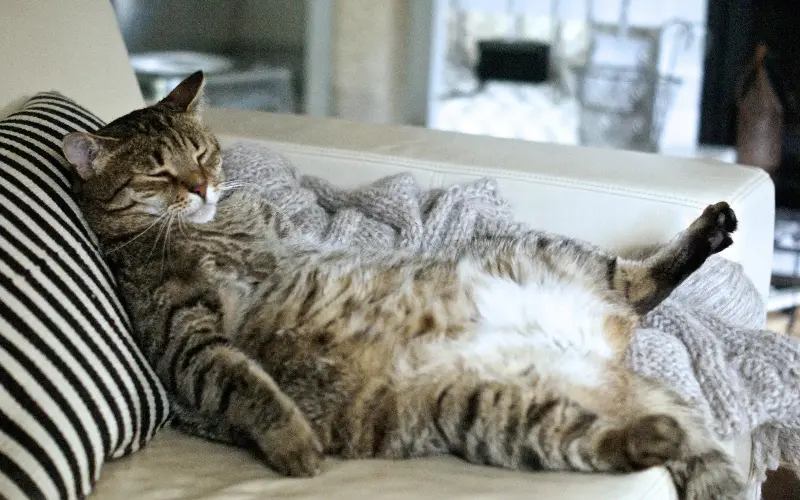
“Because cats spend so much of their day out of sight, especially outdoor cats, this technology gave us a rare glimpse into their hidden daily routines. People tend to suspect that cats are lazy, and these results suggest that, indeed, they spend much of their day at rest, with sitting and lying down making up most of their observed behaviour.”
In behaviour familiar to many sleep-deprived owners, the cats displayed bursts of activity around sunrise, when people are often woken by their pet noisily demanding food, and sunset, when cats often have a fit of the “zoomies”.
Dawn and dusk are active times for cats because of their hunter brains, as these are the times of day when the mice and small birds they prey on are most active. But the evening burst of activity came a bit earlier in the evening for indoor cats – between 3pm and 5pm in the winter – in comparison with outdoor cats, who were most active between 4pm and 9pm.
The researchers could not be sure why, but suggested that indoor cats’ hunting instincts may have been overridden to some degree by domestic life, which causes them to become particularly active at the times when their human families return from school and work.
Dr Smit said: “Some of the activity peaks in indoor cats appeared to occur in the late afternoon, around the time owners might be returning home from work. However, we did not collect information on owner schedules, so we cannot confirm this directly.”
The study, published in the journal Pets, found that both indoor and outdoor cats spent 5 to 6 per cent of their time grooming across both summer and winter, and 4 to 7 per cent of their time eating.
Previous research led by Dr Smit in 2024 found that cats living in rural areas spent more time eating than their counterparts in urban areas, while cats living in single-cat households spent more time lying around, but less time sitting, than cats living in multi-cat households.
Cats in households with at least one child spent more time in the summer lying around, but less time sitting, compared with cats in households with no children. This study established that the home environment had a major influence on cat behaviour.