



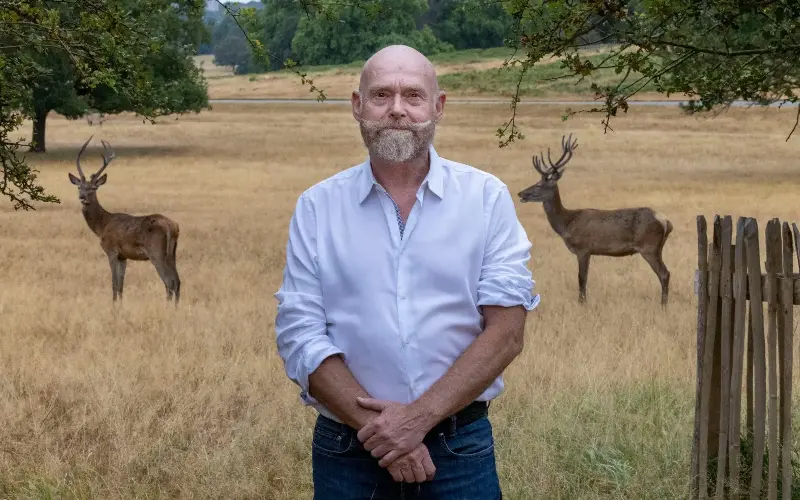
Red and fallow deer have roamed freely in Richmond Park since it was created by King Charles I in 1637. This means they have survived – and thrived, in fact – through a civil war, the great plague, the Industrial Revolution and two world wars. It would be a great shame if after all that they were taken down by a tourist’s picnic.
Sadly, at the tail end of a long, hot summer that has brought a consistently high number of visitors to the park, their future could be threatened by just that. This week, a stag was put down by park rangers after it lunged at a picnicker. The deer had approached a group of people sitting on the grass, sniffed around for food, and attacked a man in his 60s who was left with (non-life-threatening) chest injuries.
Paul Richards, the park’s manager, says incidents like this are the direct result of visitors feeding the deer their picnic food and generally treating the ancient 2,500-acre landscape in south-west London as a “petting zoo”. A human intervention as small as feeding one of the deer a carrot stick can have devastating consequences.
“What we found with this particular deer is that its behaviour had completely changed,” he says. “It wasn’t naturally grazing; it moved away from the rest of the deer and became quite solitary. Because it had been fed by tourists, it was just looking for people to get food off.” As a result, it had to be euthanised.
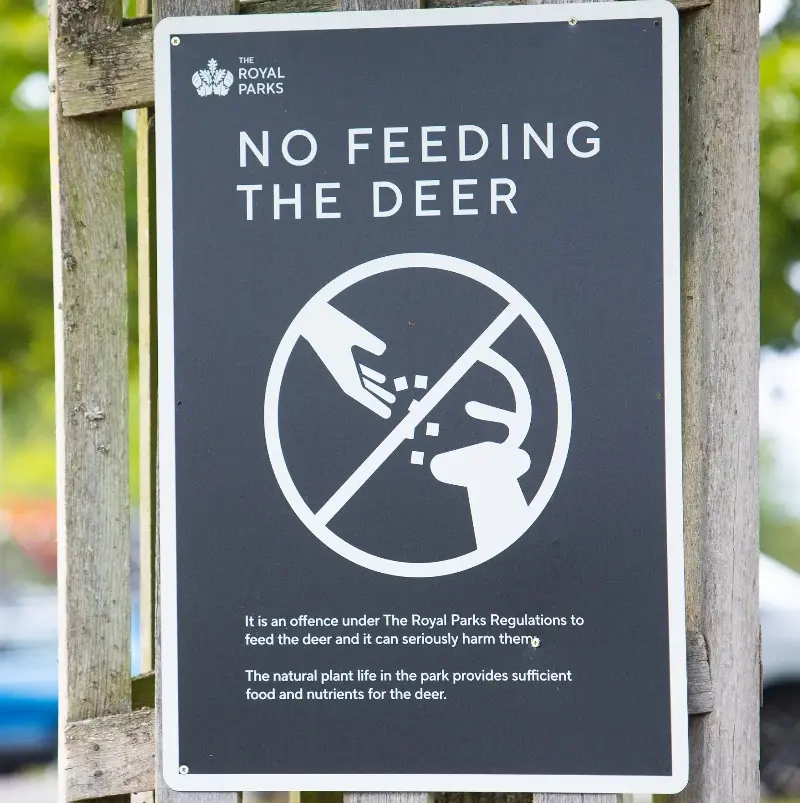
Richards took up the post of park manager in the spring of 2022. In his four-year tenure, there has been only one other incident of a deer being put down because of an incident with a member of the public – when a deer that had become used to being fed snacks from people’s backpacks “jumped on a lady’s back and pushed her over”. But this summer he has seen a marked increase in visitors approaching the deer, even attempting to stroke them, and feeding them carrots, sandwiches and crisps from their picnics.
“I go up to them and explain that they’re doing more harm than good,” he says. “People think they’re doing a good deed, bringing some carrots along for the deer. But that act of kindness is quite the reverse – you’re actually doing a lot of harm.
“There is plenty for deer to graze in the park already – normal grazing is grass, both green and dry, like hay, other vegetation, things like brambles, acorns, beech nuts and horse chestnuts,” he says. Aside from being much better for the deer, this is essential to maintaining the park’s sweeping landscape. Its acid grassland habitat is protected by the deer grazing and eating all the leaves and twigs on trees that grow below 6ft.
Meanwhile, picnic food offered up by tourists also poses a health risk to the deer themselves. “They won’t open a packet of crisps, obviously. They’ll eat the crisps and the bag they were contained in. Same with sandwiches, plastic and all,” Richards says. “Again, by introducing this bad habit, the deer start eating things they really shouldn’t, and that does them harm as well.”
There are two factors at play here, according to Richards: a sheer lack of common sense – which sadly seems to be increasingly widespread these days – and the pernicious impact of social media.
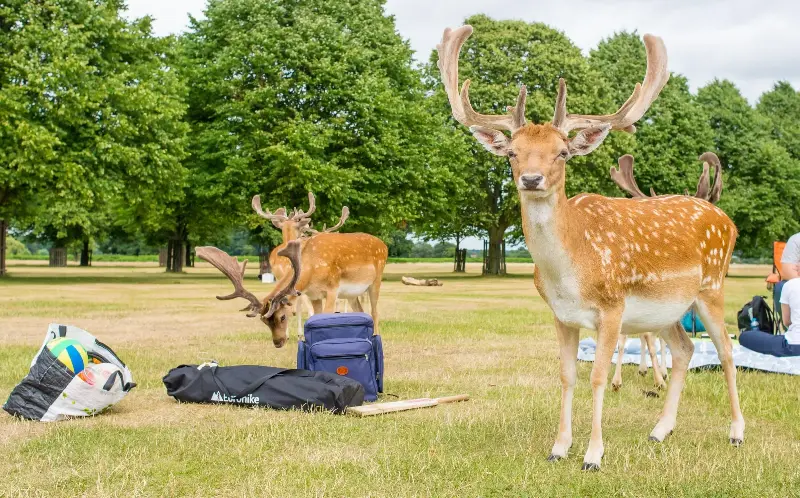
“Certainly this year we’ve seen more people trying to engage with the deer. A lot of it is to get photographs. Instagram and other social media [mean] a lot of people want to get a selfie,” he says. “But you’ve got to respect the fact they’re wild animals; they’ve been here for centuries and this is their park, really.”
He points out that certain sections of the public seem to be unaware that stags are “big, powerful, and can run at 30 miles an hour”. At this point in the year the male deer have antlers that can be up to 35in long, in time for the rut in September, when they compete for a mate. “They’ve gone rock-hard now and have sharp points on them,” he adds. “Sadly, what happened to the man on Saturday is that the deer took fright and gave him a nasty gouge on his side.”
The Met Police’s dedicated Royal Parks unit was officially disbanded in November last year, which has also had a knock-on effect on how the park is policed and its wildlife protected. “We had a dedicated police team based here in Richmond Park,” says Richards. “You had those eyes in the park patrolling – we’ve lost that.” The park is still policed by local officers but no longer has a team whose only job is to protect it.
Volunteer park rangers do a great job at getting the safety message across – primarily to stay a minimum of 50m away from the deer – but unfortunately some people still choose to ignore it. “I don’t know whether they’re just naive, or they just don’t seem to have that common sense,” he says. “It’s always been a bit of an issue.”
Earlier in the summer, footage of families attempting to stroke the deer was widely shared online. At the time, Richards said his team were “shocked and extremely concerned” by the footage, which appeared to show a parent holding their young children within inches of the deers’ potentially lethal antlers.
“I was flabbergasted by that. They’re wild animals, you don’t know how they’re going to respond,” he says.
So what advice would he give to people who see someone approaching the animals? Richards suggests speaking to them, or else contacting park management. “You might get someone who says ‘it’s none of your business,’ but mostly people say, ‘thank you for letting me know, I wasn’t aware.’”
“We want them to remain wild and not be domesticated,” he says. “Their grazing activities maintain the park that we all enjoy.”