



“Overbooking shouldn’t be allowed,” writes Roger Feraille. “[It’s an] appalling practice that needs further investigation and stopping immediately,” agrees Michael Brown. “Terrible practice that should be banned,” echoes Martin McPhie.
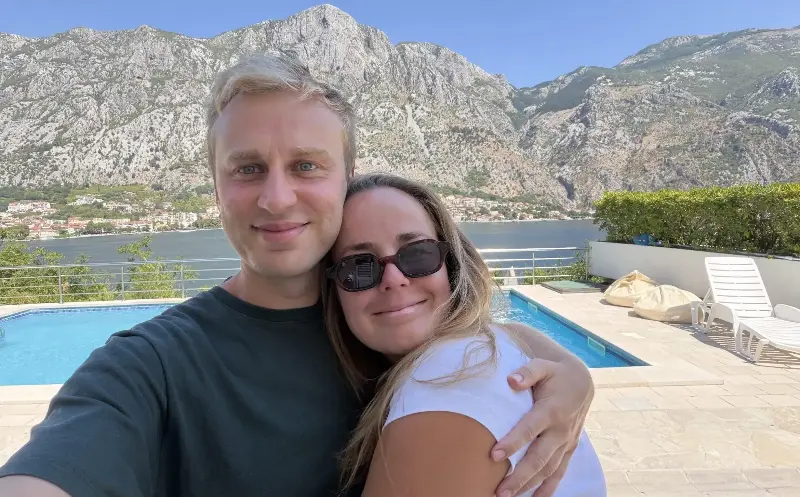
They are all responding to the recent Telegraph Travel exclusive about Katya and Andy Wedlake, who were forced to fly separately on their honeymoon to Montenegro. At Gatwick airport, easyJet ground staff said the plane to Tivat was overbooked and had room for only one of them. The airline had sold more tickets than there were seats available and the newlyweds were told that unless one of them occupied the single remaining place, with the other waiting until the next day, they would lose all their passenger rights. Katya began their honeymoon on her own, with Andy joining her 24 hours later.
EasyJet has since apologised for the way the incident was handled and has paid compensation. But the foul-up has focused attention on an aspect of air travel that many people instinctively feel is unfair – yet which, when managed properly, works to everyone’s benefit.
What is overbooking?
Put simply, it’s selling more tickets for a flight than there are seats available. The airline aims to predict, using historical data, how many “no shows” there are likely to be for in-demand flights.
The concept first arose in the days when airline tickets were ridiculously expensive but super-flexible. Passengers booked from Heathrow to Paris or Manchester to Dublin could miss their flight – whether accidentally or deliberately – and re-book for another departure without a penalty. These days the vast majority of us book tickets that are non-refundable. Yet overbooking continues because life often intervenes between the traveller and their plane.
Frequent flyers know from experience how many obstacles can stand between them and their flight: a short-notice family or work emergency; traffic gridlock on the way to the airport; a missed connection from another flight; or, these days, getting through the EU Entry-Exit System. In addition, on many budget flights there is no incentive to let the airline know if your plans have changed.
On average, according to easyJet, one in 20 passengers fail to show up – meaning nine empty seats on an average flight.
Is it fair to sell tickets for seats that don’t exist?
Many people cite the analogy of theatres or sports events, pointing out that you would be furious to find your seat already occupied. But planes are different. Airlines make no guarantees about where you will sit on board. This gives them flexibility to say: “We have a 180-seater aircraft and we know five per cent of passengers typically fail to turn up, so we will sell 189 tickets.”
Selling the same seat twice works to everyone’s benefit when handled correctly. Mostly, airlines get away with the practice, so they make more money. That, they say, helps keep fares down. Overbooking also allows people who are desperate to book a last-minute seat to do so – even if, in theory, there is no room. As there are fewer empty seats, the environmental impact of each passenger is marginally lower, too.
Sometimes, though, the carrier is caught out and too many people turn up. Awkward? Not if the airline is generous enough. American carriers are brilliant at handling overbooking – to the extent that I choose flights that I think might become oversold. Standard practice is to offer increasing sums of money to entice flexible passengers to take a later departure. Typically, offers start at $300 (about £222), but can increase swiftly. Airlines may also throw in a hotel, dinner and breakfast, and possibly even an upgrade. It means “involuntary offloads”, where passengers are denied boarding against their will, are almost unheard of.
What happens in the UK?
Under air travel rights rules, airlines are entitled to overbook. If they misjudge sales and too many people turn up, they are supposed to seek volunteers. The law states: “When an operating air carrier reasonably expects to deny boarding on a flight, it shall first call for volunteers to surrender their reservations in exchange for benefits.” This is a straightforward deal between the airline and the passenger who agrees to give up their seat.
Unlike their American counterparts, though, UK airlines seem to have little appetite to keep increasing the incentive until they free up the required number of seats. They tend to jump quickly to step two, which says: “If an insufficient number of volunteers comes forward to allow the remaining passengers with reservations to board the flight, the operating air carrier may then deny boarding to passengers against their will.”
How do staff choose who to offload?
British Airways and easyJet generally offload the last passengers to check in. If you attempt to check in close to departure, and get a message saying “check in at the airport”, that could be because the plane is oversold. Airlines prefer not to remove people who have been assigned seats, not least because it avoids the “I’ve paid for this place, how dare you remove me?” arguments.
Passengers travelling with only cabin baggage are also more likely to be offloaded because it avoids the complication of checking in luggage and then removing it from the hold.
Typically you will be given a boarding pass without a seat number, and be told to wait by the gate. Usually the airline guesses right and you will get a place, but passengers travelling together may be split up.
What happens if I am offloaded?
In the UK and Europe – or anywhere in the world if you are flying on a British or EU airline – you should be rebooked on any carrier that can get you to your destination as soon as possible. You are entitled to compensation on a sliding scale depending on how long the flight is and how late you will be. This ranges from £110 for a short-haul trip (up to 932 miles) when you arrive more than two hours late, to £520 for a long-haul flight (more than 2,175 miles) that gets you there four hours or more behind schedule.
In theory you are supposed to be compensated immediately in cash, but in practice you may have to claim online after completing your journey.
In addition, if you are delayed overnight the airline must provide a hotel room and meals.
What about other parts of the world?
For flights departing from US airports, compensation is twice the one-way fare for passengers who arrive one to two hours late, rising to four times the fare for longer delays and longer flights. Airlines can cap these amounts at $1,075 (about £795) and $2,150 (about £1,589) respectively, but they are still far higher than in the UK and Europe. As a result, carriers are much more generous with their offers to volunteers. “There is no limit to the amount of money or vouchers that the airline may offer, and passengers are free to negotiate with the airline,” the Federal Aviation Administration (FAA) says. Note that if an aircraft is “downsized”, however, you are generally not entitled to any compensation.
Canada has strict rules, with denied boarding compensation of up to C$2,400 (about £1,275). In most parts of the world, though, you have no legal entitlement.
Are there any airlines that don’t overbook?
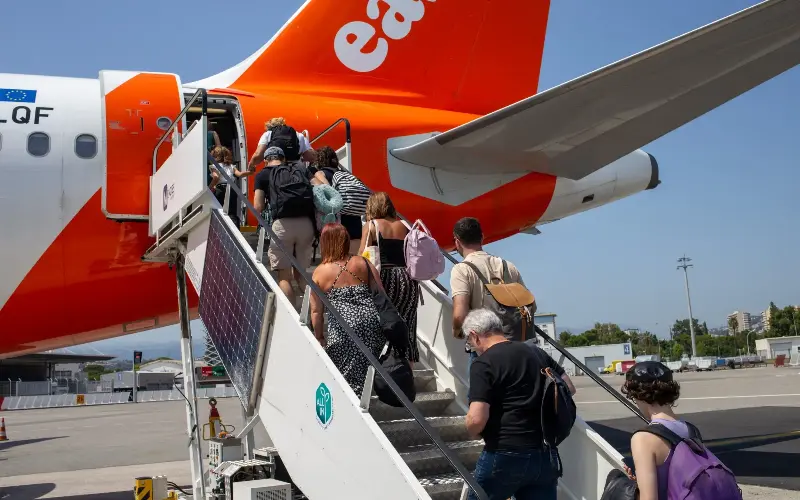
Jet2 and Ryanair do not sell more tickets than there are seats available, but even then a late change in the size of an aircraft may mean that fewer passengers can travel. Ryanair, Europe’s biggest budget airline, has planes that seat either 189 or 197 passengers. If a smaller jet replaces a larger one, some people may not be able to fly. Some US airlines do not overbook, but the FAA warns that even on these carriers you may need to give up your seat to make room for a Federal Air Marshal.
Are there alternatives to overbooking?
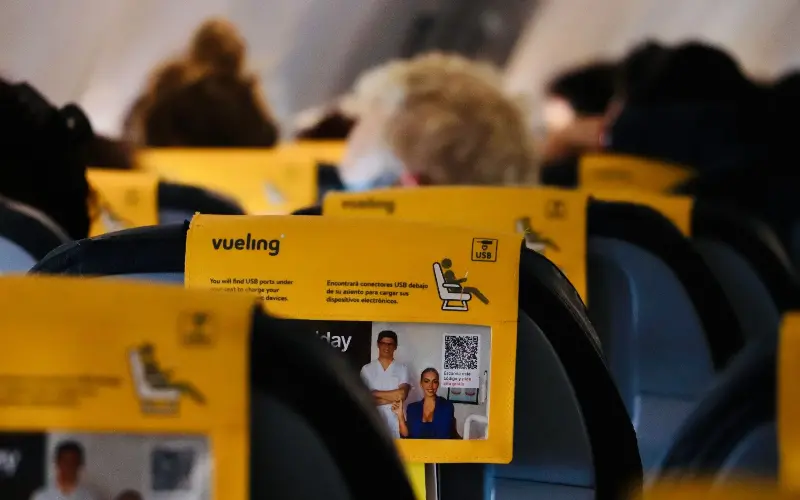
Vueling, of Spain, and Wizz Air both offer incentives to passengers in advance when they see planes are filling up. You may be emailed and offered a voucher if you are prepared to switch to a different departure. Even then, there can be problems: Telegraph Travel reported on the case of a woman in her 80s who was taken off a Málaga-Gatwick flight by Vueling after the airline sold too many tickets.
How could things be improved?
All too often in the UK and EU, I hear of cases in which ground staff have simply asked for volunteers once, offering exactly the stipulated compensation for denial of boarding. That means there is no incentive for trying harder. British law could be changed to increase compensation to much higher levels, whereupon the airlines would be much more inclined to incentivise passengers to leave of their own free will.