



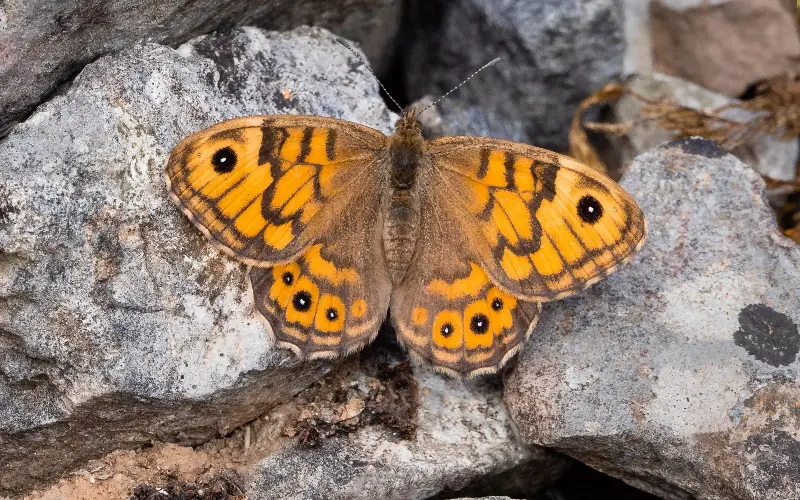
A quarrying company has been accused of “obliterating” a habitat for rare butterflies on a four-acre wildlife reserve after moving in to shore up a rockfall.
The number of butterflies recorded at former Hoe Grange Quarry in Derbyshire has fallen from 200 a day to just 20 a week since Longcliffe Quarries closed off the site.
The former limestone quarry had not been mined since the 1980s and became a popular spot for the rare Wall butterfly under the management of Derbyshire Wildlife Trust.
But Longcliffe Quarries, the owner of the site, sealed it off in January to carry out works that conservationists say they were not consulted about.
Ken Orpe of Butterfly Conservation East Midlands (BCEM) claimed the company went “completely over the top” with its repairs, and left the site a barren, mud-covered wasteland.
Mr Orpe has been running the site with his wife Pat and other volunteers since 2011, and described the impact as a “catastrophe”.
“To obliterate the site as they have done is absolutely disgusting – we’re distraught,” he told The Telegraph. “We’ve put 15 years of our lives into this.
“It’s an ecological disaster.”
Dave Savage, Derbyshire Wildlife Trust’s head of landscape recovery, described the damage as “deeply disappointing”.
He said: “For more than 10 years we’ve managed the site on behalf of Longcliffe Quarries, helping to make it one of Derbyshire’s most important wildlife sites for wildflowers, butterflies and other pollinators.
“While we fully recognise that health and safety must come first, we’re disappointed the work was carried out without consulting us.
“We believe a solution could have been found that kept people safe while avoiding such significant impacts on this important habitat.”
Longcliffe Quarries defended the work and claimed it told the wildlife group of its plans.
Paul Boustead, group managing director, said the work undertaken was considered most suitable to “minimise disturbance”.
He said: “Longcliffe is committed to protecting and developing biodiversity across all its sites – working and former operational quarries. However, safety will always come first.”
He said the site was closed because of “unstable rock faces” and the company had to establish “‘bunds’ or mounds – to contain any future rockfall and form a physical barrier to discourage access into any potentially unsafe areas. These bunds now cover just 4.5 per cent of the five-hectare site.”
Mr Boustead added that there was “huge potential” for the site to continue to be a haven for biodiversity.
He said: “We are confident that the area in which the bunds have been installed will quickly re-establish itself as a habitat.
“The material used is a low nutrient sub-soil which is the most suitable for encouraging wildflower development. Indeed, in our visits during July, flowers were already spotted growing in area areas traversed by the vehicles that installed the bunds.
“Butterfly Conservation East Midlands was informed that this work had to be done; and that the site had to be closed whilst the work took place and until the area was again deemed safe. The site is now available for them to again host guided visits.”