



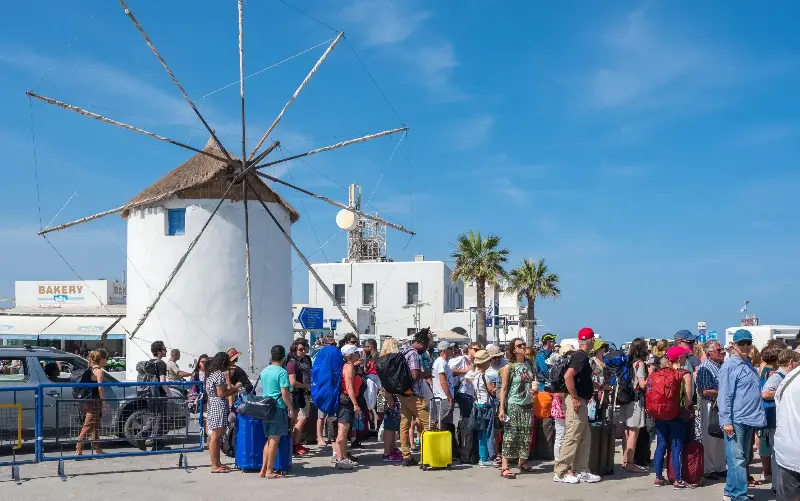
Electronic beats seeping from the driver’s sound system (rather than the syrupy Greek tunes that had serenaded my taxi ride a few years before) should have been a warning. As someone who’s been visiting Paros on and off for years, however, the news that this Cyclades Island, famed for its marble, sandy beaches and punch-packing white spirit souma, was set to become “the new Mykonos” still seemed like a bad joke. Yet the signs were there.
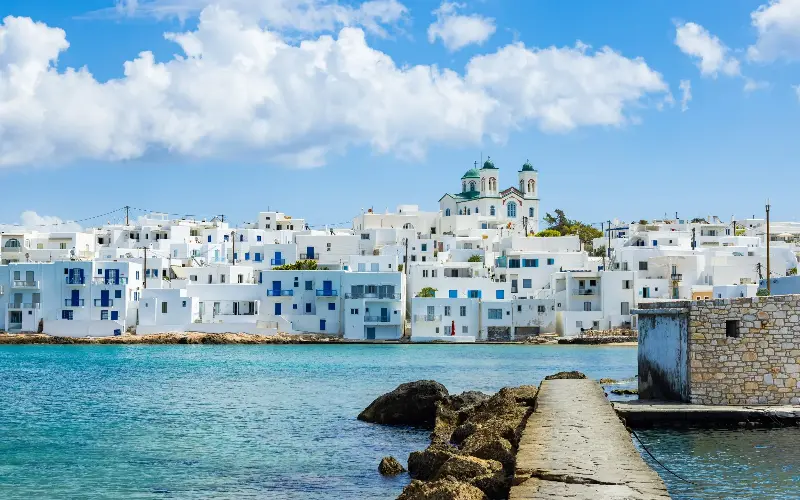
Pretty Paros, a 40-minute ferry ride from Mykonos, had recently been the backdrop for teen flick One Day and psychological thriller Malice. A slew of slick new five-star hotels, including Parilio, Parian Chronicle and Ovea, had upped the accommodation ante on an island which had always been more about family-run guesthouses.
Then there were those alleged celebrity sightings: Matthew McConaughey scoffing grilled octopus at overpriced seaside taverna Barbarossa; rapper Ludacris snoozing in a cabana on Kolymbithres Beach; Jeff Bezos swanning around in Naoussa’s glitzy marina.
I’d been in Mykonos a few days before, battling chaotic traffic on the island’s busy roads or mired in miles of bare midriffs and Gucci loafers in the cramped Chora. I was staying at Cavo Tagoo, the epicenter of island hipdom. The staff were indignant when I mentioned Paros’s “new Mykonos” status. “They should find their own style, not copy us,” they huffed.
Two days later, when I arrived in Paros, it struck me that its chaotic airport – I’ve always arrived by ferry – remains very old-school Greek. We were crammed into a building the size of a Mykonos hotel suite, minus the luxury trimmings. Stood two abreast and barely breathing in the heat, we waited for the antiquated luggage belt to deliver our luggage. My red-ticketed priority bags were the very last to arrive. Not very Mykonos. But a swanky airport upgrade is firmly on the agenda, with completion expected in 2030.
The alarm has been raised about the tourism boom in Paros. According to former MEP Kriton Arsenis, the island has been “overbuilt at a dramatic pace” in recent years. “In the past five years alone, it has topped the Cyclades in new building permits, surpassing even Mykonos and Santorini,” he told Brussels-based news and media organisation Euractiv last year.
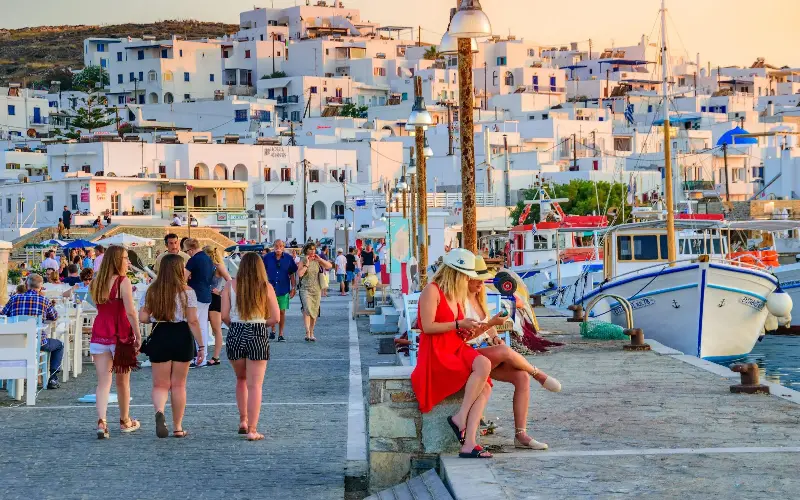
Heading through the suburbs of the main town, Paroikia, where mageirios serving home-cooked Greek comfort food rub shoulders with grubby garages and hole-in-the-wall rental car shops, Paros seemed much the same. We followed the same potholed roads lined with sugar-cube houses, and there were the usual sun-scorched fields and the occasional windmill. But my driver was in no doubt that the island has changed dramatically over the past few years. “They’re building everywhere by the coast – no Greeks can afford to buy houses here anymore,” he snarled.
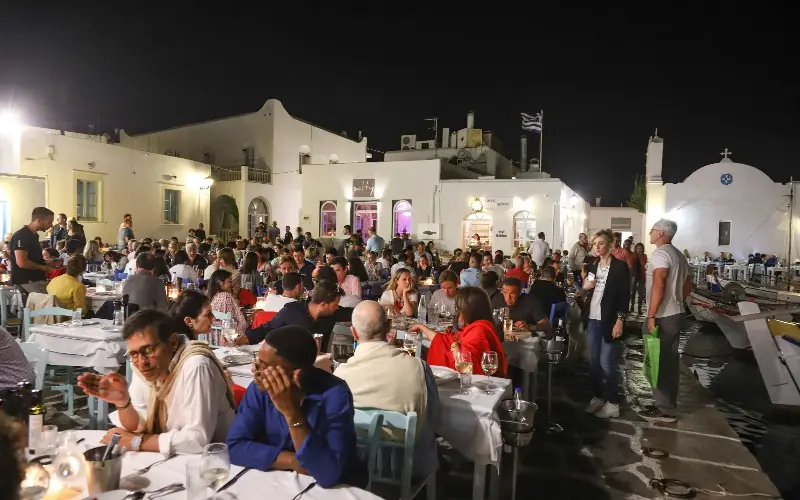
Tucked into a warren of alleys a few blocks back from seaside resort Naoussa’s glitzy marina, 26-room boutique hotel Meros is one of the island’s new arrivals. Naoussa is the island’s nightlife capital and the other guests, who spent their days lounging around the pool and nights out on the town, were almost exclusively American and Australian. “The Arab market is also beginning to come for Naoussa’s nightlife and shopping,” one staff member told me.
I asked him what he thought about the “new Mykonos” rumour. “Paros is more than twice the size of Mykonos, so you only need to go across the island to Piso Livadi and other resorts to find areas that are quiet and less expensive,” he suggested.
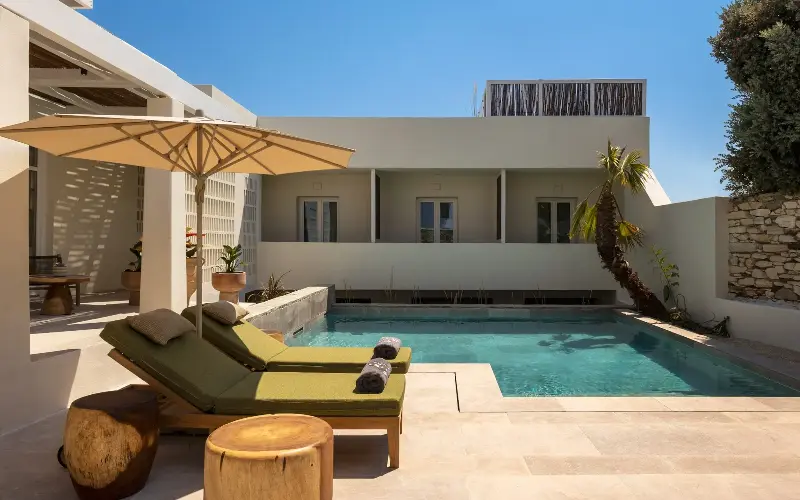
Although Naoussa’s small sandy beach lacked the allure of Psarou or Paradise across the water, the resort’s crowded alleys packed with boutiques vending slinky resort wear and sparkling jewellery certainly reminded me of Mykonos. And at night the resort buzzed with raucous laughter and ear-splittingly loud music. Even with windows tight shut, the din in my room was unbearable, so I joined partygoers every night at tavernas like To Takimi and Axinos, where the vibe was more bad karaoke than DJ sets, and the cocktails were cheap.
Keen to see whether other parts of the island had changed since my last visit, I hired a scooter and sought out some of my old haunts. My favourite fishing village, Aliki, now had a new boardwalk, smart restaurants and was surrounded by luxury villas, short-term rental apartments, and pool complexes. I arrived during a protest by locals against the recent decision of Greece’s finance ministry to lease the once dreamily peaceful beaches of Trypiti and Aliki to the sunbed rental brigade. “They are pouring money into hotels and giving out building permits like confetti, but our roads are terrible, we can’t access our own beaches and we don’t even have a hospital,” one protester told me.
In Piso Livadi, where I’d once spent a month sleeping on the beach and living on Greek salads and pizzas, the sands were littered with sunbeds for hire at €50 a pop. Fine-dining emporiums were rapidly replacing the ouzeries and family-run tavernas along the seafront.
With some trepidation, I took the winding road inland to the island’s one-time medieval capital, Lefkes. Reassuringly, at Klarinos taverna, Andreas Ragousis still dished up garlicky snails, karavolades, herb-fragrant spitted pork kontosouvli and other dishes that his father Nikos has served ever since he opened the taverna back in 1982.
But even in this sleepy spot I found concern about the direction in which Paros is heading. “They have built villas and ruined our countryside,” a local shopkeeper told me. “Now Paros is to have a new airport and nothing will stop them. We locals will soon be priced out – this will be another island of millionaires and concrete.”
Heidi Fuller-love flew to Paros with Aegean Airlines which offers services from Heathrow to Paros via Athens from €243 return. Meros has rooms from £189 per night, including breakfast.