



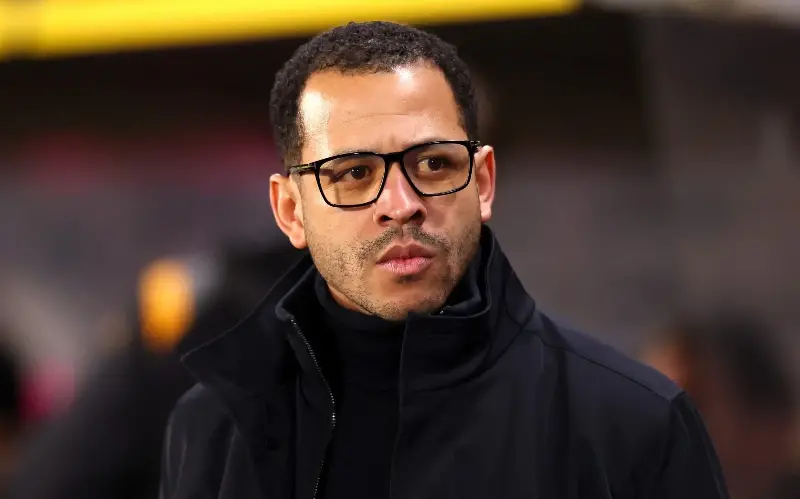
Chelsea wanted to bully Arsenal in the Roman Abramovich era. Today, they are being run like they want to be them.
Liam Rosenior’s recent appointment is proof of Chelsea’s hierarchy studying and admiring Arsenal’s blueprint. They hired their new head coach in the hope he will become their version of Mikel Arteta.
As the clubs prepare to go head to head this weekend, Arteta’s appointment at Arsenal in 2019 offers a useful parallel to Rosenior’s switch to Chelsea in 2026.
It is easily forgotten that Arteta was both younger and significantly less experienced than Rosenior is now when he arrived at the Emirates. While his status as a former player – and his years working alongside Pep Guardiola – ensured a more positive initial reception at Arsenal than Rosenior encountered in west London, there were nevertheless more established, proven managers out there.
Joining a club facing the power of Manchester City, Arteta had much to prove to both supporters and senior dressing-room figures, some of whom may have doubted his ability to achieve the influence he wields today.
Similarities with Rosenior’s situation on joining Chelsea are clear, albeit he inherited a more talented squad than Arteta did seven years ago.
Big scalps early in reign gave Arteta authority
Whether the instruction from above is to embark on a slow and steady rebuild (as it was for Arteta), or to transform a team of huge potential into title contenders within 18 months (as it is for Rosenior), on the day both men took over, their clubs opted against a ready-made finished product. Instead they backed someone they hoped would grow into the job and become “the next big thing” over two or three seasons.
Big scalps helped Arteta in those early months, especially en route to winning the 2020 FA Cup. He defeated Manchester City in the semi-final at Wembley and Frank Lampard’s Chelsea in the final. That was massive. There were also early victories for Arteta over Jürgen Klopp’s Liverpool in the Premier League and Community Shield.
Whenever Arteta reflects on his Arsenal career, he will stress the importance of those wins to buy him the time, goodwill and trust, which enabled him to survive the more difficult spells over the following two seasons.
Rosenior needs to replicate that instant success against the biggest clubs and rival coaches if he is to last at Stamford Bridge. He will only fully convince Chelsea’s supporters when he beats Arsenal, Manchester City, Liverpool and Manchester United. He faces them all in the Premier League before the end of the season, with the possibility of further encounters with Arsenal, City or Liverpool in the FA Cup and Champions League.
While finishing in the top five is a must for the club, Rosenior’s reputation as a coach would be better served by defeating one of the big English clubs and securing cup success, just as it was for Arteta in the summer of 2020. It is staggering that Chelsea have not won a domestic trophy since 2018. That should make the FA Cup a major target for Chelsea’s new coach, serving both his short-term and long-term ambitions.
Rosenior has enjoyed a good start. Until a recent couple of home draws with Leeds United and Burnley, he had hit the ground running with five consecutive wins across the Premier League and in Europe. Arsenal are the only side to defeat a Chelsea team under Rosenior’s management, both times in the Carabao Cup.
But the reaction to the last two setbacks underlines how little it will take for cynicism to grip.
I stand by my initial reaction: Rosenior’s appointment at this juncture in his management career was risky given Chelsea’s situation and the potential of a hugely talented squad to take the next step had they turned to a more experienced coach. Four years after Abramovich sold the club, the board continues to act as if it is building for the future.
After an era in which we became accustomed to Chelsea hiring (and then firing) the best, proven managers on the market, the last three head coaches – Graham Potter, Enzo Maresca and now Rosenior – have established and maintained the perception of a development club. They have drifted away from recruiting those already at their peak seeking to maintain theirs and the club’s position at the top.
Touchline antics and quirky buzz phrases
That said, Rosenior cannot be criticised for grasping the opportunity of a lifetime. And the manner in which he is approaching it is a reflection of the challenge he faces convincing those who are doubting his credentials for such a prestigious position.
Some of the early criticism has focused on whether he is slightly performative in front of the cameras. There have been quirky buzz phrases used in press conferences which have caught the attention, and a couple of moments on the touchline which have lent themselves to the suggestion he is prone to the occasional stunt.
On Rosenior’s last visit to the Emirates, for example, he was involved in a slight altercation during the warm-up, accusing Arsenal staff of venturing into Chelsea’s half of the pitch.
Was this premeditated to enable Rosenior to show his new fanbase he is not a soft touch? We will watch with interest to see if such incidents become regular, or if this was part of a choreographed plan for the new manager to set the tone early on.
If it was the latter, it may have been with good reason.
Managing a club of Chelsea’s stature, and a dressing room which includes a World Cup winner and several £100m-rated players, requires steel.
Rosenior seems to be a coach who is in tune with the dangers of the negative perceptions that helped bring down Potter and Maresca, the former accused of being out of his depth while the Italian could not stop himself airing private grievances in public.
If he has studied their downfalls, it makes sense that he wants to show he is a different character and is ready to front up the concerns that he is not ready.
Chelsea fans still on fence
Rosenior could have announced himself amid a wave of humility, acknowledging his good fortune to be given such a big job. Such an approach might have chimed well with those watching his unveiling.
Equally, it could have been viewed as an immediate sign of weakness, especially in the dressing room. If a manager gives the impression they may not have been the obvious or most sensible choice, players and supporters will not need much evidence to agree.
Walking into Stamford Bridge determined to look and sound the part and declaring yourself fully qualified to succeed makes more sense, even if it is a fine line between sounding confident and arrogant, especially when you have so little on your coaching CV.
Despite promising results and performances in his first eight weeks, it feels like Chelsea fans and the wider public remain on the fence where Rosenior is concerned.
They await the statement victory that differentiates potential from the real deal.
Without one, Rosenior will head into next season amid lingering questions as to whether he has what it takes to restore Chelsea’s position and challenge Arteta as a title contender in 2027 and beyond.