



Inspired by the centenary of the first Winnie the Pooh book, travel writer Christopher Winn last week shared 10 time-warped places which, he believes, still recall the gentler Britain of AA Milne’s series.
His selection was mostly met with approval from readers, many of whom shared their own experiences visiting the locations.
‘It’s from another world’
Susan Niven, having seen Glencoe in Scotland, the scene of an infamous massacre in 1692, wrote: “The landscape is stunning, of course, but the atmosphere is something else. I stopped, offered a prayer for the lost souls and hurried to get away.” Nina Macfie called it “a forbidding, spooky place where you can almost hear the clash of claymores and terrifying battle cries”. Margaret Robinson added: “When we went there many years ago there was a lone piper playing on one of the hills. Talk about atmospheric!”
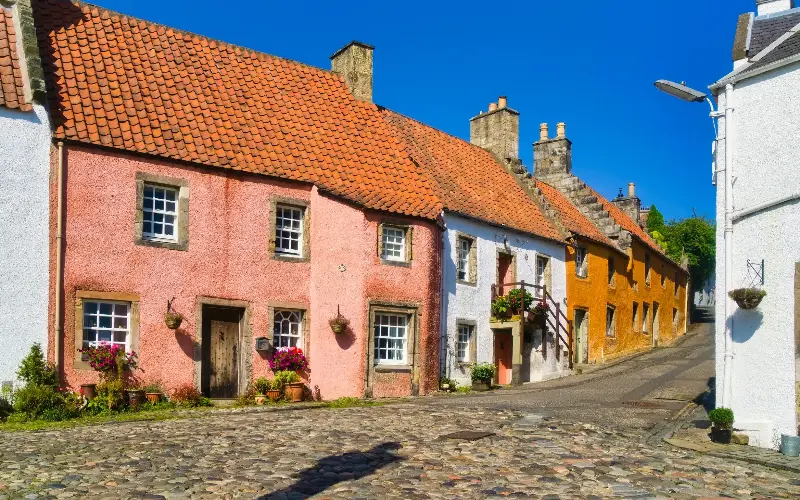
Culross, also in Scotland, was widely acclaimed (Karen Greene called it “simply stunning”), along with the Channel island of Sark.
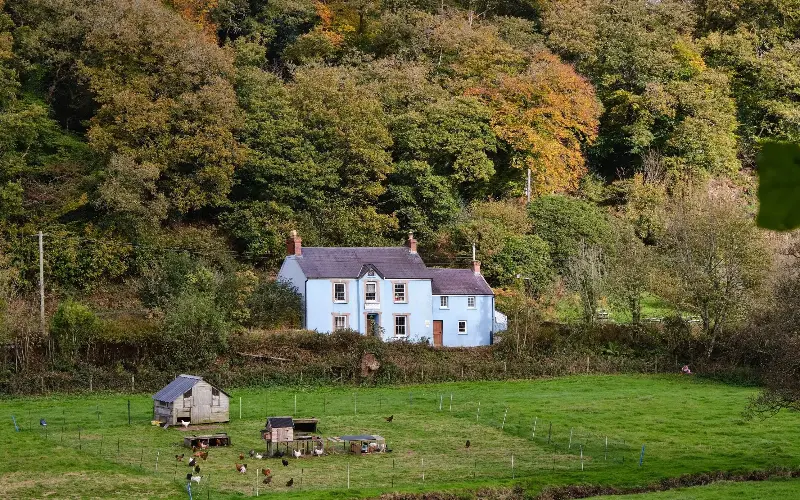
So too was Cwm Gwaun, a remote valley in north Pembrokeshire with a one-of-a-kind pub, the Dyffryn Arms, of which W Mahy wrote: “A timeless part of history, serving beer since 1845 in one small room with limited seating and tables. Don’t expect the comforts of 21st century living, but it’s an experience no one should miss. There’s a small garden, shared with local rabbits. Outside toilets. It’s life in a quiet valley, from another world. Don’t forget to bring cash.”
Another of Christopher Winn’s choices, cobbled Vicars’ Close in Wells, Somerset, was also praised by readers, though some noted that the city does tend to get quite crowded with tourists in the 21st century.
The same was said of the car-free Cornish fishing village of Clovelly, while there was some surprise to see London’s Spitalfields, included for its warren of narrow streets lined with early 18th-century houses built for exiled Huguenot silk workers.
“Spitalfields hasn’t changed much except a Huguenot house is about £4m these days, give or take,” quipped Mick Thandi.
As for putting forward their own suggestions, some respondents were reticent lest they become inundated with Telegraph readers in the coming years.
Ann Waite’s nomination? “Unnamed Moor in North Lancashire. Still wild, still tourist-free and there is a 17th-century farmhouse. I refuse to say where it is.”
John Troughton added: “Thank God you didn’t name any of the many lovely places in the Lake District that have not changed in the last 100 years. We will keep them secret to ourselves and hopefully they will stay that way for the next 100.”
‘It’s barely changed in 400 years’
Plenty of readers, however, were happy to suggest their own favourite spots where time has (mostly) stood still.
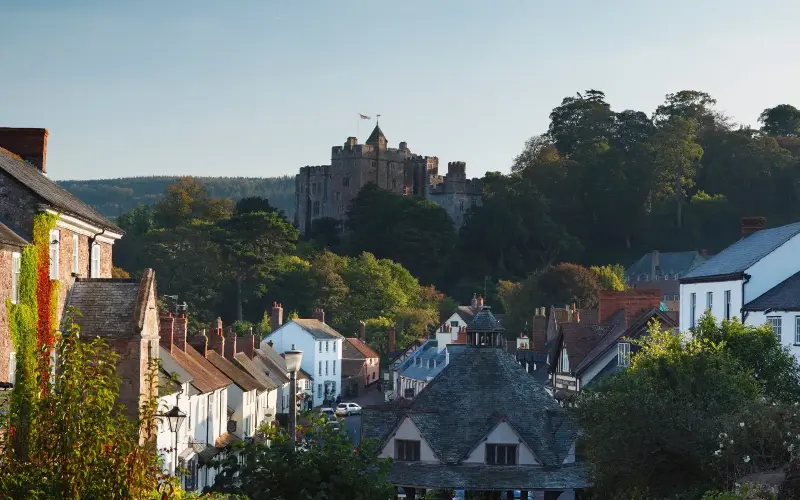
Dunster, close to the north Somerset coast, received a couple of nominations. K Ash wrote: “A picture taken before 1914 seems to be almost exactly the same as one taken from the same vantage point today. Also, the Luttrell Arms is timeless with good food and well-kept beer.”
James Marshall added: “Dunster is definitely worth a visit. We follow the footpaths around the village, visit the beautiful church and then retire to the Luttrell Arms. It makes a perfect afternoon! If you’re in that part of the world, the Valley of the Rocks is extraordinary too.”
Colin Lambert had his own West Country suggestion: “Broadhembury, nestling at the foot of the Blackdown Hills in Devon. It’s a village of cob and thatch, almost all dating back to the 16th and 17th centuries, so it’s barely changed in 400 years.”
Wales is clearly a good bet for those in search of time-warped places. Julian Fletcher wrote: “The Clwydian Hills area of North Wales, near Mold, seems to be entirely unchanged since I was a child almost 50 years ago. The landscapes are stunning and the villagers in Llanarmon-yn-Ial (they did teach me how to pronounce it correctly in Welsh, but I’ve subsequently forgotten) were very friendly too. Everyone has a smile, says hello, and chats to you.”
Mary Winter’s suggestion was also in Wales: Conwy, which she said is “like stepping back in time”, while other readers mentioned Anglesey.
Several places just over the border were nominated. “For a future list, could I suggest Ludlow in Shropshire. It is a beautiful town, perched on a hill with many buildings dating from the Middle Ages and largely unspoiled by progress,” said D.A. Cartwright, while Church Stretton, also in Shropshire, received approval.
And Ann Fox sung the praises of Cheshire: “It is still quintessentially English and very beautiful. We had a Sunday roast at the Swan Inn in Wybunbury (pronounced Winbree) – a great treat for me as I have been living in Spain for several years. They even had warm pints and several black labradors!”
‘Resplendent and unspoiled’
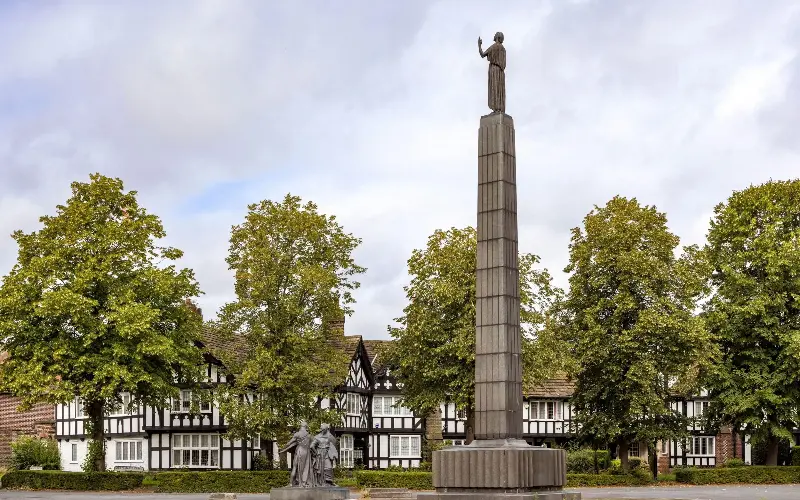
In the North of Britain, Port Sunlight – built by Lever Brothers to house soap-factory workers – was identified. “It remains unchanged, apart from the open-air swimming baths now replaced by a garden centre,” said Moe DeGrasse.
John Richards, meanwhile, suggested Beck Hole in North Yorkshire, “where covenants prevent anything being changed in the local pub [the Birch Hall Inn]”.
Chris Hayes nominated Piece Hall in Halifax (“resplendent and unspoiled”), while Mel Carey nominated the Lancashire trio of Downham, Pendle and Clitheroe; and Jac Collier the Scottish beach of Sandwood Bay, an hour on foot from the nearest road.
The South of England also has its unspoiled corners. In Kent, Paul Faires highlighted Chiddingstone, Penshurst and Hever (“timeless gems”), Vernon Seager suggested Chilham (“used as a film set”), while Polly Dunlop mentioned Sissinghurst, Goudhurst, Ticehurst and Lamberhurst.
“Burley, in the New Forest, is lovely and quaint,” said Caroline Lawley. “Lots of olde world shops, restaurants and tea rooms. Well worth a visit.” Andy Edwards wrote: “We have some unspoiled gems in Lincolnshire, Stamford town centre being one of them.”
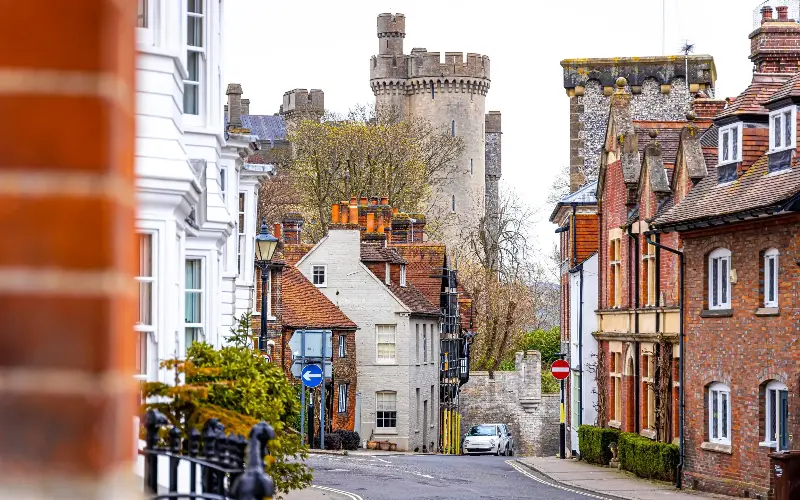
Charlie Pyper’s pick was Brent Pelham, in Hertfordshire, which he said had “had one new build in the last 25 years”. And from elsewhere came nominations for Lavenham (Suffolk), Budleigh Salterton and Shaldon (both in Devon), Rye (East Sussex) and Arundel (West Sussex).
Britain can certainly seem overcrowded, unkempt and very far removed from the whimsical days of AA Milne. But if you know where to look, there are still plenty of places clinging to that bygone age.