



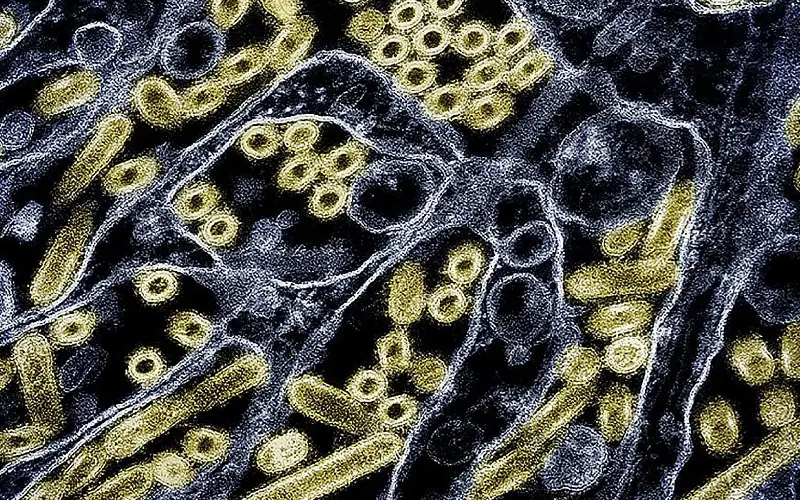
Many humans may already have some immunity to H5N1 bird flu, raising hopes that the virus could pose less of a threat than previously thought, new research suggests.
Tests on hospital workers in the Netherlands found that those who had either been previously infected with seasonal flu or received the flu vaccine had special antibodies in their blood that help fight H5N1 – the strain scientists have warned could trigger the next global pandemic.
While the antibodies, known as cross-reactive antibodies, do not stop the virus from entering the body, they do signal other cells to start fighting off the infection, strengthening the response.
This so-called alert mechanism could mean that an H5N1 infection results in less severe illness, the researchers from Rotterdam’s Erasmus University Medical Centre found.
“Based on these findings, you would expect that a person could become infected with the bird flu virus to others, but not necessarily become very ill,” Dr Rory de Vries, an Associate Professor at Erasmus University and lead author of the study, told The Telegraph.
Of the 107 people tested, 97 per cent had cross-reactive antibodies present in their blood.
The findings also showed that the immune cells in older people responded better to bird flu, most likely because they have been exposed to more flu variants over time.
“The research demonstrates that most people likely have some baseline immune protection against H5N1 avian influenza, despite never being directly exposed to it,” said Dr Craig Thompson, a professor at Warwick Medical School, who was not involved in the study.
“This work is crucial for pandemic risk assessment. It suggests the population is not completely immunologically naïve to H5N1, which could mean a pandemic may be less severe than worst-case scenarios predict,” Dr Thompson said.
When a population lacks any pre-existing immunity to a virus, as was the case with Covid-19, it often results in rapid spread through a population, as well as severe illnesses.
But the Netherlands study offers some encouraging evidence that if the bird flu virus starts to spread between people, something which the World Health Organization (WHO) has previously warned would be of “enormous concern”, the impact may be less severe than originally thought.
The study does have some obvious limitations however, chiefly that the tests were carried out on samples from a small group of people and that the laboratory findings might not translate into real-world conditions.
Dr Thompson also noted that the study only examined healthcare workers, “who have higher vaccination rates than the general population, so the findings may overestimate population-level immunity”.
Since H5N1 first emerged in the late 1990s, it has infected more than 1,000 people, killing nearly half them.
However, some scientists now think thousands more may have been infected with H5N1 without becoming ill enough for their cases to be officially recorded.
“It could be that we are missing a lot of mild cases, and my feeling is that the disease burden of bird flu might turn out to be lower than expected,” Dr De Vries said.
Human bird flu cases have increased in the last four years, as a result of a new strain that has been circulating in animal populations, including US cattle.
Since 2020, the virus has decimated millions of poultry flocks around the world and infected a huge range of animals from dogs, cats, foxes, sea lions, bears.
Several countries, including the UK, have stockpiled millions of doses of human H5 bird flu vaccines, should the virus gain the ability to start spreading between people.
The European Centre for Disease Control (ECDC) recently unveiled an H5N1 “pre-pandemic” plan, which is designed to get critical measures in place before the virus can trigger a major human outbreak, including hospital surge capacity and stockpiling PPE.
Protect yourself and your family by learning more about Global Health Security