



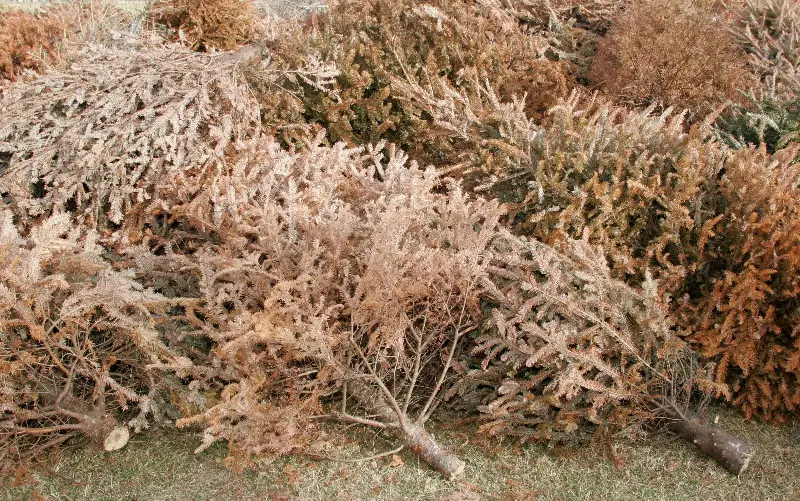
Britain is set for a Christmas tree shortage after its hottest ever summer.
Tree growers across the country said hot temperatures, dry weather and drought meant many newly planted trees did not survive their first year.
While trees remain in the ground for around eight years before being cut, it has prompted concern about the health of this year’s harvest and a tree shortage in years to come.
Oliver Combe, 57, who has worked at York Christmas Trees for 40 years, said it had been a “tough year” for growers.
“For the first time ever we have had losses in what we planted last year,” he told The Telegraph.
The Christmas tree grower, who was last month chosen to supply the tree for No 10, said he had switched to autumn planting to enable strong root growth before inevitable summer droughts.
However, this year the hot, dry summer resulted in the loss of around 2,000 of his 15,000 newly planted trees.
“This year, we have had no proper rain since Easter,” he said.
The lack of rainfall also meant fertiliser was not easily absorbed by the older trees, which could impact their growth and future harvests.
Mr Combe is now looking to irrigate his crops after successive dry summers, having previously opted not to in favour of trees growing deeper roots to find moisture themselves.
Explaining that he had identified two ponds on his farm that could act as a water supply, he said: “We will look at irrigation now.
“We’ve got two ponds and hope they will hold enough water for when we need them.”
Describing the hot weather of recent summers, he said: “The summer of 2018 was pretty extreme.
“We did think it was an exception before but very, very hot summers are becoming the norm.
“In Yorkshire, we used to have drier Aprils and Mays but it seems to be drier for longer.
“We all think ‘oh, it will balance out over August’, but one of my fields is still bone dry.”
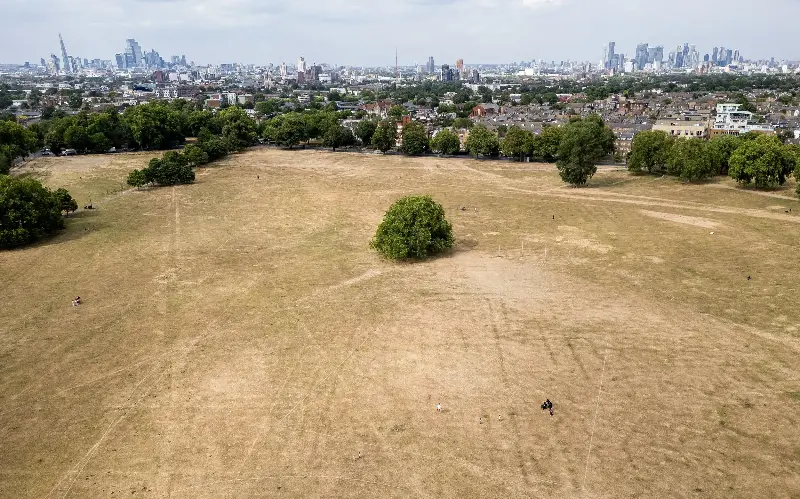
England had its driest July on record, with just 5.6mm of rain. Meanwhile, the Met Office said this summer surpassed 1976 as the hottest on record.
The average daily maximum temperature of 21.3C beat the previous record of 21C, set 50 years ago.
Mr Combe said the future for Christmas tree-growing in England is “worrying” and urged people to avoid purchasing their tree until at least the beginning of December when they have experienced several frosts, which helps them last longer.
Elsewhere, James Wallis, who runs Sutton Hall Farm near Lewes, East Sussex, with his wife Ruth, said the effect on their business had been severe.
The couple lost 20,000 trees they planted two years ago as a result of the weather.
Mr Wallis told the BBC: “The drought has made it harder for trees to absorb nutrients, and some have turned yellow.”
Mrs Wallis added: “The financial consequences are significant.
“You invest a huge amount of time and effort into producing a quality tree, so it’s very disappointing.”
‘Tough’ year for growers
Russell Parkins, chairman of the British Christmas Tree Association, said weather conditions had made it a “tough” year for growers.
“There are enough trees, but it’s a challenge to keep them in good condition,” he said.
He added: “Growers are continually adapting their practices, and we’re seeing more autumn planting to help young trees establish strong root systems over the winter months.
“Alongside this, ongoing research on provenance selection is helping ensure British-grown Christmas trees continue to thrive in a changing climate.
“This expertise and long-term commitment shown by our members means consumers can continue to enjoy high-quality British-grown Christmas trees for many years to come.”