



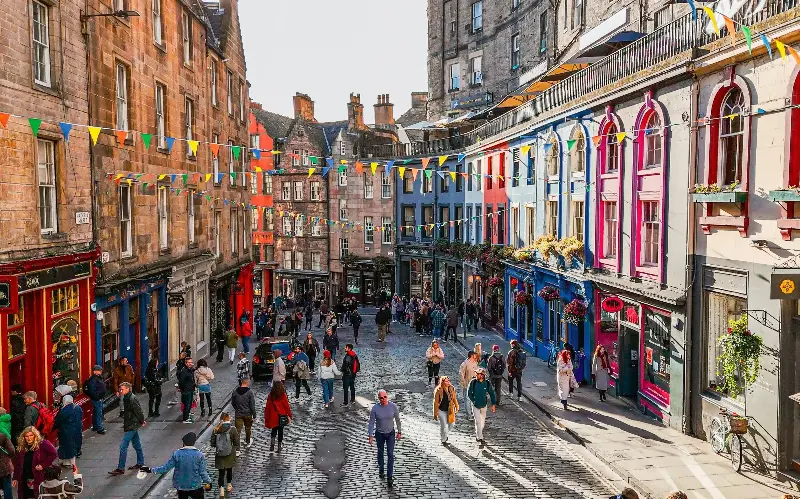
Even if you studied geography at school, you might struggle to name all of Scotland’s cities. Many Scots wouldn’t be able to tell you either, let alone about the merits of each.
There are the obvious unicorns, Edinburgh and Glasgow, which by reputation, population and visitor numbers are clearly more important than the others. By any measure, from architecture to art and festivals to food, they are two of the world’s most feel-good cities and considerably more besides. Then there is the second tier, which could be colour-coded from oily-black Aberdeen, to jam-orange Dundee, to monster-green Inverness. But which offers the most?
At this point, things begin to get a bit murky, like the depths of Loch Ness itself. There’s Perth, the country’s ancient capital, and Stirling, but not many would talk up overlooked Dunfermline – few take it seriously.
So, which of Scotland’s octet ticks the most boxes? Below you will find an honest appraisal of each, along with reasons to visit. Just remember, there’s no need to have a stooshie, stramash or square-go over the ranking – leave your thoughts in the comments instead.
8. Perth
Visitor appeal: 6/10
Perth thinks so little of itself that it can’t even fill its high street with shops. For a number of years, there have been more vacant buildings than there should be in the birthplace of the nation – and it’s been found wanting.
Thank heavens then for the newfangled Perth Museum just around the corner. Housed in the former city hall, it’s the home of the mythic Stone of Destiny, on which the UK’s monarchs are still crowned, as well as other kingdom-defining heirlooms. Among them are Bonnie Prince Charlie’s sword, Pictish cross slabs and Miss Ballantine’s salmon, the heaviest British rod-caught pink fish. Reader, it weighs 29kg (4.6st).
There remains one other leviathan reason to visit Perth. Like Edinburgh or Stirling, the major architectural achievement is lent by the country’s ancient kings at Scone Palace. It’s glorious, particularly in autumn when Perthshire’s riot of colour demands top billing.
7. Dundee
Visitor appeal: 6.5/10
There’s always been a sense of achievement in Dundee – when you close your eyes and think of the city, it’s the three Js of jam, jute and journalism that come to mind – but things have intensified of late.
First came the V&A Dundee, Scotland’s first design museum, crafted to look like the east coast’s pitted cliffs but transplanted to the River Tay. New-look Dundee train station continued the upswing and nips and tucks are continuing as part of the waterfront’s £1.6bn transformation. This year, marking 125 years since the launch of Captain Scott’s ship RRS Discovery, visitors have the chance to climb the foremast of the historic Antarctic vessel before zip-lining back down. It’s sort of Shackleton meets Gladiators.
Dundee is also still the landscape of so many childhoods. Dennis the Menace turns 75 this year, plus the city’s absurd influence on the computer games industry can’t be glossed over. It doesn’t have a gaming museum yet, but it does have tours covering the history of homegrown classics such as Grand Theft Auto and Lemmings. When Dundee was in the doldrums in the early 1990s, who could blame anyone for escaping into a world of tiny, green-haired rodents?
Does Dundee deliver? As a day out, yes, but the green and pleasant lands of nearby St Andrews and Fife beckon for a longer trip.
6. Aberdeen
Visitor appeal: 6.5/10
Aberdeen comes at you in waves, much like the North Sea and the boom-bust cycle of the city’s oil, gas and renewable industries. It’s nothing if not authentic, with more than 30 other namesakes around the world, but the original wears its history well.
For a blaze of attractions, there’s Aberdeen Art Gallery, the Maritime Museum and cobblestoned Old Aberdeen, but the city is also the front door to Royal Deeside, Balmoral and the Braemar Gathering. Royalist heaven, basically.
It’s also worth talking about the weather. Aberdeen’s architecture is granite-grey, but so are its gloomy skies. This year, the city didn’t see the sun for three weeks – the longest sunless period on the northeast coast since Met Office records began. If you have a thing for sodden waterproofs and mussed-up hair, make sure the esplanade and beach top your itinerary.
5. Dunfermline
Visitor appeal: 7/10
Scotland’s ancient capital is low on the hard sell. It’s not posy, not loud, not packed with tourist coaches, and it only just became a city in 2022. It’s also often described as having more history than Edinburgh – mostly true because of its deeper importance to the early Scottish monarchy – but locals don’t really care about those things today.
What many are interested in is Pittencrieff Park’s peacocks (weirdly, they have the freedom of the city), the footie team (nicknamed “The Pars”, as in “paralytics”, because of woeful historic performances) and hyping its new heroes, namely actor Ncuti Gatwa and singer-songwriter Jacob Alon.
For all that, nobody could ever come and conceivably miss stunning Dunfermline Abbey and Palace. Scotland’s Westminster, it’s where history excels and it can muster all sorts of stories from Robert the Bruce to Queen Margaret to Charles I. Philanthropy was born next door at the Andrew Carnegie Birthplace Museum, and, directly or not, this place and its idea of modern charity have likely touched you in some way.
Absolutely, Dunfermline is worth it.
4. Inverness
Visitor appeal: 7.5/10
Newsflash: the capital of the Highlands has the most talked-about attraction in Scotland this year. Red sandstone Inverness Castle, formerly a courthouse and prison, is finally open after a monster regeneration project, giving the city centre a full-blooded attraction it’s long lacked.
That’s helped reclaim the riverside and this is where Inverness is at its best: when exploring the Ness Islands, rambling to the Botanic Gardens, taking in a show at the Eden Court theatre, or heading farther north to dolphin watch in the Moray Firth.
You’ll hardly need reminding that Inverness is obsessed with another slippery creature, and the city does a fearsome job of selling Loch Ness cruises and loonie sightings. Trips start badly amid a tourist crush, but the visible effects of the glowering water and historic Urquhart Castle can’t be denied.
And this is where Inverness’ main strength lies: in using it as a basecamp for seeing where all its roads lead. Culloden is home to the most visceral battlefield experience in Britain. The Black Isle has heaps of beaches, boat trips and one of the country’s best breweries. Wondrous distilleries like The Singleton of Glen Ord and the new visitor experience at The Dalmore lie farther afield.
Does Inverness get marginalised by the countryside? Yes, very much so. But the internal logic of a trip to this city is that you come here to go somewhere else.
3. Stirling
Visitor appeal: 8/10
Home of Scotland’s finest urban castle and the world’s oldest football (made from a pig’s bladder and once used by Mary, Queen of Scots, apparently), Stirling is the smallest city on this list by size and population. But if you’re into Braveheart or Outlander, then there’s plenty of swashbuckling to see.
The most atmospheric places are the National Wallace Monument on Abbey Craig and the Bannockburn Visitor Centre and Battle Experience – at both, you feel as if you’ve stepped into a Game of Thrones spin-off. You’ll see far fewer American tourists at Cambuskenneth Abbey, but it’s perhaps all the better as an untouched, ramshackle ruin.
This year, Radio 2 in the Park is to be held in City Park in August, and budget train operator Lumo is launching a four-times-weekly service between the city and London. Both are a reminder that Stirling is somewhere serious.
2. Glasgow
Visitor appeal: 8.5/10
The Dear Green Place is not for the faint-hearted. Its scruffy body is of grid-iron streets, buzzy squares and universities, its shoulders are of Victorian rooftops and Gothic spires, and its head is filled with thoughts of pubs, gigs and Old Firm football.
The real highlight is the Glaswegians themselves. They’re raw, hilarious and profound with no apologies, and they swagger fashionably on its streets, making its restaurants, bars and venues thrilling. To see a gig at the Barrowland Ballroom with a raucous, pie-eyed crowd is more life-affirming than any night out in New York or Paris. And if you need stats to back that up, know Scotland’s largest city was named the UK’s first Unesco City of Music and has more venues per 100,000 people than anywhere else in the world.
As for more culture than you could shake a fizzing can of Irn-Bru at, there’s the Kelvingrove Art Gallery and Museum, The Burrell Collection and the Zaha Hadid-designed Riverside Museum. This is a city that’s gone from a real-life episode of Taggart to knowing how to sell its humour and humanity like hit comedy Still Game.
Glasgow’s miles better, still.
1. Edinburgh
Visitor appeal: 9/10
In any season or light, Edinburgh is a daydream of a city and the 21st-century incarnation of ancient Rome or Athens. It throws up world-class attractions and festivals on a whim and outstrips all the competition as the UK’s greenest city. Very little on this list can compete with the masterful moments of Holyrood Park, Princes Street Gardens and the Royal Botanic Garden. Plus, no other city is bonkers enough to build itself around a 350-million-year-old extinct volcano.
On the streets, you don’t have to look hard for great food (Lyla, Avery, Timberyard), great pubs (The Guildford Arms, Bennets Bar, Canny Man’s), or great hotels (The Balmoral, Gleneagles Townhouse, Prestonfield House). And only a simple glance up at soaring Castle Rock or the squiggles and spires of the Royal Mile will remind you where you are: in the capital of Scotland, a disproportionately fantastic place that’s envied by so many.