



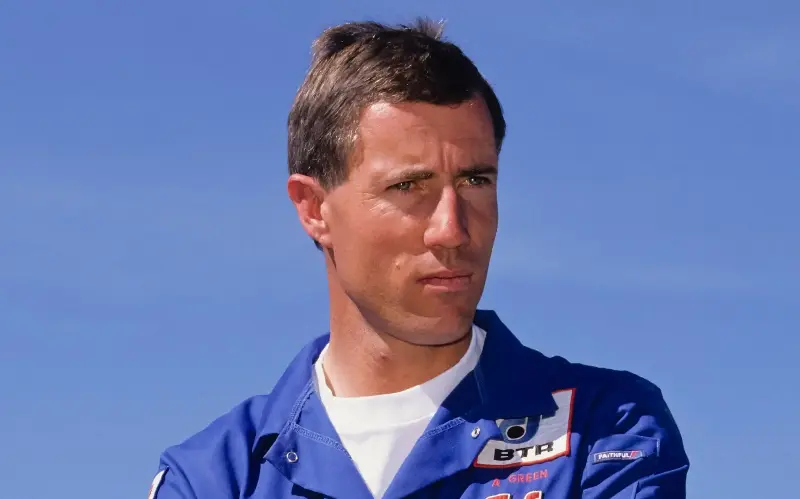
Andy Green loves a hot bath. “You prepare your body for land speed records in various ways,” says the former RAF fighter pilot, who reveals that on the day of his land speed record in 1997 the temperature inside the cockpit hovered at about 50C.
Not to relax, then? “When your core temperature is rising so quickly you can’t switch off your panic reactions, but you can turn them down. Soaking in hot water twice a day was a really effective method of doing that. I’d fill the bath with water as hot as I could stand and after 20 minutes I’d be lobster red and dripping with sweat.”
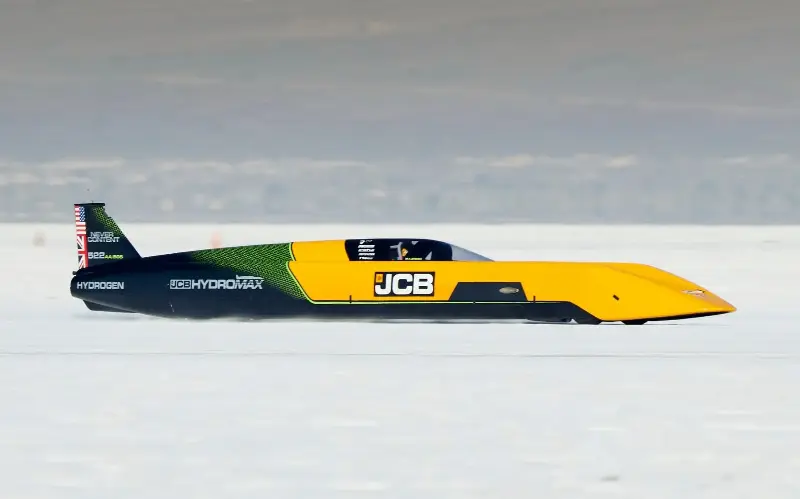
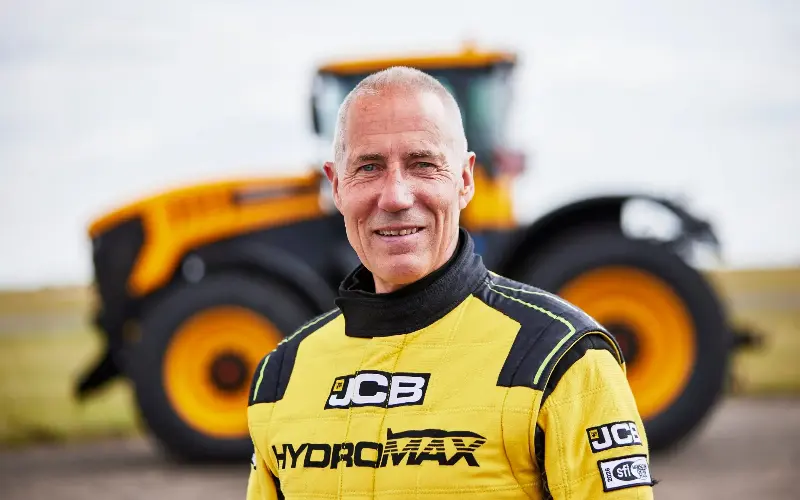
Green takes record-breaking seriously. In August 2026, 29 years after setting the absolute land speed record in the jet-powered Thrust SCC, he set a new world land speed record for a hydrogen-powered vehicle, achieving 406.320mph on a dried lake bed at the Bonneville Salt Flats in Utah.
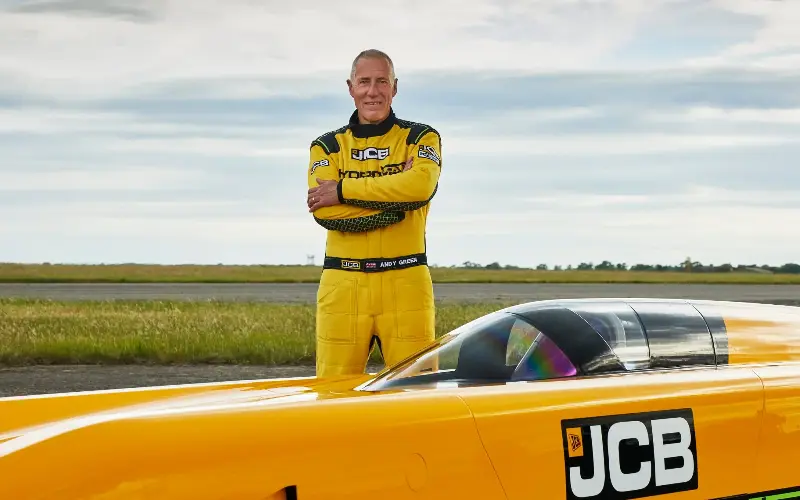
Yet Green is no stranger to speed – his previous job was fighter pilot for the RAF. “I had the world’s best job,” he recalls. “I joined the RAF because I wanted to defend the country, but I also wanted a role which was intellectually and physically challenging.”
There were plenty of transferable skills, too. “Probably the most important ones relate to control, planning and speed, working on a second-by-second basis. When you’re attempting land speed records, you’re constantly thinking about whether what you’re feeling is what you were expecting, as well as whether you need to react or change something going into the next second.”
Exceeding the speed of sound
But Green isn’t simply motivated by a need for speed. “The land speed record was about the opportunity to work with a world-class team to solve a problem and do something which people said was impossible – could you get a land vehicle, which meets the FIA’s definition of an automobile, to go faster than the speed of sound? As a former jet pilot, I knew how complicated that was.”
How does it feel to go supersonic? “You don’t hear or experience anything relating to the moment when you achieve those speeds,” says Green. “It’s impossible to hear the [sonic] booms because they’re waves of sound spreading out from the vehicle. Think about when you’re on a plane. You don’t hear or feel the speed, but you certainly feel the acceleration and deceleration.”
He’s not talking about the kind of deceleration you feel when slamming on the brakes to avoid a deer with a death wish. “Racing cars top out at around 200mph, but when you’re topping out at 700mph you feel it for a lot longer.”
And then there’s that heat. “I was wearing four times the level of thermal protection worn by an F1 driver. It was an SFI 20-certified suit, which offers 20 seconds of protection, while they get five seconds.” Those hot baths make perfect sense.
Hydrogen-fuelled record
The motivation was slightly different for his recent record. “The JCB Hydromax record was about demonstrating the zero carbon tech of the future. Take the countries which don’t have huge supplies of oil and gas – if you’ve got sunshine and water you can make your own hydrogen fuel, and the fact that you can do that, and handle and operate hydrogen safely on a testing ground such as the Bonneville Salt Flats, is hugely attractive.
“It’s not just about the future of racing cars but about the commercial side of the construction industry – you keep the benefits of internal combustion and you don’t need to cart around tons of batteries or work out how you’ll charge them.”
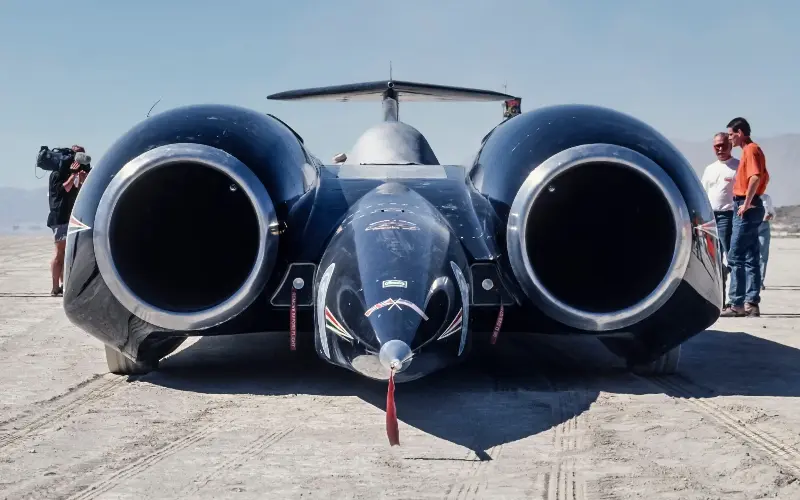
Did the 406mph he achieved for his latest record feel significantly slower compared with the supersonic speeds achieved in 1997? “No, because they’re very different records. Using two military jet engines [in Thrust SSC] to produce supersonic speeds is an entirely different challenge, but just as interesting in terms of the technology.”
Different approaches
The Black Rock Desert in Nevada was the setting for his landmark run in Thrust SSC in 1997, chosen for its dried mud surface. “If we’re talking about a thrust-powered vehicle – one designed to achieve supersonic speeds with the help of jet engines or rockets – the wheels are there for support and to control it, but not for propulsion,” he says.
“Your wheels are basically solid metal discs, so you need some give on the surface but not much grip because the wheels aren’t driving the car. So a dried mud surface such as the Black Rock Desert lakebed is perfect.”
For his latest record attempt at the Bonneville Salt Flats, famed for record-breaking exploits since 1914, his JCB Hydromax machine was driven by more conventional means.
“For standard tyres, which would never allow you to reach supersonic speeds, you need grip and the optimum surface is salt. Sir Malcolm Campbell became the first person to break the 300mph barrier in 1935 at Bonneville. Since the 1960s all of the land speed records have been set there.”
Steam power for the road
At home, Andy’s cars are two very different breeds. He owns a futuristic-looking BMW i8 hybrid and a 1904 Stanley Steamer.
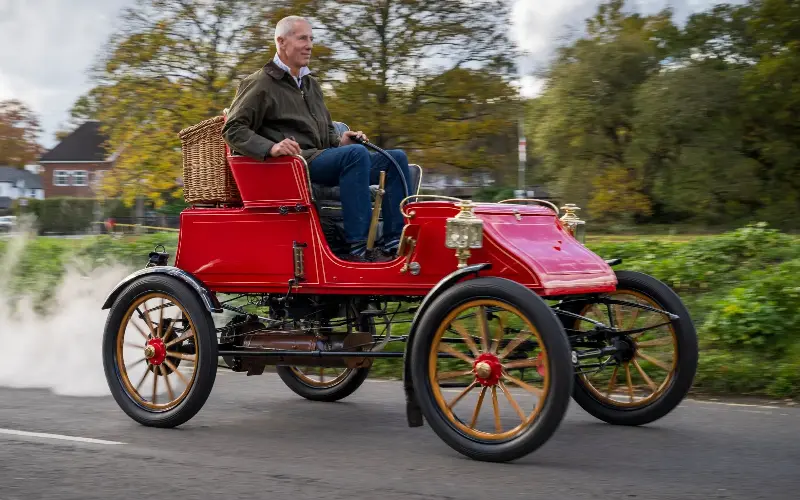
“The Steamer is the best way to go to the pub! Everybody stops and waves, people want to come up and ask you about it. It’s like having a dog but a thousand times better.
“In 1904 the internal combustion engine was very basic, but steam was very advanced at the time, and it’s a car which brings history to life.” And every year it does exactly that, when Green takes part in the 60-mile London to Brighton Veteran Car Run.
“It’s brilliant. It’s about taking 120-year-old vehicles and getting them from London to Brighton, demonstrating their capability, celebrating motoring and remembering that it was this huge thing in 1986, driving all the way to Brighton in a single day.”
The same journey would take less than five minutes in the Thrust SSC world land-speed record holder – allowing more than enough time for a few steamy pre-race baths.