



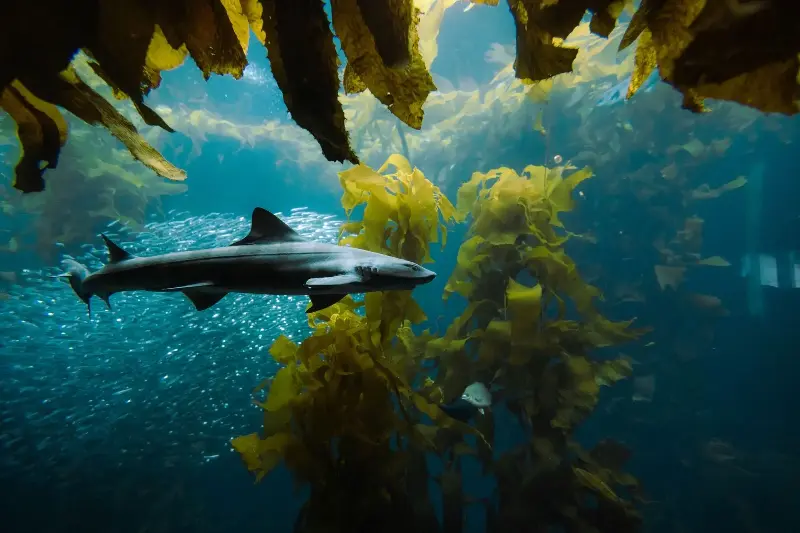
Sharks have been swimming in Earth’s oceans for roughly 450 million years. They were here long before the dinosaurs, they survived every great mass extinction that followed, and they outlasted the dinosaurs by a vast margin. Yet a global study compiled by hundreds of scientists has found that about a third of sharks and their close relatives are now threatened with extinction, driven mostly by fishing nets and the trade in fins. The animals that outlived almost everything are struggling to survive us.
It is a stark contrast, and the reason behind it says as much about shark biology as it does about fishing.
Older than the dinosaurs, and then some
The shark lineage stretches back around 450 million years, which puts its origins more than 200 million years before the first dinosaurs appeared. Non-avian dinosaurs vanished 66 million years ago in the asteroid impact that ended their reign. Sharks are still here.
Across that immense span they persisted through the planet’s great mass extinctions, the same catastrophes that erased most other life each time. It is worth being honest that they did not come through untouched. Sharks suffered heavy losses in several of those events, and around 19 million years ago the open-ocean sharks went through a still-unexplained collapse that wiped out most of their number. But as a group they always endured, adapting and diversifying into the several hundred species alive today. Few branches of animal life can claim that kind of staying power.
The global assessment
The warning comes from the International Union for Conservation of Nature, whose global status report on sharks, rays and their cartilaginous cousins the chimaeras drew on the work of 353 experts from 115 countries. Its central finding is blunt: roughly a third of these animals are threatened with extinction, falling into the categories conservationists use for species at real risk of dying out.
Just as telling is the trend. The populations of these fish are estimated to have roughly halved since 1970, a steep decline packed into barely half a century, an eyeblink against their 450-million-year history.
Why nets and fins
The overwhelming cause is overfishing. Much of the damage is not even deliberate. Most shark species are not the intended catch at all, with only around a quarter targeted directly. The rest die as bycatch, caught in nets and on lines set for other fish and hauled up alongside the intended haul.
On top of that sits the international trade in shark fins and other parts, which drives boats to hunt sharks on purpose, sometimes slicing off the fins and discarding the rest. Habitat loss and pollution pile on further pressure. Between the accidental and the deliberate, the toll on these animals has been relentless.
Why sharks cannot bounce back
Here is the piece that ties it together. Sharks and their relatives reproduce very slowly. They tend to mature late in life and produce only a few young at a time. The giant manta ray, for instance, does not begin reproducing until it is around eight to ten years old, and then gives birth to a single pup only once every three or four years.
That unhurried strategy served them well for hundreds of millions of years, when the pressures they faced were natural and gradual. It leaves them badly exposed to modern fishing. When a fleet can remove sharks faster than they can possibly breed, slow reproduction turns from a quiet advantage into a fatal weakness. The problem is not that fishing is uniquely destructive, but that sharks simply cannot replace their losses at the pace we take them.
The irony, stated plainly
Put together, the picture is a grim sort of irony. Sharks came through asteroid strikes, immense volcanic episodes and upheavals in ocean chemistry that ended countless other lineages. Those crises unfolded over long stretches, and the shark lineage, as a whole, could absorb them and recover.
The current decline is different in kind. It is fast, it is concentrated into a few human generations, and it stems overwhelmingly from a single source. A group that survived every natural catastrophe the planet could throw at it now finds a third of its members at risk from one animal’s fishing gear.
What to watch
The report is not only a diagnosis. It points to remedies that are known to work: setting and enforcing catch limits, reducing bycatch with better gear and practices, protecting the key habitats where sharks breed and gather, and tightening controls on the fin trade. Where such measures have been applied and enforced, some depleted populations have begun to recover, which shows the decline is not irreversible.
What to watch, then, is whether that will happens at the scale required, through fishing rules, trade restrictions and protected areas, and whether the halving trend of the past fifty years can be halted and turned around. The lineage that outlived the dinosaurs is more than capable of enduring. Whether it outlives the trawler is, for the first time in 450 million years, largely a decision for us.
The post Sharks have survived every mass extinction for roughly 450 million years, outlasting the dinosaurs by a vast margin — yet a 2025 global study found that more than a third of shark species alive today are severely threatened, mostly by fishing nets and finning appeared first on Space Daily.