



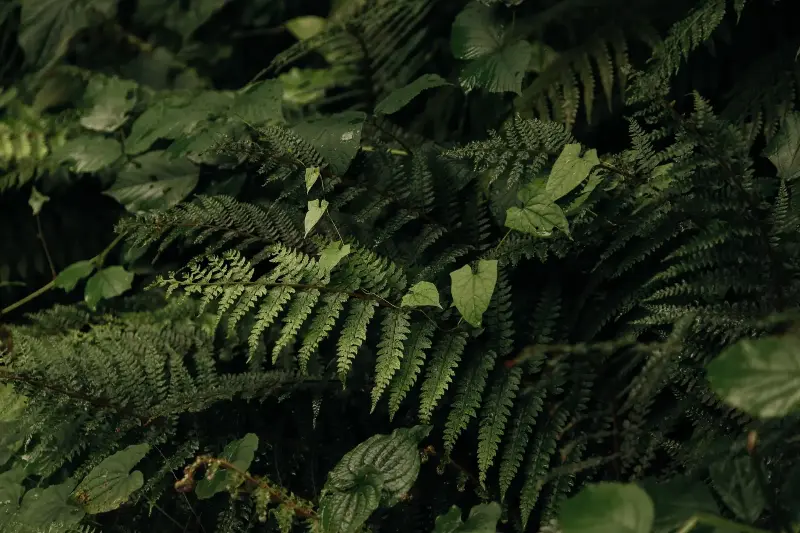
The easiest mistake to make about Antarctica is to treat the ice as if it has always been there. The modern continent feels so absolute that it is hard to imagine it any other way: white, wind-scoured, almost empty, and locked under kilometres of ice. But the rocks keep a different memory.
Those rocks show that large parts of Antarctica were once green. Not merely mossy or seasonally thawed, but forested. In the Cretaceous, when Earth was much warmer and dinosaurs still dominated the land, parts of the southern polar region supported temperate forests whose remains survive as fossil wood, leaves, pollen, spores and even preserved root systems.
The most striking recent evidence came from a West Antarctic sediment core described in Nature in 2020. The research team found a 90-million-year-old forest-soil layer from the Amundsen Sea sector, close to the ancient South Pole. Inside it was an intact network of fossil roots embedded in mudstone, along with pollen and spores that pointed to a temperate lowland rainforest at a palaeolatitude of about 82 degrees south.
That latitude is what makes the discovery so strange. This was not a warm forest at the edge of the tropics. It was a polar forest, growing in a place where the Sun vanished for months each year.
A forest under polar night
Imperial College London, whose scientists were part of the study, described the discovery as evidence for rainforests near the South Pole about 90 million years ago. Their report notes that the forest existed despite a four-month polar night, meaning a third of the year passed without sunlight. The same Imperial summary says the sample contained preserved roots, pollen and spores, including plant traces from flowering plants at very high Antarctic latitudes.
That is the mental jolt. A rainforest normally means filtered green light, damp soil, fungi, leaf litter and running water. The South Pole normally means a winter horizon without sunrise. Cretaceous Antarctica forces those two images into the same place.
The forest was not tropical in the ordinary sense. The study reconstructed a temperate, swampy lowland environment, closer in some ways to modern cool rainforests than to equatorial jungle. Average annual air temperatures were estimated around 12 degrees Celsius, with summer averages near 19 degrees. Rivers and swamps may have reached roughly 20 degrees. Rainfall was substantial.
For plants, the challenge was not only cold. It was rhythm. Months of continuous summer light would have been followed by months of winter darkness. Trees and understorey plants had to persist through a seasonal cycle with no modern low-latitude equivalent. The fossil record suggests they did.
The evidence hiding in stone
Fossil forests are rarely preserved as something as vivid as a standing grove. More often they arrive as fragments: growth rings in wood, compressed leaves, pollen grains, spores, roots, soils and chemical signals. Put together, those traces can reconstruct a vanished ecosystem more reliably than any single spectacular fossil.
In Antarctica, the evidence is spread across time and geography. Cretaceous rocks from the Antarctic Peninsula and nearby islands have yielded fossil plant material showing conifers, ferns, flowering plants and humid forest habitats. The West Antarctic core added something especially direct: a preserved soil horizon, with roots still in place, from a region much closer to the ancient pole than most previous records.
The root network mattered because it was not simply plant debris washed in from somewhere else. It showed that plants had grown at that site. The pollen and spores then filled in the community around them. Together, the material turned a drill core into a small cross-section of a lost forest floor.
The discovery also sharpened a climate problem. To make such a forest possible, the Nature team found that models required very high carbon dioxide levels, no major Antarctic ice sheet in the region, and a vegetated land surface that absorbed sunlight rather than reflecting it like ice. In other words, Antarctica was not green by accident. It was green because the whole planet was operating in a much warmer state.
Dinosaurs in the Antarctic forest world
The forest story is not separate from the dinosaur story. Antarctic dinosaur fossils are rare, but they are real. Late Cretaceous rocks of the James Ross Basin have produced remains of non-avian dinosaurs, including ankylosaurs, ornithopods and theropods. A 2019 review in Advances in Polar Science summarised the non-avian dinosaur record from that basin and described additional material from the region.
These animals did not live on the Antarctic ice sheet, because there was no modern Antarctic ice sheet beneath them. They lived on a warmer, forested high-latitude landmass connected to the wider southern world of Gondwana for much of the Mesozoic. The landscape would still have been polar. The light cycle would still have been extreme. But it was not lifeless.
Imagine a small herbivorous dinosaur moving through wet conifer-angiosperm forest as the year tilts toward darkness. Imagine ferns and undergrowth pressed flat by rain, rivers draining through floodplains, and predators navigating a season in which daylight fades not for hours, but for months. That is not fantasy added to the fossil record. It is the ecological implication of forests and dinosaurs sharing the Antarctic high latitudes.
The phrase “dinosaurs roamed Antarctica” can sound like a novelty fact, but it carries a deeper point. Dinosaurs were not confined to permanently warm lowlands. Some lineages lived in seasonal polar environments, and their world included forests adapted to darkness, cold snaps and long summer light.
A continent with more than one past
Antarctica’s ancient forests did not all belong to one moment. The continent changed repeatedly as Gondwana broke apart, ocean gateways opened, carbon dioxide shifted and global climate cooled. Forests grew, changed composition, retreated and eventually vanished as ice took over.
That is why fossil wood and leaves matter alongside the dramatic root-bearing core. They show continuity and variation: different Antarctic forest communities at different times, from Cretaceous conifer-rich ecosystems to later southern beech and other temperate plant assemblages. Antarctica was not a static green continent any more than it is a static white one today.
The transition to the modern icehouse world was long and uneven. As atmospheric carbon dioxide fell and ocean circulation changed, Antarctica crossed climatic thresholds. Ice became easier to sustain. Forests became harder. Eventually, the vegetation that had once made polar darkness survivable disappeared from the continent almost entirely.
Modern Antarctica still has life, but it is sparse and specialised compared with the Cretaceous world preserved in stone. The fossil roots near the ancient South Pole are therefore more than a curiosity. They are a record of how different Earth can be when greenhouse conditions push warmth toward the poles.
The green world beneath the white one
None of this means Antarctica was ever an easy place to live. Polar night, seasonal stress and high-latitude weather would have shaped every plant and animal there. But the continent was habitable in ways that feel almost impossible from the present.
The rocks remember forests where maps now show ice. They remember roots in mud, leaves in sediment, pollen in ancient soils and dinosaurs moving through a polar world that could be dark for months without being dead.
That is the real shock of Antarctica’s fossil forests. They do not simply tell us that the continent was once warmer. They show that the deep past contained an entire southern world now hidden beneath the planet’s coldest landscape: green, wet, seasonal, and alive under a sky that could lose the Sun for months at a time.
The post Large parts of Antarctica were once covered in temperate forest, and fossilised wood, leaves and roots preserved in its rocks reveal a green polar world where dinosaurs roamed beneath months of winter darkness. appeared first on Space Daily.