


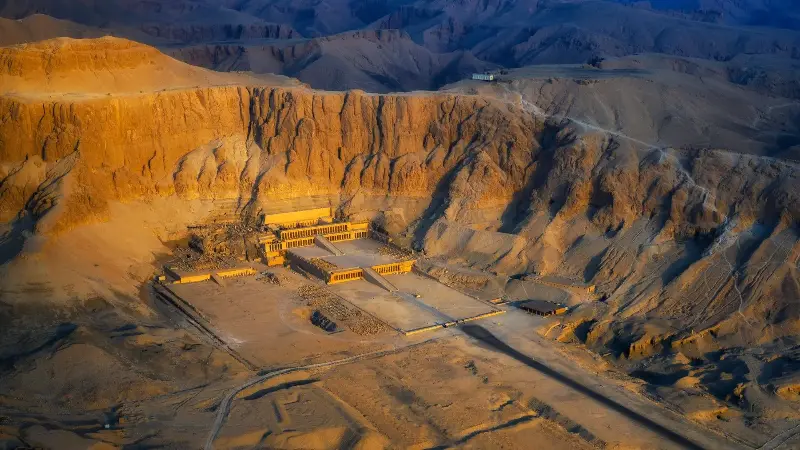
On Aug. 2, 2027, I'll be in Luxor, Egypt, to witness what could be the greatest total solar eclipse of my life. I've seen nine total solar eclipses across the world, but this one promises to be different. For a remarkable six minutes and 22 seconds, the moon will completely cover the sun, plunging Egypt's ancient temples and monuments into eerie twilight as the solar corona bursts into view.
I've been calling it the "eclipse of the century" for many years, and for good reason. It will be the longest total solar eclipse until 2114 — and the longest on land of the 21st century — and it will take place in one of the most extraordinary places on Earth. What could go wrong?
I've chased eclipses long enough to know that the celestial mechanics are the easy part. The moon will arrive exactly on schedule — that's guaranteed. Everything else — the weather, the crowds, the transport, the equipment and the people — is rather less predictable. From the possibility of dust storms to uncertainty about whether boats will even be allowed to move on the Nile, there are plenty of reasons to be slightly wary about what awaits eclipse chasers after the ultimate bragging rights on Aug. 2, 2027. Here are the 10 things worrying me most about the 2027 total solar eclipse in Egypt.
1. A sudden dust storm
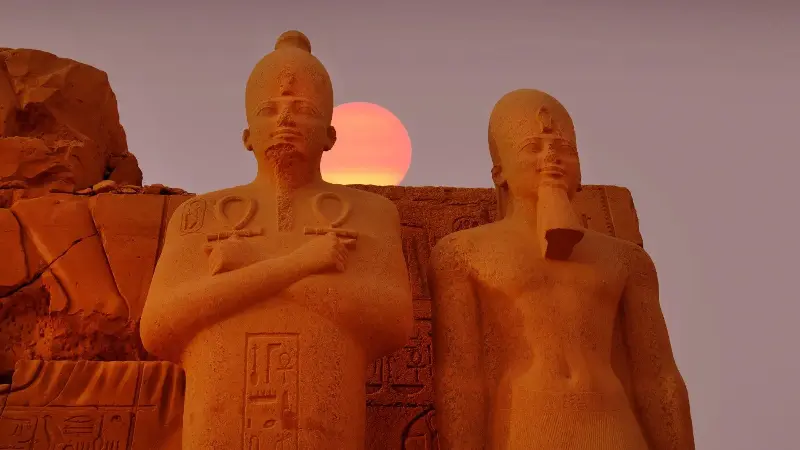
The chances of cloud-free skies in Luxor and anywhere in Upper Egypt in August are exceptionally high — close to 100%. That's almost unheard of in eclipse-chasing. However, clouds aren't the only thing that can obscure the sun. Dust and sand are potential hazards in the Egyptian desert, and a dust storm at the wrong moment could affect—though probably not ruin—the view. Although the sun will almost certainly be visible during the eclipse, airborne dust could hide the delicate structure of the solar corona.
2. Chaos in Luxor
How many people will descend on Luxor for the eclipse? August is normally a quiet month for tourism in Luxor because of the oppressive heat. In 2027, however, the city and its surrounding urban area — population about four million — could swell as eclipse chasers, tour groups, photographers and curious visitors descend. Hotels, roads, buses and archaeological sites will all face extraordinary pressure. My biggest concern isn't necessarily the number of people watching the eclipse, but the logistical chaos it will create. Let's take Mallorca as an example for the 2026 eclipse. Authorities there had a plan for its west coast, the prime viewing region. "They were going to start closing roads from 3 p.m. on the afternoon of the eclipse," said Simon Waldram, who runs astrophotography and landscape photography workshops and who drove his tour group to the intended viewing location at 8 o'clock on the morning of the eclipse. "There were already 300 cars there, and by 11 a.m. they had shut the road." Official plans can quickly change.
3. Extreme heat
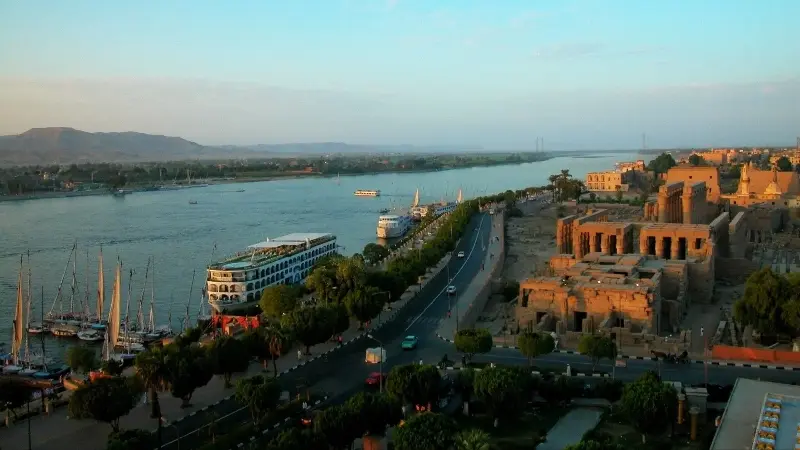
Luxor in August is brutally hot. Temperatures can exceed 104 degrees Fahrenheit (40 degrees Celsius). Totality will strike at 1:02 p.m. local time (EEST). During the eclipse, from 11:40 a.m. to 2:26 p.m., the sun will be almost directly overhead. Many tour groups will stay on their hotel grounds or remain on cruise ships — relatively close to shade and air-con — though I'm also planning to keep a wet towel around my neck and carry plenty of water. However, the heat will affect the entire trip. "We're planning our visits in the early mornings and in the late afternoon, with midday just quiet time," said Khaled ElSamman, an Egyptologist at Nord Nile whose tour will witness the eclipse from a traditional dahabiya, a two-masted river boat, in Luxor. "There are reminders to drink water and keep hydrated, but it's easy to forget if you're not used to the environment and this much humidity loss."
4. Restrictions on the Nile
I'll be traveling on the Nile, which sounds like a wonderfully romantic way to experience an eclipse. However, there's speculation that river traffic could be restricted, perhaps even from the previous day. "There might be a restriction on navigation on the Nile during the eclipse, so it's a bit hard to plan where we are going to watch it," said ElSamman. "We might end up in harbor, and maybe we won't be allowed to be in the middle of the water."
5. The enormous number of boats
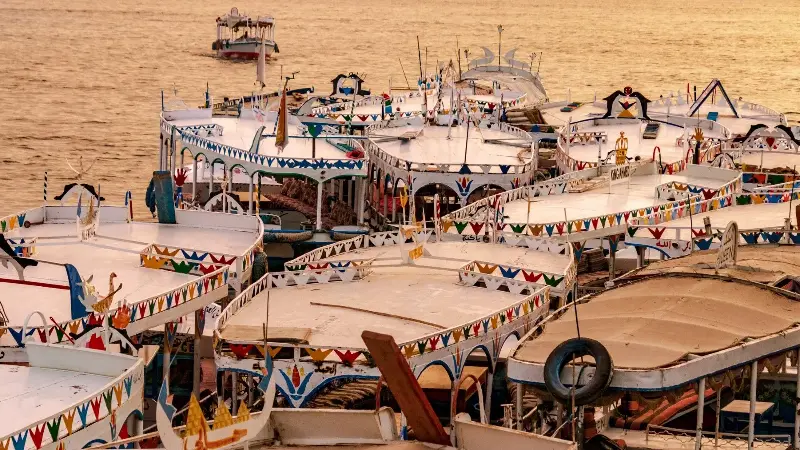
Even if we're safely moored in Luxor, how many other vessels will be there? The Nile looks set to be packed with cruise ships, traditional dahabiyas and smaller boats, all carrying people hoping to witness the same extraordinary event. I wonder what totality will actually look and sound like. Will there be music? Shouting? Bright lights from neighboring boats? Probably — though perhaps that's no bad thing. It's fun to experience totality in all kinds of different environments. One of my most vivid memories of the 1999 total solar eclipse in the U.K. is the atmosphere created by the people around me and the lights that came on in boats in Falmouth harbor. Perhaps the noise and excitement will become part of the magic. I just hope nobody leaves their floodlights on.
6. Camera equipment
Whether eclipse chasers can bring specialist camera equipment into the country is vexing many. After all, "professional-looking" camera equipment is usually difficult to get through customs. While phones and compact cameras are fine, customs and security personnel classify large mirrorless/DSLR cameras, long telephoto lenses and heavy tripods as "professional filming gear." My reporting suggests customs officials may take a more relaxed approach to specialist camera equipment during the eclipse. However, no special customs arrangements for eclipse visitors have been confirmed. Drones are a different matter — Egypt has strict restrictions on importing and operating them, with authorization required. Bringing a drone to see this eclipse would be a mistake.
7. Keeping a camera cool
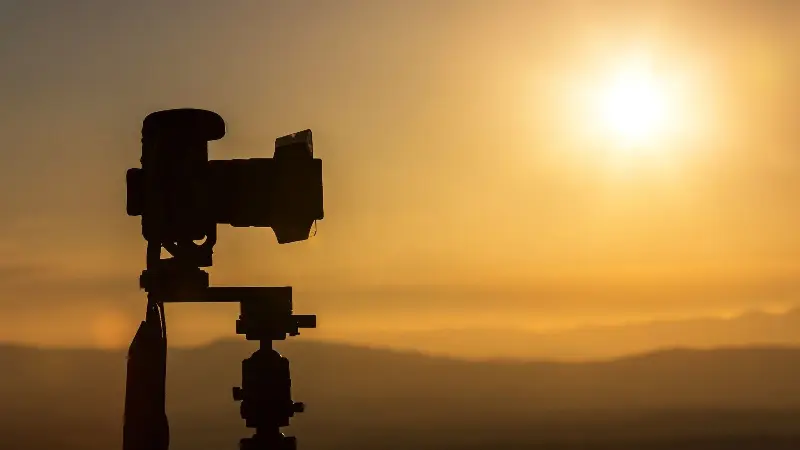
Photographing a total solar eclipse involves pointing equipment towards the sun for an extended period, using appropriate solar filters during the partial phases. In Luxor's extreme August temperatures — and with the sun almost directly overhead — overheating could become a serious issue, particularly for cameras recording video or running continuously. Eclipse chasers will need to keep equipment shaded and as cool as possible. I'll just hope to have my trusty image-stabilized binoculars with me. I bought them a decade ago specifically for total solar eclipses, and they've given me some of the most extraordinary views and moments of my life.
8. Overcrowded temples
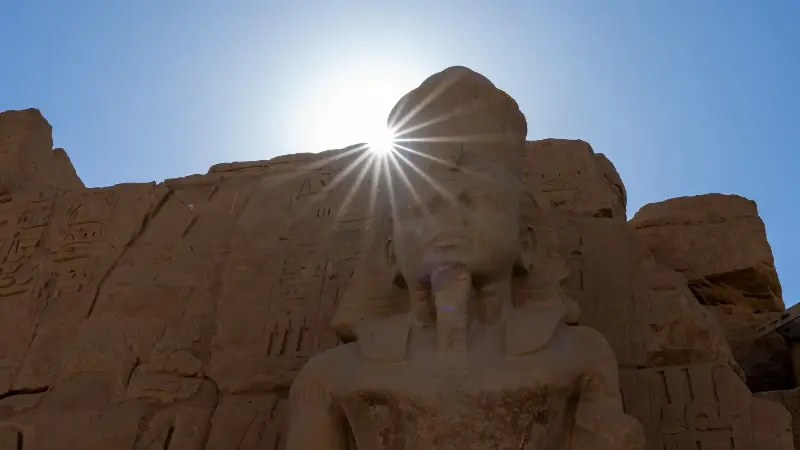
Watching a total solar eclipse from Karnak or another ancient Egyptian temple sounds almost impossibly romantic. But the reality could be very different. Popular archaeological sites, such as Karnak, Luxor Temple, Hatshepsut and the Valley of the Kings, could be overwhelmed by visitors. That could mean crowded entrances, long queues and limited facilities. Besides, with the eclipsed sun close to the zenith, those spectacular images of totality framed between ancient columns may be more fantasy than reality. It may be wise to avoid the crowds — and with myriad temples and ruins near Luxor, that's likely possible. "You want to make sure you're not fighting with 10,000 other tourists trying to see the same thing," said Waldram. Queueing for hours at Karnak is not the best way to enjoy one of nature's greatest events.
9. Eclipse-gouging
Every eclipse chaser who plans and books a hotel years in advance dreads the email that often arrives a few weeks before, saying a reservation has been canceled for some spurious reason. Welcome to eclipse-gouging, when hotel, lodge and Airbnb owners realize the eclipse date and hike their prices. This has already happened in Luxor, where prices have already reached about $600 per person per night for the week of the eclipse — roughly seven times higher than usual. Worse, people expect prices to keep rising as the eclipse gets closer. Owners of remaining hotels and boats are now refusing to charter or commit, waiting for higher prices. In a country where the average wage is $150-200 per month, it's understandable — a total solar eclipse is potentially a unique jackpot for many. But it makes life a little harder for eclipse chasers.
10. How to watch it
I've witnessed totality on a tennis court at sunset, standing next to a horse on a mountain and on a cruise ship in the Southern Ocean — among others — but I've never encountered the eclipsed sun almost directly overhead. I'll need to crane my neck to see it, and for a very long time. Should I lie flat on the ground? Recline on a boat deck? Or perhaps float in a swimming pool? I'm only half joking. Six minutes is a long time to stare almost vertically upward. Finding a comfortable position could make a surprisingly big difference to how much I enjoy the spectacle.
To spend six uninterrupted minutes studying the sun's ghostly corona, watching its delicate streamers stretch into space, is almost beyond comprehension. And that's why, despite all my worries, the "eclipse of the century" can't come soon enough. "It will have hiccups," said ElSamman. "But it's going to be amazing."