


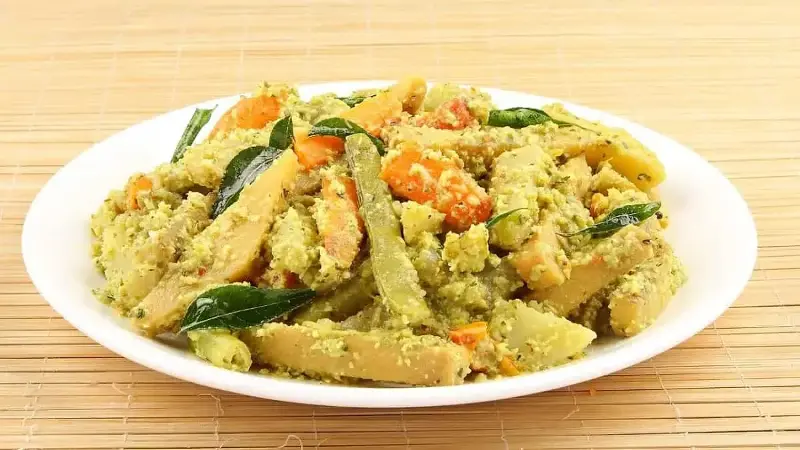
On an Onam sadhya, where a series of dishes contend for attention, there is one dish that rarely needs an introduction, i.e. avial. The light, coconut-coated vegetables may look like just another item served on the vibrant green banana leaf, but their charm is much more than that and can only be defined by the people who have had it. The blend of vegetables with different textures, a slightly tangy finish, and the aroma of fresh coconut and curry leaves all in one bite makes avial so special.
It is also one of the most useful culinary traditions in Kerala: rather than letting assorted vegetables go bad in the kitchen, they are cooked together. Over time, avial has moved beyond the concept of an everyday mixed-vegetable preparation and has become one of the defining dishes of the grand sadhya feast.
What Is Avial?
Avial represents a method of cooking, which involves boiling the vegetables or, quite literally, means “cooking them in water”. It is a thick vegetable preparation that is made by simmering a variety of seasonal vegetables such as elephant foot yam, raw plantain, drumstick, ash gourd and pumpkin in a coarsely ground mixture made of fresh coconut, green chillies, and cumin seeds. The vegetables are cut into even batons to cook evenly while maintaining a firm bite. It is not cooked into a mushy kind of dish, but you can feel the taste of every ingredient in each bite.
What makes avial especially interesting is that there isn't one universal list of vegetables or one fixed souring agent. Curd is commonly used, but raw mango is used in some variations; tamarind and other souring ingredients are also used in regional adaptations. The final touches are what give the preparation its specific character. Once the vegetables and coconut mixture are cooked through, beaten curd is added off the heat, followed by coconut oil and curry leaves to give it an aromatic touch.
But avial also has a popular Mahabharata connection as well. According to folklore, Bhima made this dish while the Pandavas were living in exile in the kingdom of Virata. Bhima is said to have taken the name Vallabha (or Ballava) and worked as a cook in the kitchen of King Virata. One version of the story says that when there were not sufficient vegetables to make separate dishes, he cut the available ones, cooked them together and lastly finished them with grated coconut. The outcome of the dish is said to have pleased the king and evolved into what is known as avial.
There are several other versions of its origin story. A different origin story takes avial to the kitchens of Travancore. According to the tale, the Maharaja’s annual Murajapam feast lured a large gathering of scholars, and one year the kitchen ran short of vegetables on the last day. The cook collected the assorted pieces that were available, turned them into a single dish and served it at the feast. The Maharaja said to have liked it enough to reward the cook and make it part of the annual feast.
The Flavour Profile Of Avial
Avial is not prepared around a predominant spice or a thick, heavily seasoned gravy. Its charm comes from how quietly the flavours work together with each other. The vegetables maintain their unique character, while the coarse coconut, cumin and green chilli mixture binds them together. Curd, when used, adds a light sourness that keeps the coconut from making the dish taste too rich.
The final drizzle of coconut oil and curry leaves is extremely important. The oil is added after cooking in traditional preparations, so its fragrance remains prominent rather than getting lost during frying. That finishing touch, along with the soft-but-intact vegetables, gives avial the unique flavour and texture people associate with it.
How To Make Kerala-Style Avial
If you want to try the authentic Kerala-style avial, here is how you can make it:
Ingredients
- 1 cup raw banana, cut into long pieces
- 1 cup yam, cut into long pieces
- 1 cup ash gourd
- 1 carrot
- 1 drumstick, cut into pieces
- ½ cup beans
- ½ teaspoon turmeric powder
- Salt, to taste
- ½ cup thick curd
- 1 tablespoon coconut oil
- Curry leaves
- 1 cup fresh grated coconut
- 2–3 green chillies
- 1 teaspoon cumin seeds
- A little water
Method
- In a pan, put the harder vegetables like yam, raw banana and carrot with a pinch of turmeric, salt and water. Let everything cook until they turn soft.
- Now, add ash gourd, beans and drumstick to this. Cook gently until the vegetables turn soft but still hold their form. Avoid overcooking, as the vegetables can get mushy.
- In a blender, make a coarse paste by grinding coconut, green chillies and cumin with a little water. The consistency of the paste should be thick.
- Once the vegetables get cooked nicely, add the prepared coconut mixture to this and mix gently. Let everything simmer for a few minutes.
- Lower the flame and stir in the beaten curd to this. Keep the flame low and do not bring it to a vigorous boil, else the curd may split.
- Lastly, switch off the flame and drizzle some coconut oil over the prepared avial. Add fresh curry leaves, cover for a few minutes and serve warm with hot rice.