



Studying endangered animal species without disturbing them and disrupting their natural habitat could be highly advantageous, as it would contribute to their protection and prevent unnecessary stress. Conventional methods for studying endangered species and their DNA, however, entail capturing animals for short periods of time, examining them and collecting tissues or other biological samples. These approaches often require significant resources and can be very stressful for animals. In the case of elusive species—animals that conceal themselves well and are thus very difficult to find or observe—it is also impractical.
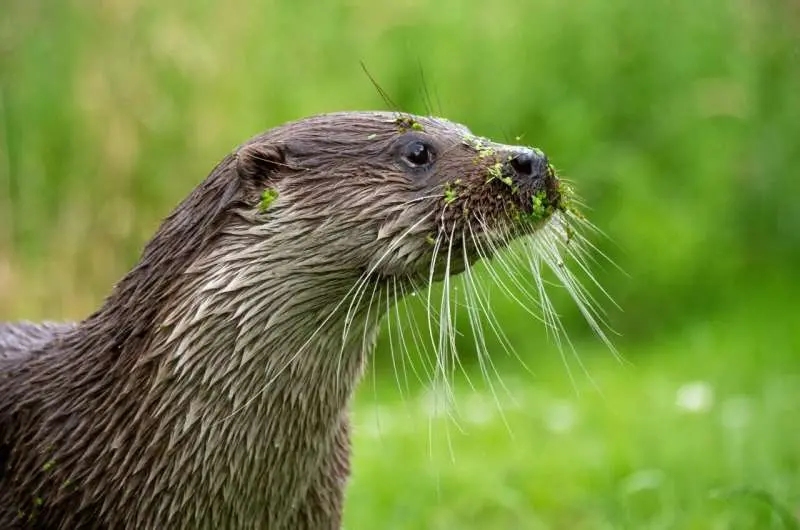
An animal species that eludes humans particularly well is the Eurasian otter (Lutra lutra), a semi-aquatic and solitary mammal found in rivers, lakes, wetlands and coastal areas across Europe, as well as in parts of Asia, the Middle East and North Africa. Eurasian otters have become endangered as the result of intensive hunting, the disruption of their natural habitat and water pollution.
Researchers at Cardiff University recently introduced a new approach to study the DNA of these elusive otters without capturing them or disrupting their natural habitat. Their proposed strategy, presented in a paper published in Royal Society Open Science, entails the analysis of otter spraints (i.e., feces) using laboratory and bio-informatic techniques.
Collecting and analyzing otter spraint samples
Building on the study of ancient DNA and on previous animal genetics research, the researchers identified various techniques that could be used to extract genetic information from animal feces. To test their approach, they collected 27 otter droppings along the River Usk in the south of Wales (UK), and extracted DNA from these samples using specialized laboratory tools.
They employed a technique called shotgun sequencing, which can derive the entire DNA sequence of an organism's genome by breaking it into smaller random fragments and then assembling them using computer algorithms. Using computational techniques, they were able to reconstruct the otter's mitochondrial genome, a small circular DNA molecule found in the mitochondria (i.e., organelles inside cells that generate chemical energy).
"Leveraging techniques from the fields of metagenomics and ancient DNA, we present a laboratory and bioinformatic pipeline for recovering whole mitochondrial genomes (mitogenomes) through shotgun metagenomic sequencing of Eurasian otter spraint (fecal) samples," wrote Sarah J. du Plessis, Jennifer E. Smith and their colleagues.
Using their proposed approach, the researchers were able to recover the complete set of genetic information encoded in mitochondrial DNA from 20 out of the 27 fecal samples they analyzed. They observed three groups of inherited genes (i.e., haplotypes) that matched those reported in earlier studies focusing on otters living in Wales, which had instead analyzed tissue samples.
"The three recovered haplotypes in these samples were identical to sequences previously documented in high-quality DNA from muscle tissue samples of otters from Wales, validating our approach," wrote Plessis, Smith and their colleagues. "We recovered higher mitochondrial depth in spraint samples collected in spring than in winter and in samples collected within less than 24 hours. However, our limited sample size prevented us from determining factors which influenced mitochondrial depth within a multivariate framework."
Interestingly, via their analyses of the otter droppings, the researchers were also able to derive genetic information related to other species on which Eurasian otters are known to prey. This was all done without extracting the otters or their prey from their natural environment or collecting tissue samples.
A promising method to monitor endangered wildlife
The pipeline introduced in this research has so far proved to be highly promising for the study of otter DNA. The researchers found that their approach was more effective if the droppings were collected in spring and within 24 hours after the animals left them behind.
While so far they have only used it to analyze 27 samples, their approach could soon be tested on a larger scale. In addition, the same pipeline could be used to derive genetic information from the feces of other elusive and endangered animal species.
Given that many animal species are at risk of extinction and that removing them from their natural setting can be both harmful and impractical, innovative research strategies like the one introduced by the authors are highly valuable. In the future, this study could inspire the development of more approaches to studying endangered animals without exposing them to stress or disrupting their habitat.
Written for you by our author Ingrid Fadelli, edited by Stephanie Baum, and fact-checked and reviewed by Robert Egan—this article is the result of careful human work. We rely on readers like you to keep independent science journalism alive. If this reporting matters to you, please consider a donation (especially monthly). You'll get an ad-free account as a thank-you.
Publication details
Sarah J. du Plessis et al, Recovering whole mitogenome sequences from Eurasian otter (Lutra lutra) spraint samples: a metagenomic approach, Royal Society Open Science (2026). DOI: 10.1098/rsos.251299
© 2026 Science X Network
Citation: Novel approach allows studying the DNA of otters without disturbing them (2026, March 22) retrieved 22 March 2026 from https://phys.org/news/2026-03-approach-dna-otters-disturbing.html
This document is subject to copyright. Apart from any fair dealing for the purpose of private study or research, no part may be reproduced without the written permission. The content is provided for information purposes only.