




A pigeon turning its head might seem an unlikely electricity generator. Yet one proposed explanation for the bird's magnetic sense depends on exactly that: Turning through Earth's magnetic field would produce tiny electrical signals inside its ears. However, a theoretical study suggests that this miniature generator cannot supply directional information fast enough to work as a compass. The problem is electrical noise produced within the proposed sensor itself.
Daniel Kattnig, a physicist at the University of Exeter, tested the proposal in a study now published in the Journal of the Royal Society Interface. His analysis challenges the mechanism while leaving one intriguing observation unexplained: Magnetic fields still activate parts of the pigeon brain connected to the inner ear.
Why look inside the ear?
The electrical idea has a physical basis. Turning a conductive loop in a magnetic field can indeed generate a voltage, and the inner ear's semicircular canals, which normally help detect head rotation, contain a salty fluid that conducts electricity.
For a 2019 study published in Current Biology, researchers generated electrical signals in an enlarged laboratory model of a canal. They also identified molecular components associated with electrical sensing in pigeon inner ear tissue.
Later research by Gregory Nordmann and colleagues, published in Science, strengthened the biological case. Magnetic stimulation activated brain regions connected to the balance system, even when it was generated in darkness. The team also identified specialized sensory cells that express genes for voltage-sensitive channels associated with electrical sensing.
For those experiments, the birds' heads were held still while the magnetic field was rotated, changing its direction relative to the inner ear without requiring the birds to turn their heads.
Together, the findings suggested a route from a changing magnetic field to electrical signals and brain activity. But beyond producing a voltage, the signal would also have to carry enough information to indicate direction.
Can the signal keep up?
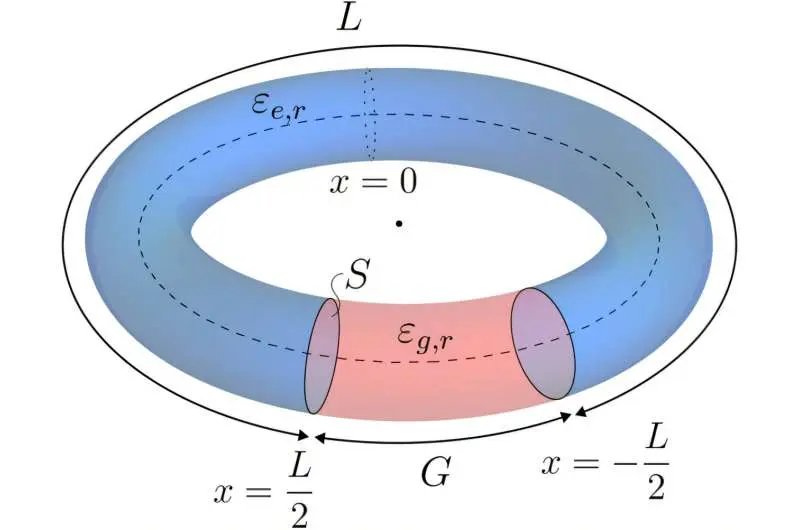
For the new study, Kattnig modeled a canal as a small ring of conductive fluid interrupted by a gelatinous barrier called the cupula. He initially treated the barrier as a perfect electrical insulator, giving the proposed sensor favorable conditions by preventing charge from leaking across it.
For a ring about 5 millimeters across, turning at a speed reported during rapid pigeon head movements, the predicted voltage reached roughly 12 billionths of a volt.
That voltage is tiny, but that doesn't automatically make it unusable. The real problem is random thermal movement of electrical charges creates fluctuations that can drown out the signal. In Kattnig's model, these fluctuations overwhelmed the magnetic signal.
Filtering doesn't solve the problem. While narrowing the range of frequencies admitted by the sensor reduces noise, it also restricts how quickly information can arrive. And, all the while, the pigeon's head keeps turning. To work as a compass, the system must associate changes in its electrical signal with particular head directions.
Kattnig then used information theory to estimate how quickly the noisy system could convey directional information. Even the idealized sensor managed only about 0.15 bits per second. His example of a rapid scan that could distinguish directions 5 degrees apart required more than 560 bits per second.
So, even the idealized sensor fell thousands of times short of the required information rate.
Allowing electrical leakage weakened that signal even further. Under the modeled conditions, more sensitive cells or additional brain processing could not recover directional information that the sensor failed to provide quickly enough.
That leaves researchers with a puzzle. The biological observations point toward a magnetic response associated with the balance system, but this particular induction mechanism cannot adequately explain a working compass. Another sensing arrangement or a different physical process would be needed.
Any alternative mechanism would need to explain why magnetic stimulation activates brain regions associated with the inner ear, while also providing enough directional information for the bird to navigate.
Written for you by our author Andrew Zinin, edited by Lisa Lock, and fact-checked and reviewed by Robert Egan—this article is the result of careful human work. We rely on readers like you to keep independent science journalism alive. If this reporting matters to you, please consider a donation (especially monthly). You'll get an ad-free account as a thank-you.
Publication details
Daniel R. Kattnig, Signals too small to sense: physical and information-theoretic limits to induction-based magnetoreception in birds, Journal of the Royal Society Interface (2026). DOI: 10.1098/rsif.2026.0332
Who's behind this story?

Andrew Zinin
Master's in physics with research experience. Long-time science news enthusiast. Plays key role in Science X's editorial success. Full profile →

Lisa Lock
BA art history, MA material culture. Former museum editor, paramedic, and transplant coordinator. Editing for Science X since 2021. Full profile →

Robert Egan
Bachelor's in mathematical biology, Master's in creative writing. Well-traveled with unique perspectives on science and language. Full profile →
© 2026 Science X Network
Citation: Pigeons' proposed inner-ear compass runs into a noise problem (2026, September 23) retrieved 23 September 2026 from https://phys.org/news/2026-09-pigeons-ear-compass-noise-problem.html
This document is subject to copyright. Apart from any fair dealing for the purpose of private study or research, no part may be reproduced without the written permission. The content is provided for information purposes only.