



Scientists have found a way to make salt taste saltier without increasing its sodium content, a welcome development in the culinary world. Salt is a powerful flavor enhancer, drawing out the subtle flavors of a dish while balancing sweetness and bitterness. Its appeal comes hand in hand with some drawbacks. Salt activates the brain's reward system, making food more pleasurable, but eating too much salty food can negatively affect cardiovascular health.
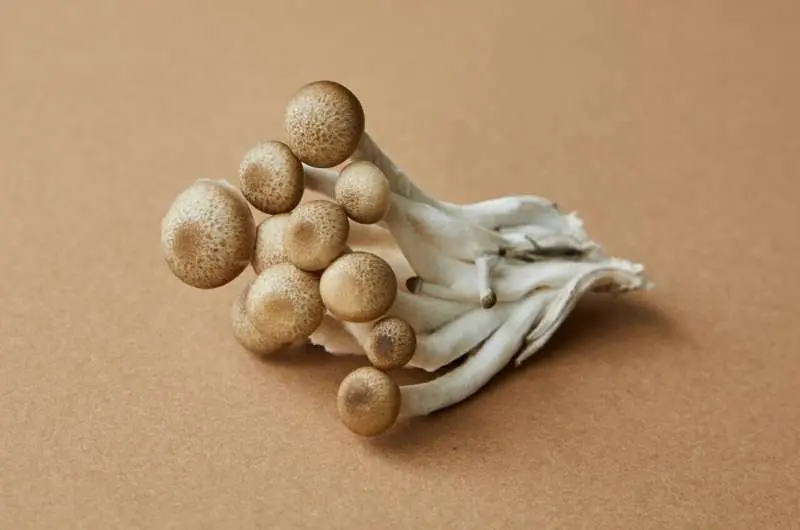
In a recent study published in npj Science of Food, researchers turned to Hypsizygus marmoreus, a popular edible mushroom, to see whether its proteins contain natural peptides that can amplify how our taste buds perceive saltiness.
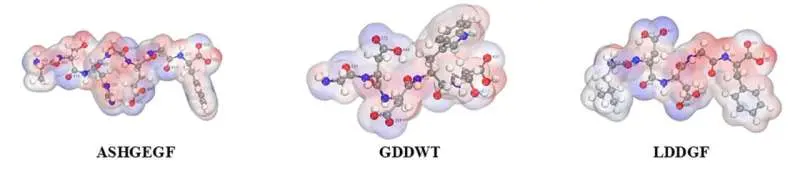
They successfully extracted three mushroom-derived peptides: ASHGEGF, GDDWT and LDDGF. To measure how much saltier the solution tasted, the researchers used an electronic tongue, a device that mimics our sense of taste by translating chemical signals in liquids into electrical readings.
ASHGEGF was the standout performer, delivering the strongest salty kick by increasing the saltiness intensity of a 3 mg/mL NaCl solution by 70.59%. The three peptides boosted saltiness on their own and in combination, reinforcing each other to deliver a saltier taste that lasted longer.
Salty but healthy
Salt can make or break a dish. It needs to be in perfect balance: not too much, not too little. Excessive table salt consumption, however, has been linked to serious health problems, like high blood pressure, depression and even damage to organs, such as the kidneys.
Cutting down on salt might be good for health but not so good for the taste buds. So, scientists have been looking for alternatives that keep the saltiness while reducing sodium content. The most common sodium chloride (NaCl) alternatives on the market contain potassium. With regular use, these alternatives can increase the risk of excess potassium retention, potentially posing health risks for older adults.
Peptides, short chains of amino acids often extracted from yeast, soy and bovine bone, offer a way to lower sodium in food without a major loss of flavor. They intensify the taste of salt solutions, so you can reduce sodium while the food still tastes salty. Interest in them is growing because they come from food sources, have nutritional value and are readily absorbed by the body.
In this study, researchers focused on the edible mushroom Hypsizygus marmoreus, which is rich in proteins and flavor compounds but whose specific saltiness-enhancing peptides remained poorly studied.
To find out which enzyme worked best, the researchers blended powdered Hypsizygus marmoreus mushroom with water and treated it with six different commercial enzymes. Trypsin successfully broke down the mushroom's proteins into tiny peptides.
Mass spectrometry identified more than 6,000 peptides, and AI and computational tools filtered out unsafe or unstable candidates, shortlisting those most likely to boost taste. The researchers chemically synthesized the five candidate peptides the system selected and asked human tasters to taste salt solutions containing them to measure perceived saltiness.
The team tracked how quickly the salty taste peaked and how long it lasted over a 105-second window. They also used an electronic tongue that measures saltiness intensity objectively and, unlike human tasters, does not suffer from sensory fatigue. This step confirmed that three peptides—ASHGEGF, GDDWT and LDDGF—significantly amplified saltiness.
Power of peptides
When added to a saltwater solution, these three peptides significantly amplified the perceived saltiness without adding any extra sodium. ASHGEGF came out on top, increasing perceived saltiness by 70.59% in a salt solution, followed by LDDGF and GDDWT, which increased saltiness perception by 49.02% and 47.06%, respectively. The saltiness lasted between 75 and 105 seconds, depending on which peptide was in the solution, with ASHGEGF again lasting the longest.
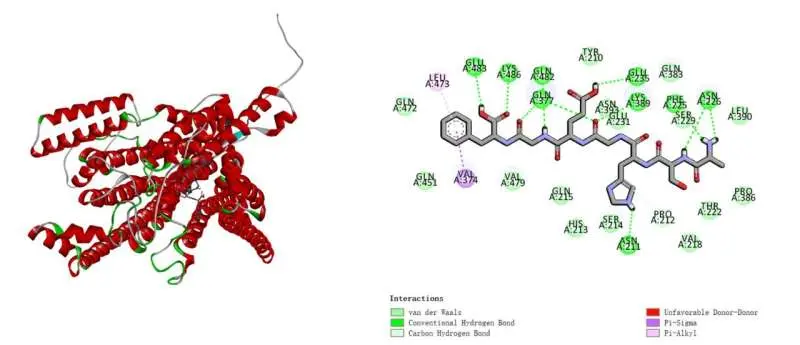
To understand the mechanism behind this effect, the researchers ran molecular docking simulations. They saw that the peptides fit into the binding pocket of the TMC4 receptor, which is a novel chloride channel that plays a crucial role in detecting salty tastes. The peptides form stable complexes with TMC4 as the electron-rich regions on acidic amino acids form a strong hydrogen-bonding network with the receptor.
Taken together, these findings point to a promising route for creating new seasonings from Hypsizygus marmoreus mushrooms that enhance saltiness. The next step is to add the identified peptides to real low-sodium foods to test how much sodium they can replace, whether they affect taste and how well they hold up in everyday use.
Written for you by our author Sanjukta Mondal, edited by Sadie Harley, and fact-checked and reviewed by Robert Egan—this article is the result of careful human work. We rely on readers like you to keep independent science journalism alive. If this reporting matters to you, please consider a donation (especially monthly). You'll get an ad-free account as a thank-you.
More information
Wenping Kong et al., Discovery of saltiness-enhancing peptides from Hypsizygus marmoreus via virtual screening, multisensory evaluation, electronic tongue, and molecular simulation, npj Science of Food (2026). DOI: 10.1038/s41538-026-01088-9
Sanjukta Mondal
Master's in Chemistry. Freelance science journalist and communicator. Published in Chemistry World, BioSpace, and The Hindu. Full profile →
Sadie Harley
BSc Life Sciences & Ecology. Microbiology lab background with pharmaceutical news experience in oil, gas, and renewable industries. Full profile →
Robert Egan
Bachelor's in mathematical biology, Master's in creative writing. Well-traveled with unique perspectives on science and language. Full profile →
© 2026 Science X Network
Citation: Mushroom-derived peptides boost saltiness by up to 70%, offering a path to low-sodium foods (2026, October 13) retrieved 13 October 2026 from https://phys.org/news/2026-10-mushroom-derived-peptides-boost-saltiness.html
This document is subject to copyright. Apart from any fair dealing for the purpose of private study or research, no part may be reproduced without the written permission. The content is provided for information purposes only.