


MANILA, Philippines — Do you often go to the market or supermarket to buy produce — meats, fish and seafood, vegetables, fruits, root crops, and aromatics, among others — for the family’s regular consumption?
Some do it daily for freshness, while others make it weekly for convenience. Some households do it a few days apart, depending on their free time. Homemakers, mostly working women, assign a member of the household to do the regular marketing, tagging along only when their schedule permits.
But in all those regular and irregular trips to the market, have you ever "discovered" ingredients whose appearance or name catches your curiosity? Have you, for one, "discovered" Magic Kamote?
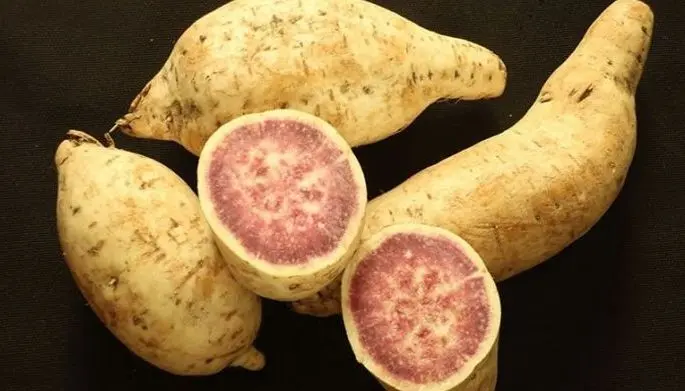
It is a term of endearment or nickname that vendors of vegetables and root crops, such as kamote (sweet potato), have given to a variety of kamote — a prized one, at that! — that grows in the Philippine highlands and are often harvested from the Ilocos Region, Nueva Vizcaya, and the Cordilleras, including the fruit basket and vegetable capital that is La Trinidad, Benguet.
This kamote variety is called Magic Kamote because it holds a “magical” truth within it. When you look at it, this sweet potato has a creamy white skin, but when you cut it open, you will find a vibrant purple flesh inside.
Sometimes, it is a combination of white and purple flesh, although it is always more purple than white. But when you peel and cook it, the flesh “magically” transforms into a deeper, more brilliant purple. Using it in place of other varieties of kamote thus gives dishes more color and excitement.
More than just its color, though, Magic Kamote is highly prized because it offers a load of health benefits. It has, like most other kamotes, a low Glycemic Index (GI), and since it does not spike blood sugar in people, it is an ideal food for diabetics.
It also makes a healthier carbohydrate alternative to rice and bread, and does the heart and the gut a lot of good, too. Magic Kamote also comes packed with antioxidants. Its purple flesh is rich in anthocyanins, which provide powerful antioxidant and anti-inflammatory properties similar to those in blueberries.
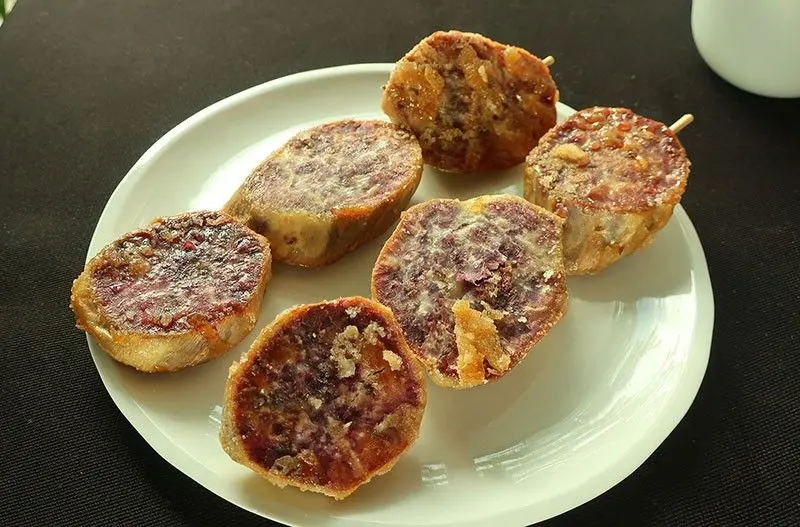
Finally, what also truly makes Magic Kamote highly coveted is that it tastes great. It is naturally sweet — and not overly so — so you can use it in every dish that requires kamote or uses it as an enhancement option.
These include Kamote Cue, Kamote Fries, Kamote Chips, Ginataang Bilo-bilo, sweetened kamote for Halo-Halo, even plain and simple boiled kamote.
And if you use Magic Kamote on these simple Filipino merienda fares, you’d be transforming them into “gourmet” level delights. With Magic Kamote selling at P80 to P90 per kilogram, not bad at all.