



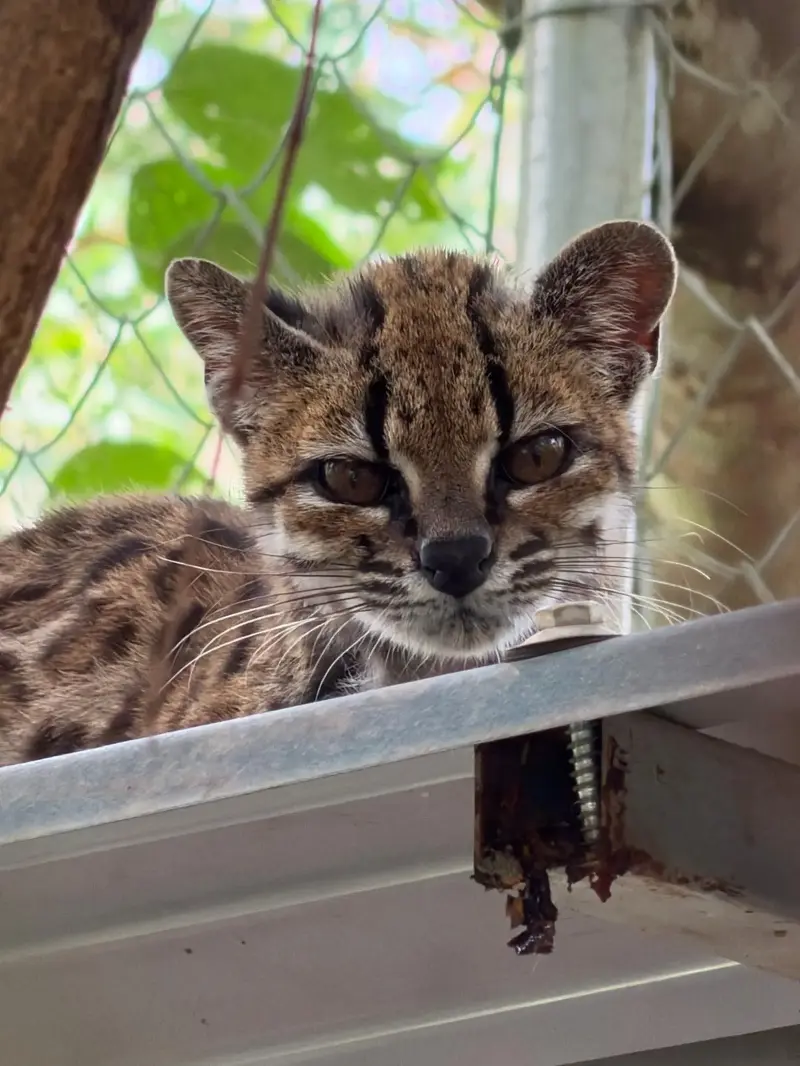
The Leopardus tilcayo, a new species of tiger cat and the first novel living cat species to be discovered in over 100 years, may have evaded scientific human discovery until very recently, but despite its elusive nature, one expert says there are major threats to the cat’s existence.
The new discovery was announced earlier this week in a study that published in the journal Current Biology on Thursday. The Leopardus tilcayo immediately made headlines, likely due to the wonder that comes with discovering a living species and also in part because of its immense cuteness. The wild cat, which is roughly the size of a domestic kitten, has brown and black markings that somewhat resemble a leopard and a small, rounded face with dark eyes.
Where Does the Cat Appear?
The cat was discovered in the Bolivian Yungas, a cloud forest in the eastern Andes.
How Was the Cat Discovered?
The cat was brought to a wildlife sanctuary after a man living in the region thought it was a domestic kitten and took care of it by feeding it noodles, rice, and eggs, NBC News reported, then later realized it was a wild animal. Paola Nogales-Ascarrunz, an author on the study titled, “Phylogenomics and museomics reveal five distinct species of tiger cats in South America,” volunteers at the Senda Verde Wildlife Sanctuary where the cat was brought. There, Nogales-Ascarrunz and other researchers learned it was a new species.
Much remains unknown about the cat. What is known, however, is that Leopardus tilcayo faces three distinct threats to its existence.
Risks to the Species
“The main threats include habitat loss and fragmentation, hunting, and diseases transmitted by domestic animals,” a press release about the cat said. “Some of these species live in habitats that are predicted to be severely impacted by climate change, which will further reduce the available space for them, and consequently decrease their numbers.”
Meanwhile, despite being a carnivore, the cat poses no threat to people.
“The Tilcayo is a very small cat and does not pose a threat to people,” Nogales-Ascarrunz told Newsweek. “In fact, it is a shy and elusive animal that tends to avoid humans rather than approach or attack them. We also have no evidence that it poses a significant risk to other animals in the area.”
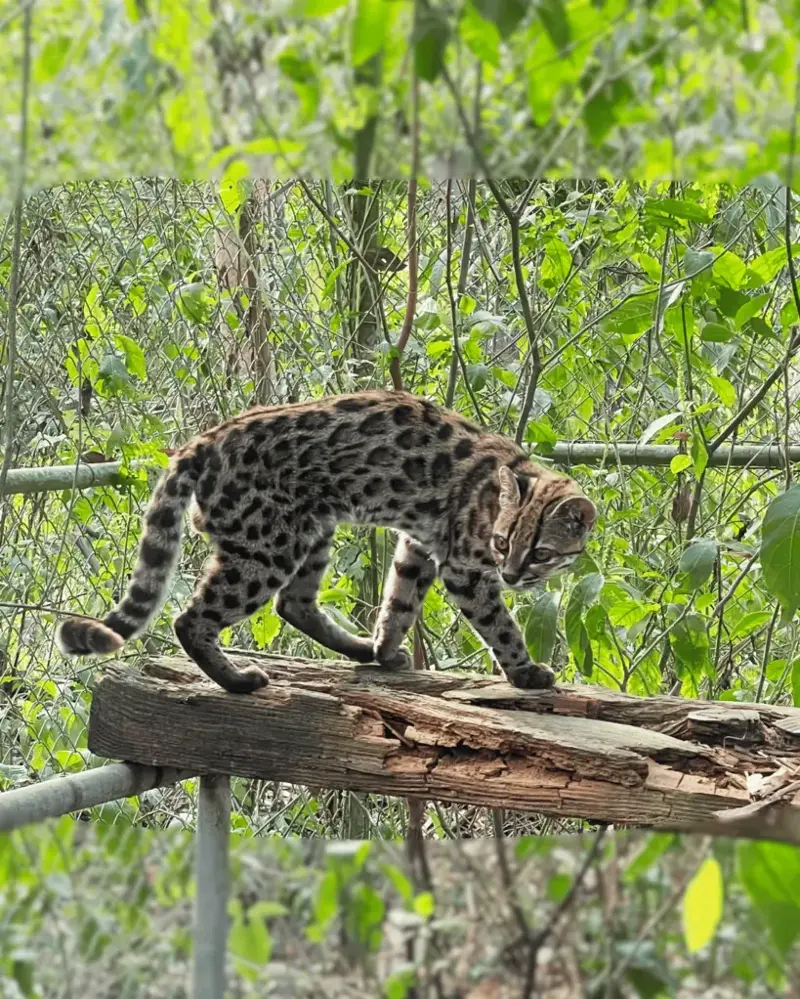
Where the Tilcayo Name Originated
Communities living within this cat’s Bolivian habitat refer to it as “tilcayo,” and so researchers kept the name as a tribute.
Is the Leopardus tilcayo Endangered?
Since the cat was just discovered as a separate species, its conservation status still needs to be evaluated, Nogales-Ascarrunz said. Prior to its discovery as a new species, the tilcayo was included under the Leopardus tigrinus species, which is considered “vulnerable” on the International Union for Conservation of Nature (IUCN) red list.
Is the Leopardus tilcayo the Smallest Wild Cat in the World?
No. Despite its adorable size, the Leopardus tilcayo is not the smallest wild cat species. That designation belongs to the black-footed cat, which lives in Africa. The black-footed cat weighs only 2 to 5 pounds.
Leopardus tilcayo is, however, the smallest wild cat species in Bolivia.
What Does the Leopardus tilcayo Eat?
The cat is a carnivore, Nogales-Ascarrunz said, but there’s limited information about its biology and lifestyle. It “likely feeds mainly on small mammals, such as small rodents,” she said, but more research is needed.
What Happens Next
Now that the Leopardus tilcayo has been discovered, researchers have more work to do. Nogales-Ascarrunz told Newsweek that as far as next steps, researchers will seek to understand the cat’s distribution, habitat, and ranges in which they travel.
“We also need to determine whether their populations are structured into distinct subpopulations, and, if so, how many there are and how they are connected,” she said. It is the first new species discovery Nogales-Ascarrunz has been involved in.