




The United States faces a growing challenge: ensuring that its physical infrastructure can keep pace with economic and technological growth.
International investors deployed more than $130 billion into U.S. assets during 2025, according to year-end data compiled by Global SWF and reported by Realty Today.
At the same time, S&P Global Market Intelligence, citing data from 451 Research, reported that electricity supplied by the grid to hyperscale, leased, and cryptocurrency mining data centers reached approximately 64.4 gigawatts in 2025, up 25 percent from the previous year.
Directing Investment in the Right Way
Demand could reach 183.2 gigawatts by 2030. Together, these trends raise a fundamental economic question: how can investment capital be directed toward the land, energy systems, industrial facilities, and infrastructure needed to sustain growth?
These figures point to a broader shift in the U.S. investment landscape. International capital is flowing into American assets while technological growth creates new demands on land, energy, industrial facilities, and infrastructure. The challenge is no longer simply identifying where money can be invested. It is understanding how capital can be translated into functioning assets that meet real economic needs.
The challenge is that physical assets cannot be developed in isolation from the places where they operate. A real estate project depends on zoning, permits, utilities, construction costs, prospective occupants, and local demand. Energy infrastructure requires access to resources, transmission capacity, and regulatory coordination. Even a promising investment thesis can encounter significant obstacles if these practical requirements are overlooked.
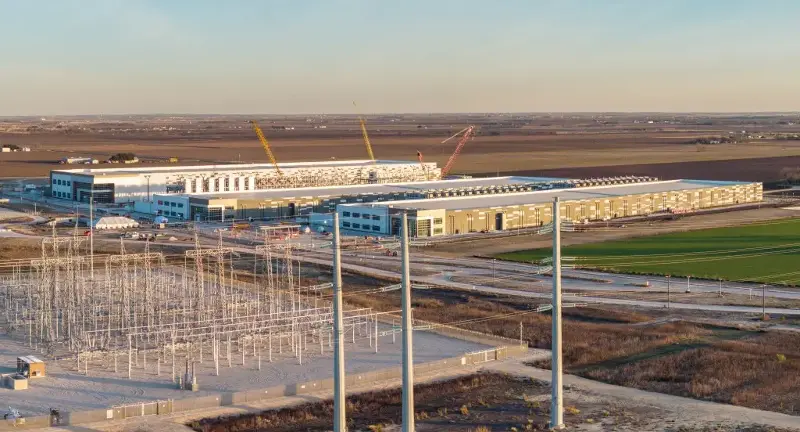
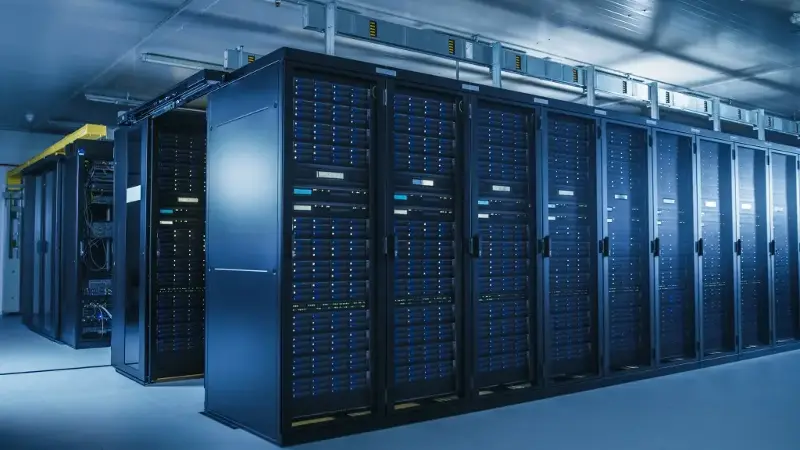
The growing demand for artificial intelligence infrastructure illustrates the point. Data centers are often discussed in terms of computing capacity and technological advancement, but their development depends on a network of physical systems. Electricity, cooling, land, water, transmission infrastructure, and specialized construction all influence whether a project can proceed.
As S&P Global’s research on data center power demand indicates, the expansion of computing infrastructure could also increase the importance of supporting energy systems, including battery storage. Investment opportunities may therefore extend beyond data centers themselves to the infrastructure required to build, power, and operate them.
For real-assets investors, this creates a more interconnected investment environment. Technology development can influence industrial demand. Industrial expansion can affect employment and population growth. Those changes can influence housing demand, while all these activities place different requirements on local infrastructure. Understanding these relationships can help investors evaluate opportunities within a wider economic context rather than treating each property or asset category as an isolated decision.
My experience across technology, real estate, private equity, and international business has reinforced the importance of connecting investment decisions with the conditions on the ground. Capital can cross borders quickly, but physical projects must navigate the specific requirements of individual markets.
This is particularly relevant when international investors consider the United States. The country offers a broad range of real-asset opportunities, but its markets are not interchangeable. Regulations, development costs, infrastructure capacity, employment patterns, and customer demand can differ significantly between regions and even between neighboring municipalities. Understanding those differences is essential to assessing whether a project is viable.
Southeast Leads Way for Expansion Interest
Development provides a useful example. An investor considering a residential or industrial project must evaluate more than the acquisition price. The process may involve securing entitlements, coordinating with local authorities, understanding infrastructure constraints, and identifying the eventual users of the property. These decisions can shape a project’s financial viability long before construction begins.
The Southeast offers a relevant case study. According to the Georgia Department of Economic Development, Georgia recorded approximately $35.2 billion in project investment during fiscal year 2026, alongside 436 business expansions and new company locations. International companies accounted for more than $7.8 billion in foreign direct investment associated with recruitment and expansion activity.
Meanwhile, CBRE’s 2026 U.S. Industrial and Logistics Occupier Survey found that the southeast was the leading region for expansion interest, with 30% of respondents selecting it for planned expansion over the following 36 months.
These indicators do not guarantee that every investment in the region will succeed. They do, however, illustrate why regional economic conditions deserve close attention. Business expansion can influence demand for industrial space, housing, transportation, and supporting services. Investors who understand these connections may be better positioned to assess where development could respond to an identifiable need.
My experience in real estate development has shown me how closely these considerations are connected. Residential and industrial properties, data centers, and energy infrastructure serve different purposes, but each depends on location, available resources, regulatory requirements, and the economics of development. Evaluating these factors individually, while understanding how they influence one another, is essential to assessing whether a project is viable.
Diversification across asset classes is not, by itself, a substitute for sound investment judgment. Each opportunity must be assessed on its own merits, including its costs, risks, expected demand, and operational requirements. Connections between asset categories can provide useful context, but they should not obscure the fundamentals of an individual investment.
Local knowledge is particularly important in this process. Relationships with municipalities, governing bodies, utilities, contractors, and prospective customers can help investors understand the practical requirements of a project. They can also reveal constraints that may not be apparent from financial models or broad economic forecasts. These relationships are not a guarantee of success, but they can contribute to more informed decisions and better coordination during development.
There is also a wider community dimension. Residential and industrial projects affect the places where people live and work. Their long-term value depends partly on how well they respond to local needs, fit within existing infrastructure, and contribute to sustainable economic activity. Development decisions should account for these considerations alongside financial returns.
The next phase of U.S. real-assets investment will likely be shaped by the interaction between international capital, technological growth, energy demand, and regional economic development. The scale of available funding creates opportunities, but the ability to deploy that funding effectively will depend on a clear understanding of the physical and regulatory environments in which projects must operate.
Investors should therefore look beyond headline capital flows and broad sector forecasts. Before committing funds, they should examine local demand, infrastructure capacity, regulatory requirements, project economics, and the needs of the communities involved. The priority should be to connect capital with viable projects grounded in real demand, and to make that assessment before the investment decision is made.
Sanjay Raghavaraju is the founder and CEO of 33 Holdings, an Atlanta-based real-assets investment firm. His experience spans technology, real estate, private equity, and international business.
The views expressed in this article are the writer’s own.