



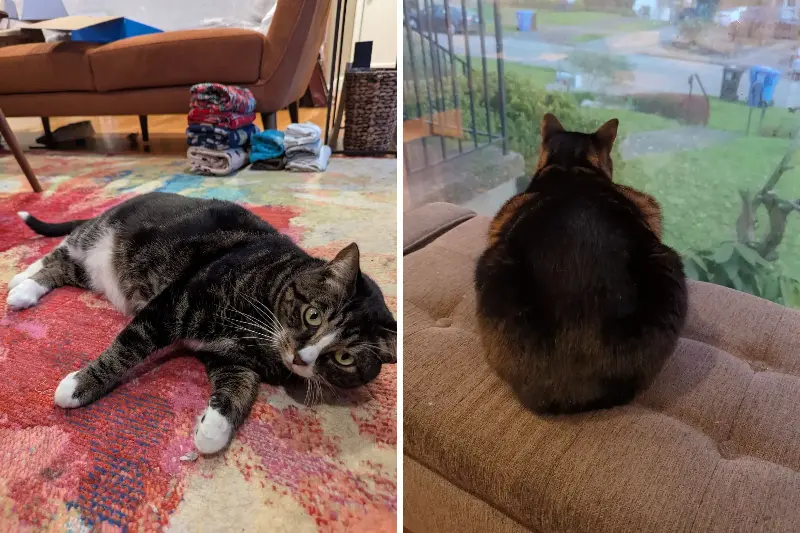
A rescue cat and his owners are learning that dieting isn’t always straightforward.
In a post shared on Threads by user @that.map.guy.craig, the owner introduced his rescue cat, Dennis, and the challenge of keeping him at a healthy weight. Dennis tipped the scale at 14.5 pounds, prompting the household to cut back his food and begin a weight-loss plan. The owner joked that Dennis was “large and in charge in a bad way.”
But even with careful monitoring and portion control, Dennis proved to be a determined eater. At his two-month check-in, the family got a surprise: the scale revealed that Dennis had gained weight, reaching 16 pounds.
The owner replied to his post, explaining that Dennis is a bit grumpy and, in all likelihood, had been sneaking food from the family’s other cat. Part of the comment reads: “…we thought he was being a good boi. Lies. All lies.”
View on Threads
What Viewers Said
The relatable struggle resonated widely online, turning Dennis into an internet favorite. Threads users flooded the post with photos of their own hefty cats and stories of diets gone awry.
“Every time I attempt to put Banjo on a diet, his Dad says, ‘He’s not fat, he’s all muscle.’ Constant battle of the bulges and attitudes here,” one user said.
Another added: “When our boy got to 16 lbs, he was put on a diet as well. He started eating the dog food.”
A third person joked: “Even my cats just told me that the scale must be very wrong and the fur is indeed heavier in the winter than in summer. That is all.”
For many pet parents, the viral moment highlights just how complicated feline weight loss can be—even with the best intentions.
Newsweek reached out to @that.map.guy.craig via Threads for additional information and comment.
What Is a Healthy Weight for a Cat?
While Dennis’ story is humorous, maintaining a healthy weight is crucial for a cat’s overall well-being. An article from Catster states felines should weigh between 8 and 10 pounds, though this can vary by breed.
Veterinarians often use a body condition score—a hands-on assessment of fat coverage, waist shape, and how easily ribs can be felt. Ideal weight cats have ribs that are easy to feel, but not pretruding, a visible waist when viewed from above, and a slight abdominal tuck from the side. Overweight cats may have ribs that are difficult to feel, a rounded abdomen and little to no waistline.
Maintaining a healthy weight helps prevent diabetes, arthritis and urinary disease, as well as reduce overall quality of life. Experts recommend gradual weight-loss plans guided by a veterinarian, since rapid calorie restriction can be dangerous.
If your cat needs to slim down, some practical strategies include measuring portions carefully, feeding multiple small meals a day and encouraging activity with toys and climbing spaces. Puzzle feeders and interactive toys are especially helpful—they make your cat work for their food, which can slow eating and burn calories.
Do you have funny and adorable videos or pictures of your pet you want to share? Send them to [email protected] with some details about your best friend, and they could appear in our Pet of the Week lineup.