



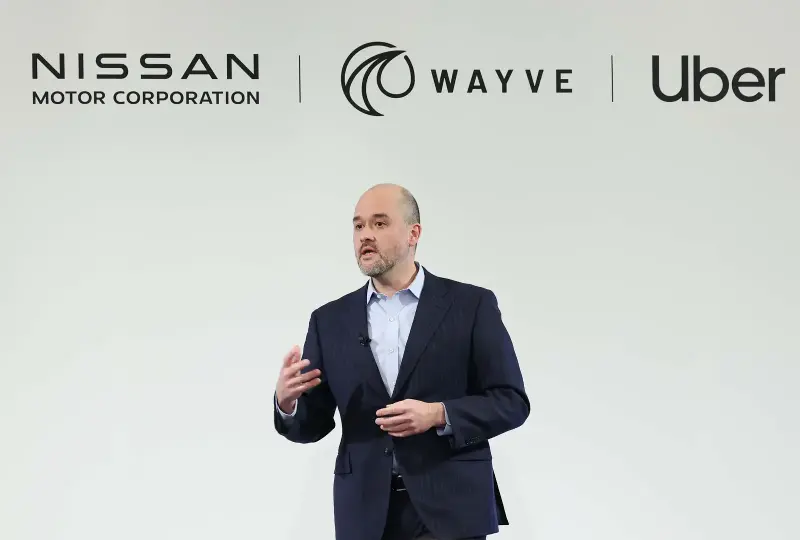
Nissan today announced that it will center its future lineup around artificial intelligence-defined vehicles as part of its new “Mobility Intelligence for Everyday Life” long-term business strategy.
The company interprets AI-defined vehicles as those that utilize the technology to increase vehicle safety and autonomous drive functionality. It aims to eventually deploy AI-driven intelligence to 90 percent of its lineup.
“This is the right moment to articulate Nissan’s long‑term vision as we move beyond the Re:Nissan recovery plan and set a clear path for the future. Our vision defines where Nissan is headed, with customer experience as our guiding priority. By advancing mobility intelligence, we will deliver intuitive, advanced, and reliable products and technologies that offer outstanding value and enrich how mobility is experienced,” Nissan President and CEO Ivan Espinosa said in a press release.
Nissan is among the Japanese automakers facing headwinds as fierce business competition from China persists and regulatory uncertainty in remains in Europe and North America. And, that’s on top of its own financial struggles.
The AI-driven intelligence rollout will be enabled by advanced versions of technologies already in market: Nissan AI Drive Technology and Nissan AI Partner technology. The company is notably collaborating with Wayve and Monolith.
The first vehicle to come out of the Wayve partnership will be the Nissan Elgrand, a van sold in Japan, by the end of the 2027 fiscal year. It will feature next-generation lidar technology and have end-to-end autonomous drive features.
“Increasing driver assist technology leading to eventual personal use as well as robotaxi applications for autonomous driving is the industry-wide path. Nissan needs this technology development to ensure competitiveness in the next decade. While the pace of personal-use adoption is a wild card, development can’t be ignored,” Stephanie Brinley, associate director of AutoIntelligence at S&P Global Mobility, told Newsweek.
“Nissan was early to offering technologies like adaptive cruise control and lane-keep assist but later lost the lead on assist technologies. The company needs to get competitively back in the game – and to be more proactive about making sure consumers know about the technology they already have,” she said.
Monolith technology is being used to cut physical vehicle development time of Nissan vehicles. It was first utilized to bring the new Leaf battery-electric crossover to market.
The new-generation Leaf has been resoundingly praised by the automotive press and industry analysts alike. It has been named the Women’s Worldwide Car of the Year (WWCOTY) 2026 Supreme Winner, InsideEVs Breakthrough EV of the Year, Cars.com Car of the Year, Car and Driver Editors’ Choice. It also took home a Kelley Blue Book Best Buy Award.