



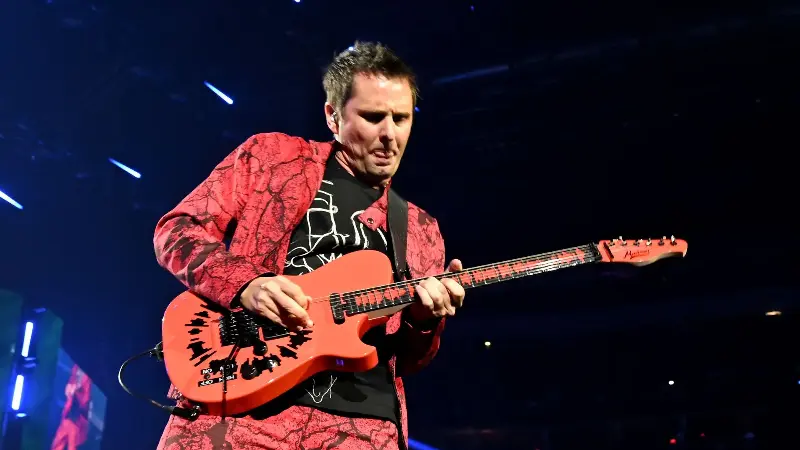
Matt Bellamy has praised social media guitarists as “the future”.
Instagram, YouTube and TikTok players who clearly have the chops but have yet to establish much of a reputation in the real world, either live or on record, are very much a talking point in guitar circles. But the Muse guitarist is positive about them – in fact he’s signed one, Emi Grace, to Manson Guitar Works, the Devon-based company he became the majority shareholder of in 2019.
Talking of Grace, he told Guitar.com: "I see guitarists like her as being the future. These Instagram-type players. It's an interesting development, because these people can now actually have a real career as an instrumentalist. For real, without needing to write songs and being a band in the traditional sense. I think that’s actually a good thing for players, you know? They have this new way of monetising what they do."
And the story of how Grace came to his attention is remarkably simple: "I reached out to her because she kept coming up on my feed on Instagram," Bellamy says. "I was like, who’s this amazing guitarist?!"
And he's got his eye on others as possible endorsees. "I'm excited about us bringing in these new younger guitarists, who are going to take it to the next level. You know, it can't just always rely on me. I like the idea of there being another face or two that start to become as associated with the brand as I am. That would be the long-term goal."
Always an enthusiastic early adopter of tech – even to the extent of building a Korg Kaoss Pad into the body of one of his guitars - Bellamy also (sorry) mused about the possibility of incorporating AI into a guitar
“I want to update the tech in the guitar a little bit, and come up with some new ideas for that,” he declared. “I like the idea of trying to integrate AI components into guitars, where you can prompt a guitar to sound a certain way. I’d like to explore that. That tech exists already in the pedal world, but I like the idea of trying to integrate some of that into guitar, so you can essentially talk to your guitar and tell it how you want it to sound. I’m not quite sure the tech’s there yet, but we’ll see."
“I’ve got a big bank of synthesizers, and it can sometimes take hours and hours to get a sound out of it,” he explains. “Whereas the prompting synthesizer thing is interesting. I like the idea of prompting something, but then something analogue happens. I think that’s probably a long way to go before we get that into a guitar, but the idea of it is interesting.”